Podcast is also available on the versions below:


Get Notified Of Future Episodes on Apple Podcasts | Spotify | Youtube
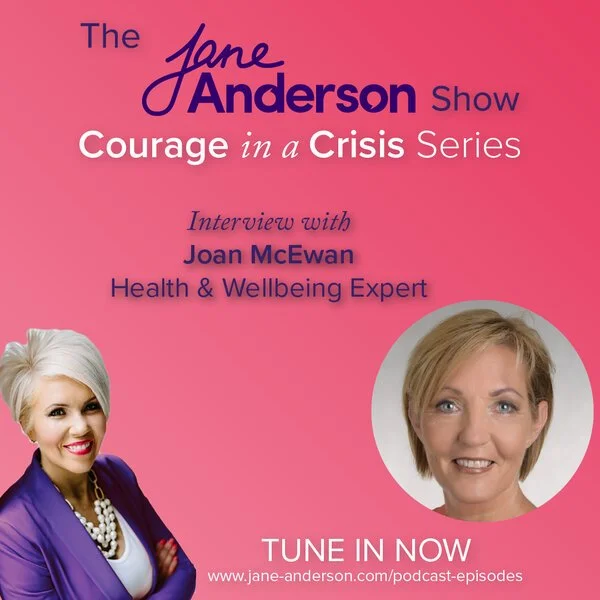
How do you lead other people through change when you are barely coping with it yourself?
That question sat at the heart of my conversation with Joan McEwan, a health and wellbeing expert, coach and author of Show Up. We recorded this episode of The Jane Anderson Show for my Courage in a Crisis series, released in July 2020, when COVID-19 had squeezed what would normally be years of change into a few months. Leaders everywhere were being asked to adapt, pivot and cope all at once, often while managing their own stress.
Joan's career runs through nursing, mental health, naturopathy and corporate health, and she now coaches leaders on getting the best out of themselves. Her answers cover stress and shame, the choices we make about how we work, and what she calls heart-mind leadership. They are a practical guide to leading through change.
A Career Built Around Helping People Heal
Joan started out as a registered nurse in Scotland, “not really understanding why I was in that field”. What she did understand was that she loved being around people and helping them. A postgraduate qualification in mental health followed, and she describes it as the moment her world exploded. Understanding the mind and behaviour made so much sense, and it took away a lot of judgment about people who weren't what we would call the norm.
After moving to Australia, newly married and pregnant, Joan and her family spent many years travelling around Western Australia. She fell in love with the Kimberleys and learned about the culture there and how its people managed, healed and survived in their tribes. Once the family had grown to two children, they drove across to Queensland, where Joan spent three years studying naturopathy so she could offer clients both Eastern and Western approaches and more choices than mainstream medicine alone.
From there she moved into occupational health and the resources sector, starting as a health superintendent in a career that took her through BHP, Rio Tinto and Anglo American. Later, in oil and gas, she was head of health, where she developed, implemented and embedded health functions, gave workers a voice and mentored her team and other leaders. Today she runs a thought leader practice. As she puts it, it is “probably a bit quirky” because it isn't the 101 of leadership. It is about how you get the best out of you. In essence, she says, she is a healer.
Why Mental Health Is No Different to Physical Health
When I asked what she was noticing in the people and organisations she works with, Joan said COVID-19 had brought one thing to the fore: “mental health is no different to physical health.” For years, she said, mental health carried a taboo and a stigma.
Now she was hearing far more people talk openly about anxiety, stress, spiralling out of control and the “mini meltdowns” where they feel they have lost all control, without the shame that has historically come with it. Joan sees that as a possible positive. Because so many people were affected, the conversations had become easier to have. I had just seen a report reinforcing that the need for mental health support was already there before COVID-19 and had grown since.
Job Loss, Shame and the Honesty That Comes With Rawness
Joan was also clear about the weight of the job losses. With hundreds of thousands of people out of work, she described “a whole different aspect of shame and disbelief” for people who had worked all their lives and were suddenly walking down to Centrelink, Australia's welfare agency, to sign on. It tugs at who we are and at the pride behind everything we have worked for.
Yet she saw something else in that rawness: “we are getting honesty and we are getting trust in ways that we've never experienced before.” Egos were being smashed because senior people in organisations were facing the same issues as everyone else. The exhaustion and burnout were real, and for many the anxiety was “crippling”.
“I'm Stuck in Mud”: A Leader's Story of Getting Unstuck
To bring this to life, Joan shared a story about a client, a senior leader in a heavily male-dominated environment. Before COVID, they had been working on the standard questions: how to find her voice and be a better leader. She was working from 6am until 11pm or midnight, had put on weight and wasn't eating properly or exercising.
Then COVID arrived. The children were home from school, she was homeschooling, she had set up a home office in the dining room and she was in back-to-back meetings. Joan described her as fragmented and spiralling out of control. Her words to Joan were: “I'm stuck in mud, and I cannot take one foot in front of the other.”
Joan's response was direct: “staying stuck isn't an answer, and it's not a solution.” Together they peeled everything back to the basics. On the family side, what mattered? At work, which tasks were critical? In her relationships, there was her husband, who was “in the ethers” because she hadn't had time for him.
“Life as you knew it is no longer,” Joan told her, and once you accept that, it becomes an opportunity to “rewrite our script”. What is important to us, what do we really need and want, and how do we go about getting it?
For this client the answer was clarity. She hadn't spent much time with her children because of her job, and she didn't want to miss the next 15 years while they grew up. “I love my job, but there's more to life than my job.” And then, as Joan tells it, she added: “Who's this man?” My response at the time: “Not a bad bloke, actually.”
Rethinking How and Where We Work
This part of the conversation was my own reflection. Joan and I have worked from home for a long time, so it felt familiar to us, but many people were experiencing it for the first time, and I could see them questioning the way they had been living. Mark, who was my fiancé when we recorded, had realised how much of his time went on traffic. I had also been following Justin Dry, the CEO of Vinomofo, on Instagram, where he regularly posted photos of himself with his baby daughter, born the previous December, and said how grateful he was for the time with her.
People were also noticing what technology could do. It had always been there, but when a whole organisation is forced to use it together, the conversation changes for leaders and teams: maybe we can do things differently.
A client had told me about an organisation that surveyed its staff on whether they wanted to return to face-to-face work full time or keep working from home in some capacity. As I heard it, between 70 and 90 per cent still wanted to work from home somehow. At the same time, I was hearing about the pressure on people to go back to the old ways, the power dynamics that make it hard to say no when you fear losing your job, and a real fear of health risks if the office wasn't following social distancing rules. So I asked Joan what advice she would give.
Fear, Reset and the Onus on Looking After Ourselves
Joan started with fear. Since COVID arrived there had been fear about everything, including the virus itself, and the unknowns had increased it. She sees COVID-19 as having put the world on hold, with the universe saying that what we had been doing in the past wasn't working and it was time for “a complete reset”. The old ways, she said, don't exist anymore, because we are far more focused on our health, our socialising, what is safe and how to build our immunity.
That puts a greater onus on what we can do for ourselves. Joan cited the figures she had in mind at the time: that 63 per cent of Australia was obese and that 87 per cent of Australians who die do so because of one chronic disease. “This is our opportunity to look after ourselves,” she said.
Looking after ourselves, in her view, builds the confidence, strength and courage to challenge. If something isn't going to work for you, say so. But you need to be able to offer an alternative: “But this would work for me. Can we try that?”
Heart-Mind Leadership: What Leaders Need Now
Joan was candid that leaders don't have all the answers right now. There is so much change, and they are being challenged personally, professionally and organisationally. In her experience, leaders want to be given “options and triggers” to expand their thinking, and to look at teams that are doing it well.
She talked about heart-mind leadership. The mind is the doing part and the heart is the feeling part. Historically we have had command-and-control leadership, which is all in the head, and Joan believes COVID-19 is allowing us to connect the mind centre and the heart centre into a new expression of leadership.
Her example was Jacinda Ardern, who she said leads and collaborates well because she listens, researches and asks questions, and “nothing is too much bother”. As leaders, Joan said, we have to become more receptive, more open and braver about trying things differently, and then share what we learn within a team. “That's the collaboration, and that's where the magic happens.”
More Choice, More Accountability
Joan expects people to be given a lot more choice, but also to be held more accountable. If you are making these decisions, you need to deliver on what has been agreed and demonstrate that it is working. For some people that will reduce stress and improve their health, because they will be more motivated to address it.
Not everyone will want the same thing. Some people will want to go back to the office, but they will find it different when they do, and after two or three months at home they may be renegotiating their terms within a week or a month if it isn't working for them.
I reflected that this means more conscious choices and more personal responsibility. Instead of feeling powerless about how the organisation works, you are aware of what you need, you tell the organisation what works for you, you come up with a plan and you deliver on your side. It connects closely to the personal responsibility at the heart of Joan's Show Up message.
What the People Moving Forward Are Doing
Joan reminded me that coming out of COVID, everyone has a lot of healing to do, because it has been a huge stress for all of us. But the people she saw “really flying forward” were the proactive ones. She described three areas they were working on:
Mindset. Looking at how they think, shifting their mindset and becoming more agile. They ask which thoughts are useful right now and discard the ones that aren't.
Body. Paying attention to what they put in their mouths, how they move, whether they exercise or walk, and whether they get out into the environment and nature.
Emotions. Taking time to listen and be present.
These people build momentum, and like-minded people gravitate towards them because they want to be part of it. Joan calls these “unusual times” because “everything's up for grabs”. For the first time, she said, we can decide that we want to go this way, and create it.
Leading Through Change With Kindness
Joan's tagline is “Show up and lead through times of change”. She wrote it perhaps 18 months to two years before we spoke and joked, “look what we've got now”. The leaders of the future, she believes, are the ones who take it in their stride and stay open and receptive. Instead of “Oh my God”, they ask how this can benefit them and how they can make it beneficial for everyone. Once we come out the other side, she said, “we'll be more kind and more humane.”
I agreed. I was seeing more mindfulness, compassion and empathy, and leaders realising that this period was about keeping people, particularly when we weren't seeing each other face to face. Joan left us with a line worth remembering: “this too will pass.”
Frequently Asked Questions
Why does Joan McEwan say mental health is no different to physical health?
Joan says COVID-19 brought this to the fore. Mental health has long carried a taboo and a stigma, but she was seeing more people talk openly about anxiety, stress and mini meltdowns without the shame historically attached, partly because so many people were affected.
How can a leader get unstuck when work and life feel overwhelming?
Joan's answer is that staying stuck isn't a solution. With her client, she stripped life back to the basics: what mattered in the family, which work tasks were critical and what was happening in her relationships. Realising that life as you knew it has changed is, in Joan's words, an incredible opportunity to rewrite your script.
What is heart-mind leadership?
Joan describes the mind as the doing part and the heart as the feeling part. She contrasts it with command-and-control leadership, which sits in the head, and sees COVID-19 as connecting the two. She points to Jacinda Ardern as an example of a leader who listens, researches and asks questions.
How should employees approach conversations about returning to the office?
Joan expects people to have more choice but also more accountability. If something won't work for you, she says, you need to come up with what would, and deliver on what is agreed. She also notes that some people may renegotiate their terms soon after a return if it isn't working.
What are the people who are moving forward doing differently?
Joan sees them being proactive about their mindset, their bodies and their emotions. They shift how they think, look after what they eat and how they move, and make time to listen and be present.
Where can I find Joan McEwan's book and coaching programs?
Joan says her website, joanmcewan.com, is the best place to start. You can buy her book Show Up there and see her coaching programs.
About Joan McEwan
Joan McEwan is a health and wellbeing expert and coach who began her career as a registered nurse in Scotland and went on to study mental health and naturopathy. She worked in occupational health and the resources sector, including as head of health in oil and gas, and now runs a thought leader practice that coaches leaders. She is the author of Show Up: How Women Can Lead in the Resources Sector Through Times of Change, which, as I said in the episode, is written for women in the mining sector but applies to women in male-dominated industries and to leaders in general.
Conclusion
Joan's central message is that this kind of disruption is a reset, and that we all have a part in how it goes. Her advice runs from the practical to the personal: strip life back to what matters, look after your body and mind, bring alternatives rather than objections, and lead with both heart and mind.
None of it asks leaders to have all the answers. It asks them to be open, to try things differently, to be honest about stress, and to show up. As Joan reminded us, this too will pass, and, as she predicted, we may all come out the other side more kind and more humane.
Connect with Joan McEwan: visit joanmcewan.com to buy Show Up and explore her coaching programs. Joan is very active on LinkedIn and is on Facebook.
Work With Jane Anderson
If Joan's story resonated with you, here are some ways to take the next step:
Women With Influence: Join a community of B2B women consultants, coaches and advisors building world-class practices.
1:1 Coaching: Work directly with me on your personal brand and business growth strategy.
Grow With Influence: Explore my coaching for B2B practices.
✨ Listen to Episode 51 on Apple Podcasts to hear Joan McEwan on stress, shame, heart-mind leadership and how to keep showing up when everything is up for grabs.
Key Takeaways from Today’s Episode:
-
Joan sees COVID-19 normalising conversations about anxiety, stress and overwhelm, so people feel less shame about having them.
-
Job losses and exhaustion have levelled senior people and everyone else, and Joan sees more honesty and trust as a result.
-
Joan's client worked through family, critical work tasks and relationships, starting from Joan's reminder that life as she knew it was no longer. That gave her clarity about what mattered.
-
More choice about how we work comes with more accountability. If something won't work for you, propose what would, and follow through on what is agreed.
-
Joan links caring for ourselves with the confidence and strength to challenge and to ask for what we need.
-
Joan pairs the doing part of leadership with the feeling part, citing leaders who listen, research and ask questions.
-
The people Joan saw flying forward were working on their mindset, their bodies and their emotions, and they attracted others as a result.