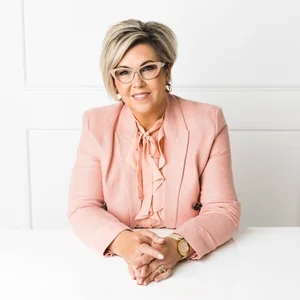
Episode 94 - Lois Creamer: Speaker Positioning & Breaking into the US
Podcast is also available on the versions below:


Get Notified Of Future Episodes on Apple Podcasts | Spotify | Youtube

Most speakers can't answer one simple question well: What do you do?
Lois Creamer has spent more than 20 years fixing that. As the author of Book More Business and a well-known figure in the US National Speakers Association community, she coaches speakers, consultants, and experts on how to turn a vague answer into a clear, sellable positioning statement, and from there into a sustainable business. She recently joined the Jane Anderson Show to unpack what's changing in the speaking industry for 2025, and what Australian speakers specifically need to know if they're considering the US market.
This episode is worth your time if you've ever struggled to explain what you do in a way that actually opens a sales conversation, wondered whether niching down will shrink your opportunities instead of growing them, or wanted a repeatable way to turn a single keynote into ongoing revenue.
Why Your Value Proposition Should Be an Outcome, Not a Topic
Creamer built much of her business around a simple observation: most professional speakers answer the "what do you do?" question badly. It's a theme she expands on in her book, Book More Business: Make MORE Money Speaking, and it's also the starting point Jane uses in her own presentation skills coaching for speakers.
"I speak on sales" or "I speak on leadership" tells a buyer almost nothing. It describes a topic, not a result. And buyers, according to Creamer, aren't purchasing topics. They're purchasing outcomes.
The Concept and Outcome Framework
Instead of naming a subject, Creamer recommends pairing a concept with an outcome. Compare these two statements:
"I'm a consultant in the speaking industry."
"I work with speakers, consultants, and experts who want to book more business, make more money, and monetise their message."
The second version does something the first doesn't: it opens the door to a real conversation about results. Creamer applies the same logic to corporate work. When she spoke on sales to corporate teams, she didn't lead with "I speak on sales." She said she worked with organisations that wanted to fast-forward their team's selling skills so they'd be better at what they do.
That framing does two things. It signals a clear outcome, and it creates room for a follow-up question rather than a dead end.
Why This Matters More Now
Creamer pointed to a broader shift happening across the industry: successful speakers today rarely rely on speaking fees alone. Many are also consultants, coaches, authors, and course creators. In her words, speakers aren't just speakers anymore. They're purveyors of intellectual property, and speaking is just one channel for delivering it.
That reframing matters for how you position yourself. If your value proposition only describes what you say on stage, it doesn't capture the full range of what you can actually deliver, or the outcomes a buyer is really paying for.
Should You Niche Down as a Speaker?
This is where a lot of speakers get nervous. The instinct, especially early in a career, is to stay broad. Cast a wide net, the thinking goes, and you'll catch more opportunities.
Creamer says the opposite is true.
Why Going Deep Beats Casting a Wide Net
When Creamer spoke on sales, she worked heavily in financial services. She'd be booked for one association event, and rather than diversifying afterward, she stayed in that lane. The result, she explained, was that buyers started seeing her as an industry insider rather than a generalist, and referrals followed naturally within that space.
She illustrated the risk of the opposite approach with a story about a newer speaker who told her he had a customer service program he was excited about. When she asked who it would help most, he said "anyone who wants a real culture of service would love my program." That answer sounds inclusive, but it gives a buyer nothing to act on. There's no specific audience to call, no specific problem being solved.
Creamer's advice: pick a lane. It doesn't mean you can never work outside it. It means you have somewhere clear to focus your marketing and build recognisable expertise, rather than trying to be relevant to everyone at once. This is the same principle Jane works through with clients inside her 1:1 coaching for consultants, where niche clarity is usually one of the first things addressed.
How Niching Works Differently in Australia vs the US
One nuance worth noting for Australian speakers: market size changes how niching plays out. In a larger market like the US, a speaker can specialise narrowly, say, leadership within hospitality, and still find enough volume of work to stay busy. In a smaller market like Australia, that same level of specialisation may not generate enough bookings on its own, which is why many Australian speakers end up delivering a broader range of programs to sustain their business, while still trying to elevate their core message enough to travel across markets.
The strategic question this raises isn't whether to niche, but how narrowly you can afford to niche given the size of the market you're primarily serving.
Should Australian Speakers Try to Break into the US Market?
This is one of the more practical, logistics-driven parts of the conversation, and it's directly relevant if you've been considering international bookings.
The Real Cost of International Speaking
Creamer was candid: the travel expense involved in flying an international speaker in "can just be a killer." If a company in the US needs someone to speak at a conference in a city like Las Vegas, there's rarely a strong incentive to fly someone in from Australia when a comparable expert is available flying in from Denver or LA instead. The value proposition has to be strong enough to justify the extra cost, and for Australian speakers, added factors like currency, flight costs, and cost-of-living differences compound that challenge further.
This lines up with broader industry sentiment: bodies like the National Speakers Association and its umbrella organisation, the Global Speakers Federation, have long pointed to specialisation and clear positioning, not geography, as the biggest lever available to speakers competing for international bookings.
How to Make the Travel Economics Work
Rather than treating international travel as a one-off booking, Creamer suggested looking for ways to spread the cost of the trip across multiple engagements. Two approaches she flagged:
Working with a larger corporation that has offices or plants in multiple cities, allowing several paid programs to be delivered across a single trip.
Working with an association that has multiple member businesses, creating the same kind of multi-engagement opportunity.
Either approach narrows the gap between the fixed cost of travel and the revenue generated from the trip. Without that kind of stacking, a single international booking has to carry the full weight of the travel expense on its own, which is a much harder case to make to a buyer.
The After-Care Framework: Turning One Keynote into Recurring Revenue
This is arguably the most actionable part of the conversation, and it's built around a real story from Creamer's own client work.
The Follow-Up Thank-You Call
Creamer routinely follows up with clients after an event with what she calls a "thank-you call." It's simple: check that they were happy with the event, and ask if there are any referrals available.
In one case, she called a sales organisation in LA she'd previously spoken for. There wasn't a new booking on the table, but during the call she asked a direct question: "Do you think you should be doing something for your salespeople?" After a pause, the answer was yes.
Case Study: The 30-60-90 Day Follow-Up
Three weeks later, Creamer was back in LA delivering that program. Afterward, four of the client's sales managers approached her separately, all wanting to talk further about applying what she'd covered. That response led her to ask the client directly whether it would make sense for her to work with the sales managers to apply the ideas from her talk, this time virtually.
He said yes, and asked what that would look like.
Creamer put together three tiered follow-up plans at three different price points and sent them over the next morning. Ten minutes later, the client had chosen one. That interaction became the basis for what she now builds into her client relationships as standard practice: a 30-60-90 day follow-up structure, offered proactively rather than left to chance.
She noted she originally tried spreading a similar offer across six months and found it didn't work as well. Thirty, sixty, and ninety days, she said, kept the structure "nice and tight."
Why After-Care Matters for Revenue
The bigger shift Creamer described is about how speakers position themselves after the event, not just before it. Rather than being seen as someone who shows up, delivers a keynote, and leaves, after-care positions a speaker as an ongoing resource to the organisation. That shift, she said, is "the highest calling" in the business, and it changes the nature of the relationship from a single transaction to a longer engagement.
It also affects fee negotiations. Creamer noted that clients are increasingly asking what can be added to a package before a fee gets discounted, which means a well-structured after-care offer can support pricing rather than undercut it.
Speaker Collateral That Actually Gets You Booked
Buyers want to see you before they buy you. That single idea shaped most of Creamer's advice on collateral.
Positioning Statements and One-Sheets
When Creamer starts working with a new client, the first thing they build together is a positioning statement, since it directly answers the "what do you do?" question that opens every buying conversation. From there, she works on a core offering sheet: a clear list of outcomes tied to what the speaker delivers. That same document often becomes the basis for a formal speaker script once topics are attached to outcomes.
Why Video Matters More Than Ever
Creamer was direct on this point: video plays a more important role now than at any previous point in her career. Buyers want to see a speaker's energy and delivery style before committing, and speakers today have more opportunities to be filmed than in the past.
Two considerations follow from that shift. First, speakers need to think about protecting their intellectual property when more of their content is being recorded. Second, they need to think about how to repurpose that footage to build ongoing visibility, rather than letting it sit unused after a single event.
Creamer also pointed to short-form video, referencing platforms like YouTube Shorts, as a format buyers respond well to, alongside a broader video presence that shows a speaker across different types of audiences and settings. If you want help turning this into a positioning statement and one-sheet of your own, this is exactly the kind of work covered in presentation skills coaching.
The 2025 Outlook for the Speaking Industry
Creamer's read on the US market heading into 2025 was cautiously positive. She described 2024 as a good year overall, tied to an improving economy, with industry insiders predicting 2025 could be a record year for US speakers.
At the same time, she flagged a shift in buyer behaviour: lead times have gotten shorter, which she attributed to buyers holding onto budgets longer and waiting until closer to the date to commit to a specific, current need. That trend puts more pressure on speakers to be ready to respond quickly once a buyer does decide to move forward, and reinforces the value of a clear, fast-to-communicate positioning statement.
Frequently Asked Questions
What is an outcome-based value proposition for speakers?
It's a way of describing your work around the result a client gets, rather than the topic you cover. Instead of "I speak on leadership," an outcome-based statement might describe who you work with and the specific change they experience as a result.
Why does niching down help rather than hurt a speaking business?
Specialising in a specific industry or audience makes it easier for buyers to remember and refer you, and it builds a reputation as an expert in that space rather than a generalist. According to Creamer, this approach has consistently generated more repeat and referral business than a broad, generalist positioning.
How can Australian speakers make US speaking engagements financially viable?
By stacking multiple paid engagements into a single trip, either through a corporation with offices in several cities or an association with multiple member businesses, rather than relying on a single booking to justify the cost of international travel.
What is "after-care" in the speaking industry?
After-care refers to structured follow-up offers made after a speaking engagement, such as coaching, virtual sessions, or consulting packages, designed to extend the relationship with a client beyond the initial event.
What speaker collateral do buyers look for before booking?
A clear positioning statement, a one-sheet outlining outcomes and offerings, and video that shows a speaker's energy and delivery style across different audiences and settings.
Conclusion
The through-line in Creamer's advice is that a speaking business rarely grows just by getting better on stage. It grows by getting clearer about who you help and what changes for them, staying specific enough to be memorable, and building a deliberate plan for what happens after the applause stops.
For Australian speakers considering the US market, the same principle applies at a larger scale: the opportunity is real, but it works best when the economics are planned for rather than hoped for.
About Lois Creamer: Lois Creamer is the founder of BookMoreBusiness.com and author of Book More Business: Make MORE Money Speaking. She has been featured in Forbes, Bloomberg Business, Speaker Magazine, Inc., and The Wall Street Journal, and was named an honorary fellow by the Professional Speaking Association UK & Ireland in 2021. She is also affiliated with the National Speakers Association in the United States
Work With Jane Anderson
If Lois Creamer's story resonated with you, here are some ways to take the next step:
Women With Influence - Join a community of B2B women consultants, coaches, and advisors building world-class practices
1:1 Coaching - Work directly with Jane on your personal brand and business growth strategy
Influence Lab - Create a year's worth of thought leadership content and turn your expertise into strategic assets for your consulting practice.
Key Takeaways from Today’s Episode:
-
As we step into 2025, there’s a sense of optimism in the market, and the speaking industry is poised for an interesting year ahead. Recently, I hosted a quarterly planning day with my Women With Influence community, where we explored the shifts and trends shaping the year ahead.
Reflecting on 2024, we saw that speakers and experts who maintained strong business habits and routines managed to hold steady, even if they didn’t experience extraordinary growth. Some industries and professionals bore the brunt of economic shifts, yet those who diversified their revenue streams and explored alternative income sources continued to thrive.
-
In 2025, the demand for key topics such as AI, productivity, leadership, and resilience remains strong. However, a significant change is emerging—there is increasing pressure on professionals to demonstrate return on investment (ROI) for their programs. This trend is evident in reports like the Global CEO Survey and KPMG’s Global CEO Outlook, which highlight the need for measurable impact.
With this in mind, I’m encouraging my community to conduct in-depth audits of their service offerings to sharpen their ROI narratives. If you're a B2B professional or thought leader, this is the time to ensure that you can clearly articulate the value you bring to the table.
Jane discusses the need for diversification of income streams beyond speaking engagements, highlighting a recent event in Melbourne with Dr. Louise Mahler as an example of innovative practices. She notes that tight budgets in 2024 have required businesses to adopt creative and accessible approaches to working with clients, such as hosting public events.
Looking ahead to 2025, Jane identifies a strong focus on return on investment (ROI) as a key trend. Business and CEO confidence are high, but spending decisions are expected to be more deliberate and results-oriented. Jane urges her community to refine their metrics and clearly demonstrate ROI in their materials to stay competitive in the upcoming year. -
For those who have followed my podcast, you know that we typically dive into the behind-the-scenes world of B2B consulting, thought leadership, and advisory services. Today, however, we’re adding a unique twist to that conversation.
I am honored to welcome Lois Creamer, a true legend in the National Speakers Association (NSA) community in the United States. Lois has been a guiding force in the speaking industry for over 20 years, helping both seasoned professionals and rising stars maximize their bookings, strengthen their positioning, and fully monetize their messages.
Lois’s journey began at United States Steel Corporation, where she honed her sales and marketing expertise. She later became the Marketing Director for a successful speaker and has since dedicated her career to mentoring speakers through NSA conferences, workshops, and global events. In 2021, she was named an Honorary Fellow by the Professional Speakers Association (PSA) in England and Ireland—a testament to her incredible contributions to the industry.
-
One of the biggest aspirations among speakers in my community is expanding their reach beyond Australia and stepping into the global speaking market—particularly in the United States. However, breaking into the US market requires strategic planning, considering factors such as travel expenses, cultural differences, and the competitive landscape.
Lois provides expert insights on this topic, highlighting key strategies for speakers looking to gain traction in the US.
“People are paying a fee for your intellectual property, but the travel costs can be a significant barrier. One approach that works well is partnering with larger corporations or associations that have multiple offices. By offering a series of programs within one visit, speakers can justify the travel costs and maximize their impact.” – Lois Creamer
She emphasizes the importance of working with organizations that can schedule multiple engagements, helping speakers spread their costs across several bookings. This approach is especially useful when working with multinational corporations or industry associations with multiple branches.
-
A major takeaway from my conversation with Lois is the importance of crafting a compelling value proposition. Many speakers make the mistake of simply stating their topic areas—“I speak on sales,” or “I speak on leadership.” However, according to Lois, this is a missed opportunity.
Instead, speakers should focus on articulating the transformation and outcome they provide. For example, instead of saying “I speak on sales,” a more effective positioning statement would be:
“I work with speakers, consultants, and experts who want to book more business, make more money, and monetize their message.”
This approach immediately conveys the benefits to potential clients and opens the door for deeper conversations about their needs and challenges. As Lois points out, clients buy outcomes, not just topics—and speakers must align their messaging accordingly.
-
Another crucial factor in positioning as a speaker is specialization. Lois emphasizes that buyers in the US market are looking for specific expertise applied to a specific market. Generalists struggle to gain traction because organizations prefer experts who deeply understand their industry and its challenges.
“If you have a niche expertise and can apply it effectively in a market, you have the keys to the kingdom.” – Lois Creamer
Many speakers initially believe that casting a wider net will generate more opportunities. However, the opposite is often true. Targeting a narrower, well-defined audience allows speakers to build credibility, become more referable, and command higher fees.
Lois shares her own experience of speaking within the financial services industry, where she built long-term relationships rather than chasing one-off engagements in unrelated industries. This targeted approach helped her establish a sustainable business model.
This section sets the stage for deeper exploration of retail transformation and the strategic insights Leonie will share throughout the episode.
-
Lois emphasizes the importance of aftercare—the additional services that speakers can offer beyond their keynote presentations. This can include coaching, follow-up sessions, customized articles, and direct consultation.
“Before discounting a fee, speakers should consider what value-added services they can provide to support their pricing.” – Lois Creamer
By thinking strategically about long-term engagement, speakers can transform one-time bookings into ongoing client relationships. Organizations evolve rapidly, and their needs shift—meaning speakers should be prepared to adapt their offerings to meet emerging demands.
-
In addition to strong positioning and follow-up services, speakers must ensure their collateral materials—such as speaker kits, show reels, and one-pagers—are polished and up to date. Lois advises speakers to go back to basics:
Develop a clear positioning statement that articulates what you do and the outcomes you deliver.
Create a one-sheet or core offering document that outlines the key benefits of your presentations.
Invest in high-quality video content, as buyers now expect to see a speaker in action before making a decision.
With more events being recorded than ever before, speakers must also consider how to protect their intellectual property while leveraging video for continued engagement.
-
As we move forward into 2025, the speaking industry continues to evolve. Those who succeed will be the ones who niche down, craft compelling value propositions, and build long-term client relationships.
By implementing these insights from Lois Creamer, speakers can differentiate themselves, command higher fees, and expand their global presence in an increasingly competitive marketplace.


Most of the guests interviewed are current or alumni members of the Women With Influence community. Click here to find out more