Podcast is also available on the versions below:


Get Notified Of Future Episodes on Apple Podcasts | Spotify | Youtube
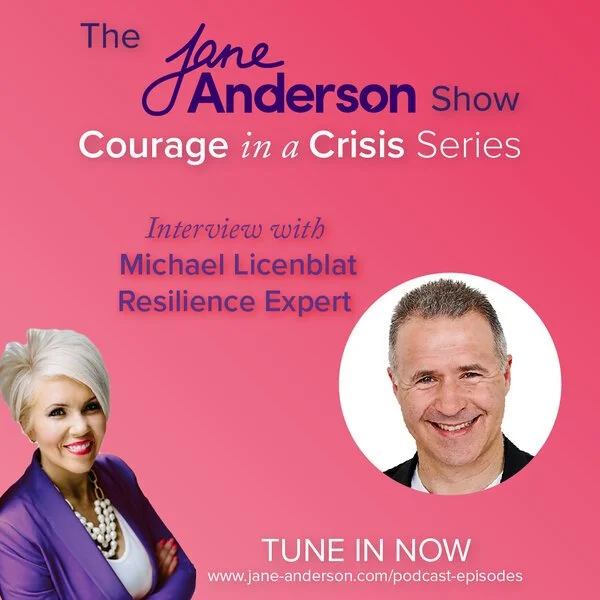
How do you keep moving forward when the ground under your practice keeps shifting?
That was the heart of my conversation with resilience expert Michael Licenblat on Episode 49 of The Jane Anderson Show, part of the Courage in a Crisis series I put together during COVID-19. Michael helps people sell more in tough markets and achieve more in high-pressure environments by bouncing back from pressure and setbacks. He is the author of Pressure Proof, and has worked with organisations including Coles, Myer, Maurice Blackburn Lawyers, Toyota, Smartline, St. George and MLC.
I first bought his book in 2015, when I was thinking, "Growing your business is really tough." During the pandemic I went back to my bookshelf, pulled out the books of experts in our community, and asked them to share their thoughts again. The context had changed, but I felt the thinking was just as relevant.
If you are a consultant, adviser or leader trying to build resilience in business, here is what Michael taught me. You can also listen to the full episode on Apple Podcasts.
Why Pressure Feels Different Right Now
I asked Michael whether where you are in your journey changes how you cope with pressure. His answer was that experience helps. He used martial arts to explain: you can hit the pads and the bag, but they do not hit back. Once you have been hit in a real fight, you know what it is like, and it does not throw your game off. I suggested the GFC as an example of an earlier tough period, and Michael agreed. People who have been through ebbs and flows before are familiar with tough times, so those times are less likely to freak them out. Someone newer to their practice, who is still finding their feet when the rug is pulled out, can find it overwhelming.
But Michael's bigger point was that, across the board, the nature of pressure has changed. Before, the problems he worked on were things like too much to do, not enough time and being under-resourced. They were activity and capacity issues. Now, with COVID-19, the core challenge is uncertainty. He described it as balancing on one leg: the predictability you had has stopped, slowed or changed shape.
There is a second effect. Without the treadmill of life pushing you along, you have to create your own momentum. Many people have lost the routines that used to structure their day, and for many their income has dropped dramatically. Michael said that when you lose control of your environment, you can feel helpless or powerless, and that makes you more vulnerable to negativity. Questions such as "When will this end?" create anxiety, and the more of them you ask, the less focused and motivated you are likely to be. He was careful to say he was speaking about how people in business respond to being out of control, not as a therapist.
Rituals and Routines: The Train Tracks That Keep You on Course
Michael's first practical answer was to put rituals and routines in place. Rituals, he explained, are conscious habits. Right now we all see them in action, such as washing your hands regularly. When we were in control of our time, we had rituals that carried us through, and many of them have stopped or changed.
His image has stayed with me: rituals are like train tracks that take the train to its destination. The train has the power, but the tracks keep it on course. Without them, we feel off-kilter.
The ritual is the thing you do: the morning walk, the way you wash your hands, the breathing space you give yourself before making or taking a call. The routine is what anchors it, whether that is the time of day, the structure you put in place or the way you organise your life. When I recapped, I put it this way: the ritual is the task, and the routine is the cadence.
Michael's purpose for them is practical. They keep you active in your business, help you stay calm and motivated, and stop your angst from climbing too high, giving you a sense of control, "whether it be legitimately or not". And because the old patterns have gone, he said we need to create them deliberately.
I shared that the early weeks felt disorienting to me. It was like being in a movie, with a sense of "this can't be happening". That is the denial stage you see in Kübler-Ross's model of change. Rebuilding a little structure was part of how I started to find my footing.
Robust or Pressure Proof? The Difference Between Coping and Thriving
I asked Michael whether resilient people are simply born that way. His answer was both. Some people are naturally better at handling setbacks, and he pointed to our parents' and grandparents' generations and what they had to deal with just to survive. But it is also a skill that can be learned.
He then drew a distinction I found valuable. Being robust means you can take the hits. You cope, but you are not necessarily improving or adapting, and you may be coping at a cost to your health, wellbeing or energy. You are treading water. At some stage, Michael said, that is better than not doing it. But being pressure proof is different. He wants pressure to be our friend, not our foe, "a handshake rather than an arm wrestle". The aim is to bring pressure in and use it to bring out the best version of you, so that under pressure you are thinking clearly, staying calm and recovering quickly.
To do that, he said, you cannot be thinking "cope". You have to be thinking "thrive", with a reaction to pressure that is more conscious and more strategic. And thriving does not necessarily mean making a lot of income. Michael explained that it means handling this period in a way that positions you in the best possible place when things improve, and making the most of your opportunities now rather than throwing your hands in the air.
Create a Destination Worth Chasing
When I asked what people can do to regain control, Michael's answer was to create a destination worth chasing: something that gets you out of bed in the morning and lights you up.
He contrasted two stances. Many of us are waiting for the government to ease restrictions so life can go back to normal. If that is all we are doing, he said, we are passengers rather than drivers, waiting for someone else to fix it, and our anxiety is higher. The alternative is to say, "I would like that to happen, but it is out of my control, so in the meantime I will start creating inroads and putting plans down." He cited an old saying: pray for water, but start walking.
Michael was also honest that what you create today may need to change tomorrow. He described the landscape as walking on sand that shifts every couple of minutes. People who are attached to certainty, which is most of us, will struggle in uncertain times. If your only goal is to get through, he said, you do not have a destination worth chasing. You are just existing.
He gave a business example. Imagine cash flow has dropped by half. Rather than asking helpless questions like "How on earth am I going to get through?", ask instead: if anything were possible, what could another revenue stream look like right now, and how could I test it quickly? The way to do that, he said, is to stay light.
Your Relationship With Failure Sets the Strength of Your Resilience
Staying light connects to what Michael called one of the principles of resilience: your relationship with failure. The mindset shift he wants is a playful, kind relationship with it. Do not get angry when something goes wrong, put yourself down or attach meaning to what failure says about you. Try a bunch of things, accept that some will not work, and make that all it means. It does not mean you cannot do this.
He said this takes discipline of thinking, and it matters because of the words you say to yourself privately, the ones you take to heart rather than the ones you express out loud. Those, in his view, determine whether you bounce back fast or plateau, hope and cope. I added that this is a moment to be mindful of our inner critic. Michael's contrast was clear: if you only want to survive, you can close your eyes and hope. If you want to thrive, you ask, "Where are my opportunities?"
Gratitude: A Small Practice With Outsized Effects
I asked Michael what had stood out to him in this period compared with other times. His answer was small wins, celebrating little things, and gratitude. He noted that it is not a new concept, but it matters more when you feel out of control, uncertain and surrounded by negativity.
His simple example: sit in your space and notice that you have five fingers and they work, then take a breath in and a breath out. That puts you in a different mindset, he said, one that is centred rather than panicked or angry. Being centred makes you less emotionally reactive, and I took from that his point that you can think clearly and solve problems faster. For business owners, that shapes the decisions we make, from the initiatives we put forward to whether we sit back and wait for JobKeeper to kick in.
Gratitude has been part of my own response. My wedding had been planned for the weekend before we recorded, and it was put back a year. People said I must be devastated. I was grateful that we were well and that I was not seeing sick family in the hospital. I have written down three things I am grateful for every day for years. I find that it moves me into abundance and creativity, and it is hard to think creatively from scarcity and fear. I also said that, as experts and leaders, we need to be careful, and that requires feeling psychologically safe. Michael agreed.
As I mentioned during our chat, the centredness chapter in Michael's book is one of its longest. I said it was nearly a third of the book, and Michael confirmed it is among the biggest chapters.
Stay Light and Think Beyond Survival
Michael told me he makes good, sharp decisions when he is light and excited about a project. When he is nervous and coming from a position of lack, his thinking turns to self-preservation.
He sees this in larger organisations too, in how they plan. Is the next month or two about bunkering down, cutting costs and getting through? That is important, he said, and it is the robust response. Or are they also asking what their brand will look like in a couple of months and how they want to be positioned when this starts to wear off? The pressure-proof approach is both: protect yourself, and also carry yourself to where you want to go. Lightness lets you think beyond survival.
His last idea was to treat the situation as a challenge, like a game. In sport, you play like your life depends on it, then shake hands at the end and say, "Good game, we will do it again next week." He mentioned the board game Settlers of Catan, where you constantly change your approach depending on what the next player does. Then he corrected himself: "gamify" is the wrong word. The word is light.
Where to Find Michael Licenblat's Work
Michael's website is bouncebackfast.com, which has everything on one landing page. He said it includes white papers he has written, the online Pressure Proof program (a series of video tutorials that anchors the ideas in his book) and a series of webinars. The webinars also have their own site at onlineresilienceseminars.com, but he said you can reach everything from bouncebackfast.com. When I asked about getting his book, he suggested going straight to his website.
Frequently Asked Questions
What does "pressure proof" mean?
In Michael's definition, being pressure proof goes beyond being robust. A robust person can take the hits but may only be coping, perhaps at a cost to their health, wellbeing or energy. A pressure-proof person uses pressure, like a handshake rather than an arm wrestle, to think clearly, stay calm and recover quickly.
Is resilience something you are born with or can learn?
Michael says both. Some people are naturally better at handling setbacks and pressure, but it is also a skill that can be learned.
What is the difference between a ritual and a routine?
According to Michael, a ritual is a conscious habit, such as a morning walk or a pause before a call. A routine anchors the ritual in place through timing, structure or how you organise your life.
How can business owners regain a sense of control during uncertainty?
Michael recommends deliberately creating rituals and routines, and creating a destination worth chasing so you are driving rather than waiting as a passenger. He also advises accepting that your plans may need to change.
Why does self-talk matter for resilience?
Michael says the words you say privately to yourself, and take to heart, shape your relationship with failure. That relationship determines whether you bounce back quickly or plateau.
Can gratitude help with business decisions?
Michael believes it can. In his view, sitting in gratitude helps you feel centred and less emotionally reactive, so you can think clearly and solve problems faster.
About Michael Licenblat
Michael Licenblat is a resilience expert who helps people sell more in tough markets and achieve more in high-pressure environments. He is the author of Pressure Proof and has worked with organisations including Coles, Myer, Maurice Blackburn Lawyers, Toyota, Smartline, St. George and MLC. He told me his work applies principles of resilience to business, leadership and performance, drawing on his study of psychology and other natural therapies. Visit bouncebackfast.com to learn more.
Conclusion
What I took from Michael is that resilience in business is less about toughness and more about deliberate choices. When uncertainty strips away the structure of your day, build some back with rituals and routines. When the future looks unclear, pick a destination worth chasing and start walking. Watch what you say to yourself when something fails, and use gratitude to stay centred enough to make clear decisions.
And as Michael reminded me, the lighter you hold it, the more likely you are to see opportunity rather than only survival.
Work With Jane Anderson
If this conversation resonated with you, here are some ways to take the next step:
Women With Influence: Join a community of B2B women consultants, coaches and advisors building world-class practices.
Grow With Influence: Explore my coaching for B2B practices.
1:1 Coaching: Work directly with me on your personal brand and business growth strategy.
Toolkit: Use my scorecards and diagnostics to see where to focus next.
✨ Tune in to hear Michael Licenblat on resilience, rituals and why the way you speak to yourself shapes how quickly you bounce back.
Key Takeaways from Today’s Episode:
-
Having been through tough periods before makes hard times less frightening, but Michael sees the core challenge now as uncertainty rather than workload.
-
Rituals are the conscious habits you do, and routines anchor them in time. Michael says they keep you active, calm and motivated when old patterns have disappeared.
-
Being robust means absorbing the hits. Being pressure proof means using pressure to think clearly, recover quickly and bring out your best.
-
Instead of waiting for someone else to fix things, start putting plans in place that excite you, knowing they may need to change as the landscape shifts.
-
Test things quickly, expect some to fail, and refuse to make failure mean you cannot do this. Michael says your private self-talk shapes how fast you bounce back.
-
Small wins and daily gratitude move you out of panic so you can make clearer decisions.
-
Protect yourself now, and keep asking where you want your business and brand to be when conditions improve.