Podcast is also available on the versions below:

Get Notified Of Future Episodes on Apple Podcasts | Spotify
Could the skills you already have be the foundation of a career supporting experts and thought leaders?
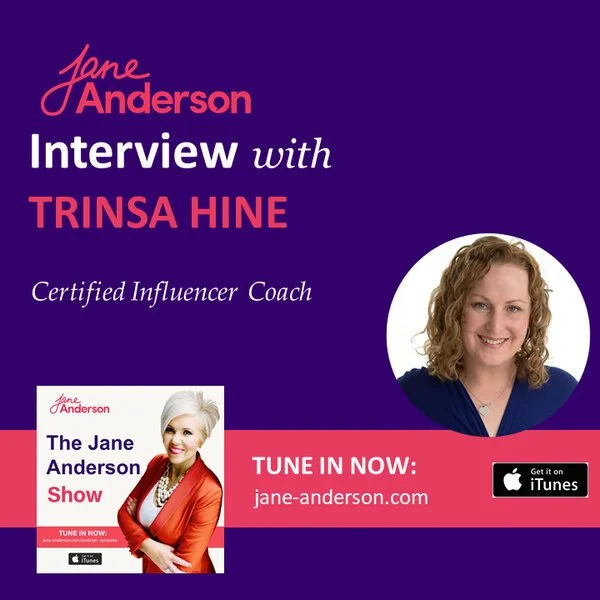
I hear this question often from virtual assistants, business managers, marketers and executive assistants who are curious about becoming certified in the Expert to Influencer methodology. Many of them wonder whether they would be good enough at it, or whether they need a marketing degree first. Sometimes it helps more to hear from someone who has done it than from the person who built the program. That is why I invited Trinsa Hine onto The Jane Anderson Show.
Trinsa was one of the first two practitioners to be certified, alongside Sally Curtis. Her background is not in marketing. She was a PA to the CEO of DHL Global Forwarding, and before that she raised a young family, supported school fundraising and events in the UAE and worked with the Australian Business Council in Dubai. Today she is a Certified Influencer Marketing Coach who supports experts across very different industries.
What I love about Trinsa's story is how honest she is about the nerves, the learning curve and the confidence that came with it. If you are weighing up this path, her experience offers a realistic picture of what certification can look like in practice.
From Stay-at-Home Mum to the CEO's Office
Trinsa had her children young, and she began as a stay-at-home mum doing waxing and cake decorating. When the family moved to the UAE, she threw herself into fundraising for her children's school and supporting large school events, including international days. That led her to work with the Australian Business Council in Dubai, where she supported its G'day Dubai program when Qantas came over.
When she got back, she applied for and won the job of PA to the CEO of DHL Global Forwarding. She describes it as full-on corporate work: calendars, appointments, conferences and everything else that comes with that kind of role.
As I told Trinsa, none of this is wasted. Running calendars and travel for a high-performing person, organising events and fitting work around family life are exactly the skills an expert needs from the people who support them.
How a Family Practice Led to Expert to Influencer Certification
In 2017, Trinsa's father, Dr Richard Hodge, asked her to help support his practice. He wanted to be more visible on social media, and together they signed up for my Social Media for Experts course. Trinsa got a taste for the work and enjoyed it, so when I offered the Expert to Influencer master class and then certification, continuing down that path felt like a natural progression.
She did not leap straight out of corporate life. She started doing some of this work part-time while still at DHL, then moved into working full-time in her own practice. She told me she is glad she did the course.
The Fear of Promoting Someone Without Looking Cheesy
Like many people considering this path, Trinsa had real doubts. She admits she had no idea how to promote someone properly so that it did not look cheesy. Her father runs a very professional practice, and she did not want the work to look like something done casually from home. Using social media to promote an expert is a very different game from using it personally, and she wanted the finished product to be professional and polished.
When she first helped her father, she says she felt like she was floundering a little. She understood the corporate side, including appointments and calendars, but when she heard the words "lead generation" and "marketing", her reaction was a firm "Oh my God, no."
That is why one thing she says about the methodology matters so much. She likes that it works from a place of adding value. There is a marketing aspect and there are leads to find, but it comes from service rather than from the "please, please, please come and talk to me" approach.
I made a related point during our conversation. Putting content out there is not enough on its own. You need a system and a process, so that by sharing value you earn the right to invite people into your funnel. When someone tells me they have put out all this content and nobody is buying, I ask a simple question: are you actually asking?
Supporting Experts Across Different Industries
One of the things Trinsa loves most about her role is the variety. In a single week she might be thinking about how to reach school principals, then shifting to a CEO interested in performance enhancement for high-performing CEOs, then working with a healthcare expert. Each industry has its own language, its own tricks and tweaks, and its own style of image and content.
That requires a particular skill, and I think Trinsa does it well. You are capturing the voice of the expert while also understanding the mindset of the people they want to reach, including their problems and what matters to them.
Trinsa adapts to what each expert needs rather than choosing the services she prefers. Her work has included webcast reach-outs and LinkedIn support for different experts. For a healthcare client who was building his practice from scratch, she has been putting white papers, procedures and filing in place so the practice behind him can support his growth when it reaches what she called the black belt level.
Using a Diagnostic to Match Support to Readiness
I built the methodology partly because of a pattern I kept seeing. Experts often reach somewhere around the 200 to 300 thousand mark in turnover and become very busy. They know they need help, whether from a local or offshore virtual assistant, but they do not yet understand their own practice and strategy well enough to know what to ask for. Time gets lost working out what to hand over.
This is where the diagnostics help. Trinsa explained that the report shows where an expert's gaps are and also what they are ready to tackle. A gap might be in one area, but the expert may not be ready to go there yet. In that case, she says, you come back and say, "Let's get comfortable here so we can move here." It takes some time, but it means you are working at the pace the expert can actually use.
What a Failed Workshop Taught One Expert About Confidence
One of the stories Trinsa shared shows how this support works in practice. A client wanted to run a public workshop for the first time and was terrified that nobody would turn up. He had picked a date and a price, but he had not thought through the practical details. Trinsa asked about catering, materials and how many people he expected. He realised there was a lot more to it than he had thought.
They set a date, and unfortunately it was not a good one for his audience. Nobody turned up. Because nothing had been booked, they were able to cancel at no cost. What mattered was how the client responded. He felt more prepared for the next one, and he had, as Trinsa put it, "ripped that Band-Aid off." No one turned up, and he had survived.
It turned out the workshop was the right thing to run. Several people told him they were interested but could not make the date. He was heading into 2020 knowing how he would approach the next one, with more confidence that he was running the right workshop. Trinsa called the whole experience a steaming failure that built that confidence.
I think this is a powerful point. Even when the numbers do not come, you gain feedback you can use. If the problem is only the date, that is an easy fix.
A Sounding Board That Keeps Experts in Their Genius
Trinsa tells me she is often a sounding board. Experts want time to run ideas past her and ask questions such as "Does it sound like me?", "Am I being too salesy?" and "Am I being salesy enough?" They want to know whether something fits their practice and their program. Some of her clients belong to communities such as Thought Leaders, and others do not, and she finds it valuable that the methodology works across both.
My mantra since I built the program has been to keep experts in their genius. Having a practitioner to turn to means an expert does not have to carry all of the blockers and self-doubt, which consume headspace, time, energy and money. The aim is not to turn experts into specialists in running events and marketing. Let them stay experts in leadership, or whatever they are expert in, while you help them make decisions.
We agreed that practitioners also help experts refocus. It is easy to get caught up in delivery or chase the next shiny object, so a simple question such as "Where are you on your white paper?" can bring an expert back to what they need to finish first.
Do You Need a Marketing Background to Become a Practitioner?
No, and Trinsa's story is proof. She told me that if she had believed she needed a marketing background, she is not sure she would have tackled certification. She does not identify as someone with a marketing background and would have said she lacked the qualifications.
Today she feels confident helping people with a LinkedIn strategy, a reach-out or getting a webcast off the ground. In her words, the Expert to Influencer program gave her the marketing confidence she lacked beforehand.
Her experience also changed how she sees her working life. She never saw herself as having a career. She felt very fortunate not to need to contribute a lot to the family income, so she assumed she would just do a bit of a job. Now she has a career by choice. Certification gave her the confidence to know what she is talking about, identify where an expert needs help and put processes in place. As she puts it, "I'm a helper."
For me, marketing is simply helping people. You find the right people, work out their problems and put something together that helps them. A practitioner is the connector in that process. For experts building a personal brand, there is a lot of fear and vulnerability involved, and we have the Australian tall poppy culture to contend with as well. Having someone to say "Could you look at this with me?" is valuable.
How Trinsa Structures Her Practice
Trinsa sells her time in blocks. Some clients have a set pattern, such as one task on Mondays and another on Tuesdays. Others fit into her week more loosely, asking whether she has availability that afternoon. One client often jokes that he is one of the horses in her stable.
I like this because there is no single way to build a practice with the methodology. You might work with one client, become a business manager inside an expert's business, or run your own practice. The practice can evolve however you want it to. Trinsa also pointed to another practitioner in the community who has helped an expert who was something of a hidden secret become far more visible.
Advice for Anyone Considering Certification
When I asked Trinsa what she would say to someone thinking about doing this, her first piece of advice was not to get too overwhelmed. She stayed in contact with the four women she did her initial master class with, and she says all of them walked away thinking about the portfolio they needed to pull together and wondering how they would do it. Her message is to take a breath. There is a supportive Facebook group and people are very helpful. When she did pull her portfolio together, it came together more quickly and easily than she expected. She is now supporting another practitioner who felt the same way at the start.
I would add two points. First, you are probably applying the methodology for clients anyway, so those pieces of work can form your portfolio rather than being extra work. Second, if an expert is not doing something, such as podcasting, someone else in the practitioner community may need it, and you can offer to do it for your portfolio. You can also mock it up. All I am looking for is whether you understand it. Trinsa confirmed how generous the community is: put your hand up and something comes back, tenfold.
If she were starting again, she says she would realise sooner that she already had more of her portfolio available than she thought. She would also return for the second master class, which she attended and found very valuable. The first time she was a bit overwhelmed, and the second time, with some practice behind her, she could take in more detail. I invite alumni practitioners back to my programs for a nominal fee that covers room hire and food. It helps people retain their skills, and because algorithms, tech and CRMs change, the questions evolve even though the methodology stays the same.
Frequently Asked Questions
Do you need a marketing background to become an Expert to Influencer practitioner?
No. Trinsa Hine came from an administrative background as a PA to a CEO and says she is not sure she would have tackled certification if she had thought she needed a marketing background. She says the program gave her the marketing confidence she lacked beforehand.
What does a certified Expert to Influencer practitioner do?
It depends on what each expert needs. Trinsa's work has included webcast reach-outs, LinkedIn support, and putting white papers, procedures and filing in place for a healthcare client building his practice. She also acts as a sounding board for experts.
Can you work with just one expert, or do you need your own practice?
You can shape it however you like. You could work with a single client, become a business manager for an expert, or build your own practice with several clients. The methodology can be adapted to how you want to work.
How does Trinsa Hine structure her client work?
She sells herself in blocks of time. Some clients have a set pattern of days, while others fit around her availability during the week.
How do you build the portfolio for certification?
Trinsa says not to get overwhelmed, because it came together more quickly than she expected. Work you are already doing for clients can form part of it, and if an expert is not using a particular skill, you can offer to do it for someone in the community or mock it up. What I look for is whether you understand it.
Can alumni return to the master classes?
Yes. I invite alumni practitioners back to my programs for a nominal fee that covers room hire and food. Trinsa found the second time she attended valuable because she had some practice behind her.
About Trinsa Hine
Trinsa Hine is a Certified Influencer Marketing Coach and one of the first practitioners certified in the Expert to Influencer methodology. She supports experts and thought leaders, including those who work with school leaders, high-performing CEOs and healthcare. LinkedIn is the best way to connect with her.
Conclusion
Trinsa's story shows that a career supporting experts can grow from skills you may already use every day: organising events, managing calendars, supporting busy people and helping them feel confident. She did not start with a marketing background or a plan for a career. She started by helping her father, took a course, and then built a practice that suits her.
If you are thinking about certification, her advice is simple. Take a breath, use the community, build your portfolio from the work you are already doing and give yourself a chance to learn. Support experts from a place of service, and you may find, as Trinsa did, that confidence follows.
Work With Jane Anderson
If Trinsa's story resonated with you, here are some ways to take the next step:
Women With Influence: Join a community of B2B women consultants, coaches and advisors building world-class practices.
Grow With Influence: Explore my coaching for B2B practices.
1:1 Coaching: Work directly with me on your personal brand and business growth strategy.
✨ Tune in to hear Trinsa Hine on moving from corporate administration to a practice supporting experts, and why confidence in marketing starts with serving others.
Key Takeaways from Today’s Episode:
-
Event organising, calendars, travel and supporting a high performer are all valuable to experts. Trinsa built on exactly these skills.
-
Trinsa says she would not have tackled certification if she believed she needed one, and the program gave her marketing confidence she lacked beforehand.
-
Trinsa likes that the methodology adds value first, so the work does not feel cheesy or hustly, while still looking for leads.
-
The report shows both gaps and readiness, so you can build comfort in one area before moving to another.
-
Trinsa's client ran a workshop that no one attended, learned from the date problem and went on feeling prepared.
-
A practitioner can act as a sounding board and bring experts back to priorities such as a white paper, rather than turning them into marketers.
-
Trinsa found hers came together quickly, with community support, client work and a second master class all helping.