Podcast is also available on the versions below:

Get Notified Of Future Episodes on Apple Podcasts | Spotify
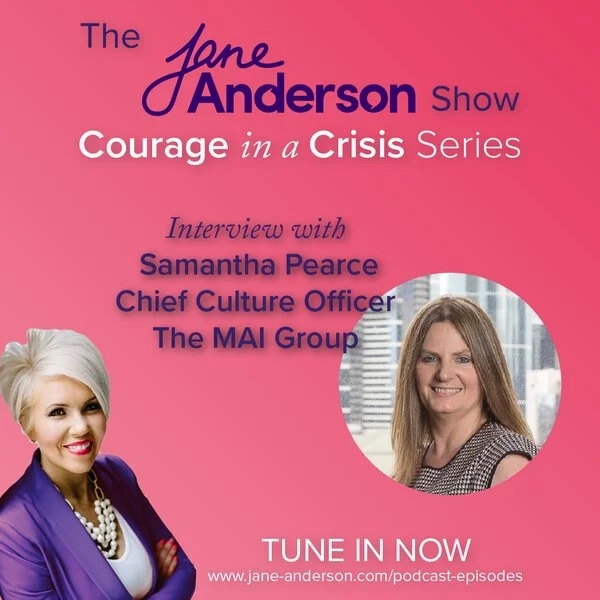
What happens to a strong team culture when everyone suddenly has to work from home, and nobody knows how long the crisis will last?
In this episode of The Jane Anderson Show, recorded early in the COVID-19 pandemic, I spoke with Samantha Pearce, Chief Culture Officer at the MAI Group, about keeping a remote team culture strong in a crisis. I have worked with Sam for some time, and when I talk to organisations about living their values, she and the team at the MAI Group are often the benchmark I have in mind.
We spoke about a month into the crisis, so this is not a story with a tidy ending. It is a real-time account of what one organisation did in its first weeks of remote work: moving early, putting people ahead of productivity, writing a daily update, and carrying its office rituals across to Zoom. If you lead a team, run a community or simply want to know where to start, there is plenty here to borrow.
From Practice Manager to Custodian of Culture
Sam joined ICD Property in 2013 as the admin and HR manager for a team of about 12. Before that she spent around 15 years as a practice manager in the legal industry, and she thought she had probably peaked in her career. Then an advertisement caught her eye. She saw a chance to move into HR, and from the first day the feedback was that she was born for the role.
The group has grown a long way since then. Sam told me it now spans three or four companies and 40 staff members, with new businesses spinning off all the time. Those include MAI Capital, which has evolved into an investment and funds management company, and the MAI Foundation, a venture philanthropic foundation committed to supporting young people through social enterprise. There is also a family office, which Sam moved into about 12 months before our conversation. When she talks about family, she means more than relatives. It includes the key leaders, directors and stakeholders across the companies.
Her role is now purely HR, and a big part of it is succession. Sam is building a plan so that managing director and chairman Michael Mai can follow his passions while younger executives step up to lead the companies. As she described it, those leaders have to create a new identity of their own, which is both a challenge and a rare opportunity.
One detail stood out to me. The group has one HR professional for every seven team members. Sam confirmed it, and added: "We don't just say what we do. We actually do."
People and innovation are the two values I always associate with the MAI Group. Sam agreed, noting there are others too.
Why the MAI Group Moved to Remote Work So Early
Sam can name the day it began: 10 March. She was in a morning meeting when Michael came in and asked her to join a meeting straight away about the coronavirus and what the group would do for the company and its staff. By five o'clock that evening, Michael was addressing the whole group. They were going remote early, he said, to give it a try. It might even be the way of the future, because it was about the new world of work and not only about the crisis.
How they communicated mattered as much as the decision. After the morning meeting, Sam and Michael went their separate ways and spoke with the directors. The directors then took their own staff aside, calmly, and explained what it meant for them and how the group thought it would approach the change. By the five o'clock meeting everyone had been semi-briefed, but Sam felt people still needed to hear it from the top. It was important to hear it at all levels and to come together as one group. The staff took it really well, and Sam puts that down to the way it was handled.
When I recapped it for her, the pattern was clear. They called the team together early, stayed calm and proactive, and made the decision quickly, building on a culture that was already strong.
Sam also pointed out that in those first days the focus was remote working itself, and not the virus. There were not many cases yet, so the group had three or four days to go home and experiment before the lockdowns. They already had groundwork in place: OneDrive had been set up, they had used a VPN previously, and for the last 18 months staff had worked from home about one day a week if they chose to, which most had.
Working From Home, Not Just Working Remotely
Sam was honest that she had done less home working than most. At first she set herself up at the kitchen table, packing everything away at night to get dinner ready. After three or four days it became daunting, and she realised something. "We're not working remotely," she said. "We're actually working from home." This was the business now.
So she got a monitor, found a desk around the house and set up in the kitchen, still in the hub of the activity but with lovely bright light and everything she needed. Once she took ownership of her space, she believes her efficiency rose by maybe another 20 or 30 per cent.
Sam was just as candid about the early weeks. The group, she said, did not really see great efficiency for the first week or two. Every day brought something new, and just when she felt she had things under control, the next morning's news changed the plan. Each person had to decide what mattered most to complete that day, and sometimes that was family and sometimes it was work.
I raised the point that self-care and self-management become critical here. If you are a leader, you are no longer in the room to notice that someone is not themselves that day.
Putting People First: Trust, Psychological Safety and Realistic Expectations
Some leaders listening will be asking how you know people are still doing their job, or whether you can trust them at all. I put that question to Sam, and she said it simply has not come up with her team.
The group's goal in the crisis is to look after its staff and their families, including their safety and wellbeing. "We have nothing if we don't put our people first," Sam said. If you cannot build people up and give them psychological safety, she asked, how can you expect them to be effective and productive? Her answer is to find out what your staff need, set them up for success and then let them run. That sometimes means being flexible. The group has no expectation except that people will do their best every single day, and Sam thinks that is all anyone can hope for.
This works because trust was in place long before the crisis. "Trust is basically the first pillar that you have to work on," Sam told me, and without it you have nothing. The group started with very high trust, open feedback and what she called very vulnerable managers.
Two references sit behind this approach, and I shared them with Sam. Matthew Lieberman, author of Social: Why Our Brains Are Wired to Connect, talks about belonging, psychological safety, trust and care as the foundation for high-performance teams. Patrick Lencioni, in The Advantage, also treats that foundation as essential. We have to walk before we can run, and the MAI Group has focused on walking.
Efficiency Looks Different at Home
Sam is open that efficiency is a struggle, but she points out that the comparison is with the efficiency the group had in the office. She keeps telling staff it is different and that they need to reassess. There are different distractions, and there are also opportunities. Flexible arrangements mean you can start at 6:00, 8:00 or 10:00, and it simply might mean working at the other end of the day.
Each company has chosen the approach that suits it. MAI Capital, a newer and more structured team, works 9:00 to 5:00. ICD Property is extremely flexible, to the point where you could work all night and have all day off. As Sam put it, what matters is how you get your work done, and that is completely up to you.
Pilot It and Aim to Survive
Sam's view is that remote work is something to pilot. Nobody expects a new project to be 100 per cent successful the first time, so the group expects to get better and better over time. That is exactly why they went early: "We want to nail it."
They are also drawing on experience. When the group was young, there was a lot it did not know and did not have answers for, and it survived. Sam shared a phrase the team uses: surviving is winning in crisis. They are setting themselves up with the belief that they will come through it, bigger and better, even though nobody knows when it will be over.
When I reflected this back, the point for me was that you cannot expect people to become ridiculously high performers when they are just trying to survive. Innovation will come later. For now, the priorities are trust, psychological safety and care. Sam agreed: reframe, and be realistic about the situation. In return, she said, the staff are so appreciative that there is nothing they would not do for the group.
The Daily Update That Became a Lifeline
How did Sam know all of this was landing? Through the group's feedback culture, and through one early habit in particular: a daily update.
Sam describes herself as the most mature person in the company, working with a lot of younger people who sometimes look up to her in times of crisis. So she began sending an email to the whole group each day. It opened with a warm introduction and a thought for the day, then covered the latest events with a few statistics and links to the federal government, the press conferences, the state government and the spread of the coronavirus. She finished with a few positive, light-hearted tips.
For three or four days, she heard nothing. "No one's coming back to this," she thought. Intuitively, she still believed it was the right thing to do. Then on day five or six, a flood of emails arrived: "This is such a great initiative. Can you please keep going with these updates?"
The replies also showed that staff were not as efficient as they wanted to be. So Sam wrote a piece about productivity and being kind to yourself: get done what you can, and if you need to do something personal that nobody else understands, go and do it, because you will feel better and come back to the work.
Then one of the group's managing directors replied to the update and shared his own difficulty with efficiency. Sam sees the effect clearly. If a managing director can be that vulnerable with the staff, it gives everyone permission to be okay. They do not have to be perfect. I pointed out that this is the kind of vulnerability Patrick Lencioni's work describes as the route to trust, and that it works because Sam and her leaders have set the tone for so long. Everyone else thinks, "Thank God, it's not just me."
Sam added that the update also protected people from the noise. There was a lot of hype in the morning news and on Facebook, and she found many staff feeling unsettled. After a week or so, they told her they had stopped watching the news, because it was depressing and sensationalised, and it was not good for productivity. Their feedback was to keep the updates coming: what is in our control is to read this email each day, and you tell us what is important and we will focus on that. It helped their self-care and psychological safety, because they knew what senior management was thinking and where to focus. In Sam's words, it takes the pressure back into the family.
Why Leaders Need to Be the Sense-Maker
I love the daily update, and I think there are lessons in it for every leader. It works like a warm blanket in the cold. It settles everything, and once people feel safe they can think about the next task or call a colleague.
Many of the leaders I work with, particularly on content creation, worry that nobody is paying attention or that they will sound patronising. They say people could find this information on a government website anyway. But they don't. As a leader, you are the curator, the sense-maker and the translator, a bit like being in another country. People think, "I don't have to worry about all that. I just have to listen to what you have to say."
I also loved that Sam heard nothing for a while and kept going. We often wait for immediate feedback, and when it does not arrive we assume something is not working and stop. Sam put her persistence down to trust: she is trusted to act, she believed she was helping, and she knows that if she gets it wrong the response will be a nudge. At the time, she said, all the nudging was to keep going.
Some people tell me they are not in an organisation. My answer is that your customers are your tribe and your community. Your job is to show them the way, especially in a crisis, because that is why they chose to work with you.
Translating Office Rituals Into a Virtual Culture
When we build culture, we talk a lot about rituals, so I asked Sam what she has carried across from the office. She traced her approach back to Michael Mai. On day one, she said, he told her the group has an amazing culture that would be threatened from the beginning, and her job was to work out what the group does well in the office and make it work on the new platform.
That does not happen in a day, so Sam started with a few big items that staff loved. One daily ritual was meeting in the kitchen at lunchtime to do the quiz in the newspaper. The group moved it straight to Zoom, with everyone invited to do the quiz together and have a chat. ICD Property has pushed the initiative hard, and Sam described a theme day where everyone had a hat.
Each company has put its own stamp on it. MAI Capital also runs a lunchtime Zoom, but theirs is structured differently. They chat, they eat together, and their children pass by in the background. They have also added TED Talks, which suits a team Sam describes as a little more introverted than some of the others. "I love that they own who they are," she said. They have taught themselves how to share screens on Zoom so they can make the most of the time together. Sam's point is that although the companies sit in one group, they do not do everything the same, and the group is protective of both the group culture and the subcultures within it.
There is also a sense of play. Sam said the group has not used Zoom much, so it likes to dig in and try the functions. When virtual backgrounds popped up in a group meeting, everyone learned how to use them. The staff also swap screenshots and banter on the group's messaging system. "Just because we're in a crisis doesn't mean we can't have some fun with it," Sam said.
I have used Zoom for ages and I still did not know about virtual backgrounds. I had interviewed so many guests with offices set up behind them that I wondered why they were in San Francisco. Shared learning like this builds a lot of bonding. We are all in this together, and we are all learning things.
Sam then offered a line she attributes to Winston Churchill: "Never let a good crisis go to waste." She believes the group will find a silver lining in everything it does.
Reassessing Strategy a Month In
I asked Sam what advice she had for leaders who feel the crisis has only just hit and do not know where to start. She pointed out that the group has been taking it day by day, and that a month in, they know far more than they did at day one.
Now the group is looking at strategy. One of the big calls the day before our conversation was to stop working on business plans, because they were no longer relevant. You cannot continue business as usual, Sam said. You have to stop and reassess the situation and ask what the major risks are.
The group has identified stress management for its staff as one of those risks, so it plans to roll out training. It also wants to research what success looks like for organisations that have come through a crisis. Sam wants to keep the whole team working and busy. The foundation is set, she said, so the group will keep building on what it does best: working together and problem solving. Property development and investment solutions are all problem solving, and she sees the crisis as no different. The aim is to keep working as a team, as a tribe and as a family to find the solution that gets the group through. "That is what we call winning," Sam said, "just being able to survive."
Lessons for Leaders and Community Builders
When I summed up what I took from our conversation, a few lessons stood out.
Move early. If you feel it is too late for that, it is still good to know for next time. Paying attention and acting early made a difference at the MAI Group.
Build trust, psychological safety, connection and belonging. That is the foundation everything else rests on.
Lower the pressure. The goal right now is to survive, not to innovate and create all the remarkable things the group is known for. Come back to compassion, family, patience and understanding.
Translate what already works. Take the rituals your people value and find a way to carry them into the digital space.
Trust your intuition on communication. Some things in the digital space do not necessarily carry over to face-to-face communication in a crisis.
Sam added a thought about working across generations in a young team. She is more senior in the organisation, and she acknowledged that "we don't talk the same language, but in our hearts we talk the same language." You trust that you are doing the right thing, and that someone will help you get back on track if you need to upgrade your approach.
If you want to go deeper on culture, I recommend my conversations with Melanie Marshall on organisational culture and Yvette Bethel on why culture change doesn't stick.
Frequently Asked Questions
How quickly did the MAI Group move to remote work?
Within a day. Managing director Michael Mai raised the coronavirus with Sam on the morning of 10 March, and by 5 o'clock that evening he told the whole group they were going remote early to give it a try. Staff had already worked from home about one day a week for the previous 18 months.
How do you build trust in a remote team during a crisis?
Sam says trust is the first pillar and has to be built long before the crisis. The MAI Group puts people first, sets staff up for success and expects only that they will do their best every day. Open feedback and vulnerable managers help.
What should a leader include in a daily update?
Sam's update opened with a warm introduction and a thought for the day, then covered the latest events, a few statistics and links to government sources, and ended with light-hearted positive tips. Her staff said it helped them avoid the sensationalised news and focus on what was in their control.
How do you keep company culture alive when everyone works from home?
Sam's chairman asked her to identify what the group does well in the office and translate it to a virtual platform. The lunchtime newspaper quiz moved to Zoom, and each company added its own touches, such as theme days or TED Talks.
What does "surviving is winning" mean in a crisis?
It is a phrase the MAI Group uses to reframe expectations. Sam explained that the group has survived tough times before when it did not have the answers, so the goal now is to get through the crisis together, not to push for peak performance.
What should leaders do a month into a crisis?
Sam's group stopped working on its business plans because they were no longer relevant, then reassessed its major risks. It identified staff stress management as one of them, and plans to roll out training.
About Samantha Pearce
Samantha Pearce is Chief Culture Officer at the MAI Group. She joined ICD Property in 2013 as admin and HR manager after around 15 years as a practice manager in the legal industry. She now works purely in HR across the group's companies, with a focus on succession planning. Sam's preferred place to connect is LinkedIn.
Conclusion
Sam's story shows that a strong remote team culture in a crisis is built on decisions made before the crisis and a handful of deliberate choices made in the first days of it. The MAI Group moved early, told everyone together, put the safety and wellbeing of people and their families ahead of productivity, and kept communicating through a daily update that became a lifeline. It carried its favourite rituals to Zoom and let each company make them its own.
If there is one thread through our conversation, it is that surviving is winning. Look after your people, lower the pressure, and trust that the innovation will come back.
Work With Jane Anderson
If Sam's story resonated with you, here are some ways to take the next step:
Women With Influence: Join a community of B2B women consultants, coaches and advisors building world-class practices.
Grow With Influence: Explore my coaching for B2B practices.
1:1 Coaching: Work directly with me on your personal brand and business growth strategy.
✨ Tune in to hear Samantha Pearce on remote team culture in a crisis, and why surviving is winning.
Key Takeaways from Today’s Episode:
-
The MAI Group decided to go remote within a day, briefed directors first, then heard the decision from the top at a single group meeting. Acting early gave staff three or four days to experiment before lockdowns.
-
Sam's number one goal was the safety and wellbeing of staff and their families. In her words, the group has nothing if it does not put its people first.
-
Sam calls trust the first pillar. Because the group already had high trust, open feedback and vulnerable managers, it did not worry about whether people would do their job at home.
-
Efficiency at home is different from the office. The group expects only that people do their best each day, treats remote work as a pilot and expects to improve over time.
-
"Surviving is winning in crisis" lowers the pressure and reminds the team that they have been through uncertain times before.
-
A warm, light-hearted email with the latest facts and trusted links helped staff step away from hype and focus on what was in their control. Keep going even when feedback is slow.
-
When a managing director shared his own struggle with efficiency, it gave staff permission to be okay without being perfect.
-
The lunchtime quiz moved to Zoom, and each company shaped its own version, from theme days to TED Talks.
-
A month in, the group stopped working on business plans, identified staff stress as a major risk and planned training in response.