Podcast is also available on the versions below:


Get Notified Of Future Episodes on Apple Podcasts | Spotify | Youtube
You have the ideas. You've written the newsletters, built the programs and delivered the keynotes. But when it's time to turn that expertise into video, it can feel like a second job: planning, filming, editing, subtitling, thumbnails, and then working out where it all goes.
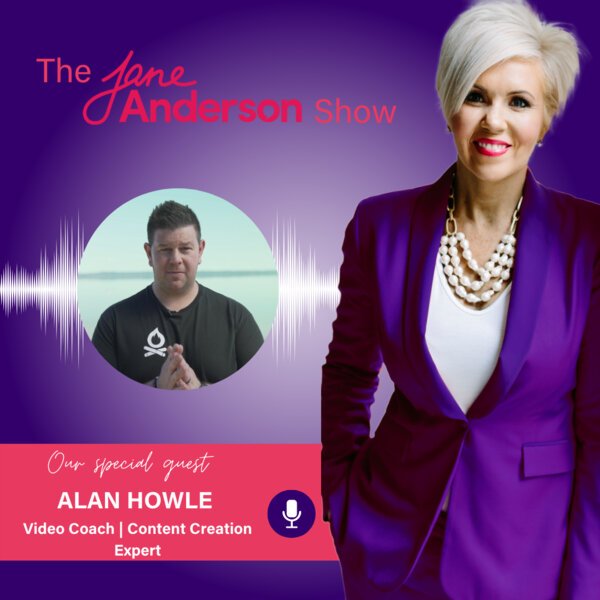
In Episode 57 of The Jane Anderson Show, I spoke with Alan Howle, a video coach and content creation expert and the founder of Triple Effect Video Agency. Alan and his team film six months' worth of video content in two days, then edit and publish it across YouTube, Facebook, LinkedIn and Instagram.
The conversation was recorded live with members of my community, so it includes their questions too. One note up front: I have no referral or affiliate arrangement with Alan. I invited him on because his thinking matches how I approach content: get as much value as possible from every piece you create, without it taking over your calendar.
Here is what he shared about video content for consultants and other experts, and how to make it work in a busy practice.
From Graphic Design to Video Coach: How Alan Howle Got Here
Alan's path wasn't a straight line. After leaving school he studied graphic design, but he didn't feel ready to run a business or fully explore his creativity. He moved into the corporate world, including sales, and kept his design skills going as a side project for friends, family and a few clients.
A turning point came when he turned 30 and decided he could do much more than he was doing. He went all in on design and marketing, from running Facebook ads to building landing pages.
Video became his focus because of something he noticed while running a social media program. The people willing to be the face of their own business, and put the human side of what they do in front of an audience, grew in a different way. They also gained leverage, which is something I talk about a lot when it comes to influence.
Alan now works with people at every stage: those who are nervous about getting in front of a camera, those who need guidance, and those who already have a stack of videos but need help getting them filmed, edited and published.
Why Video Shows What Photos and Written Content Can't
For the experts in my community, we are all personal brands. We operate under our own name, and while we have to deliver an outcome, the differentiator is us. Clients choose someone because they like that person's version of the work: how they talk about it, and the energy they bring.
Alan added that people often underestimate the value of what they have to share. Our upbringing, our circumstances and our experiences all feed into the message. He also thinks the biggest fear behind being on camera isn't the camera. It's the vulnerability of accessing the best of what you can offer, and wondering what you might be capable of.
I told him a story that makes the point. When I started my practice, I had beautiful, professionally retouched photos. At a meeting with a company here in Brisbane, the person I was meeting said I was "so much more authentic and down to earth" than he expected, and that he had thought I'd be snobby. He hadn't heard me speak. My photos were perfect, and nothing in them showed my energy or my country-girl voice.
Alan agreed that written content, with strong images, can present you in a polished light and gives you room to tell stories and share your thinking. But he suggested a diverse mix. Video lets people see that you're human: you mispronounce a word, you laugh at the wrong moment, and that is part of what makes you real.
Trust Is the Hardest Thing to Earn Online
When I asked how video fits into the way people find us, Alan made a point about trust. In his view, the hardest thing to achieve in a digital presence is trust. Attention can come easily if you do something big or silly enough, but getting someone to decide to work with you means they have to believe in your product, believe you can help them achieve a result, and see social proof such as results and testimonials.
A library of video content about the topics you want to be known for, Alan said, goes a long way towards that. If a prospective client is researching you before a sales call or consultation, he'd choose to have a video representing him, because it shares more of his personality and demeanour.
The Real Challenge: Knowing What to Do With Your Video
Before the interview, I asked members of my community about their biggest video challenges. The answers will probably sound familiar:
"Not knowing what to do with it once I've done it."
Deciding what to create in the first place.
Keeping each video to a simple single message. As one member put it, talking for an hour is easy, but doing it in three minutes is very different.
Editing, including subtitles and intros and outros, so the video looks polished.
Many people in my community already have strong intellectual property from my content creation bootcamps, Content Club and content pages. They can get ideas out of their heads and bring in stories, research and metaphors. The gap is leveraging that content. Most of us are one-person businesses, or we have a virtual assistant who is already busy.
Start With What You Have, and Aim for Consistency
Alan was clear about the ideal: a video uploaded to YouTube with search optimisation and a custom thumbnail, then published to Facebook with a header, footer, subtitles and music, and adapted for every other platform. That is the ultimate, he said, and a good thing to aim at.
But the biggest factor is consistency, and being honest about what is within your means. You may not own a professional camera, but you probably have a smartphone. Alan shared the tools he suggests at different levels:
Smartphone apps: Videorama (on iPhone and Android) is one he finds easy to use, and InShot lets you add headers and footers.
Subtitles: Rev (rev.com) is the service his team uses for subtitling, and I mentioned that most of us in the community use it too.
Desktop editing: Filmora Wondershare is a basic option, covering footage, soundtracks and cuts. Canva also offers some video editing. Alan himself uses Premiere Pro, which he describes as very technical and "not for the faint-hearted".
He also gave a reality check. Many people start by planning to post on every platform and "absolutely kill it", then realise that one two-minute video has taken two days of work to produce and publish. If your time is more valuable elsewhere, that's when it makes sense to get help, whether that's an agency or a team member. Alan's team also works with footage people have already filmed, helping with uploads, YouTube thumbnails, end screens, tags and platform-specific versions.
How to Film Six Months of Video Content in Two Days
This is the process Alan described, as he ran it when we recorded the episode.
Plan before you film
Before filming, Alan takes clients through a guided meditation and a fuel strategy, which he likened to the preparation I'd do to get someone ready for a filming day. The planning matters because otherwise you can lose hours on scripts and on deciding what to talk about.
His advice on scripting is to avoid it, unless you're creating a video you need word for word, such as one for lead generation or for YouTube or Facebook ads. Dot points let you flow between ideas and "finish like a champion".
If YouTube search is a goal, think about the keywords you want to rank for, the topics you want to talk about, and what your ideal client is searching for. That leads to educational videos where you speak directly to the camera, such as how to be confident on video, or three steps to deliver powerful video content.
For social media, Alan sometimes sits behind the camera and asks questions, such as "Talk to me about your favourite experience you've ever had with a client". It becomes a conversation, almost like a podcast. He has even followed one client to the gym and the park, asking questions along the way.
Two filming days, three months apart
Alan's two days are split three months apart, and clients commit to six months. Consistency is the main challenge, he said, not getting video out. It's easy to post one or two videos, but harder to keep going. The gap also gives you the chance to see what is working.
Day one covers 13 videos, one for each week of three months, and Alan said this is usually done in three or four hours on the first day. The second filming day follows three months later.
What happens after filming
Within 10 business days, the team creates intros for Facebook and YouTube and outros or end screens for YouTube, using the client's logos. They also take photos on the day for thumbnails. Footage from your past keynotes can be used as well, which Alan confirmed when I asked about conference recordings.
Each video is edited into three versions: a YouTube version, a square version for Facebook and LinkedIn with a headline, subtitles and progress bars, and a tall-screen version for Instagram (Alan referred to IGTV, which Instagram has since retired). Videos are published to all platforms at the same time. If you have an email list, the team can also send an email through Mailchimp or ActiveCampaign that links back to YouTube. Each month, they supply a report on how your videos and channels are performing.
What Alan's Package Included (as Quoted in 2021)
Alan described a six-month agreement with 26 videos and 26 image-based social media posts, one of each per week. The posts might use photos taken on the day or images you provide.
At the time of recording, the price was $1,000 a month for six months, with a one-off $500 setup fee that Alan offered to waive for listeners. For anyone in Australia, his prices included GST. I said then that I thought it was a no-brainer given what's included, compared with what I've spent on this kind of support. These are the figures quoted in 2021, so please check current pricing and offers directly with Triple Effect.
For people outside Australia: Alan has a team in every Australian state, and said he could find and vet videographers elsewhere. His agency has worked with a videographer in London, following the same process. He mentioned his wife, Jess, who does the publishing and checks his spelling, along with a video editor, a graphic designer and filmmakers around the country.
Using Video to Show Up in Search
This part of the conversation connects with the Expert to Influencer methodology I use in my community. Video sits in what I call the educate quadrant, where people follow you on social media but aren't yet on your database. As a practice grows, the network and search quadrant becomes important: people who don't know you yet search for someone like you, perhaps "women's leadership expert" in a particular city.
Videos uploaded to YouTube, with the right keywords, SEO and tagging, can appear in Google results. Right now, a lot of search results are written content, so I see an opportunity for video to become part of your SEO. For experts in our space, this tends to be relevant once a practice is past about $500K in revenue, when you know which programs or clusters are working and want to optimise your content.
I asked Alan whether YouTube videos rank higher in organic search than written content. He didn't give a blanket answer. It depends on what you've put out there and the keywords you've used. As an example, if you search his name, he's confident videos will appear before written content, since he doesn't do much blogging. He added that this is where thumbnails, tags and the timeline become an art, not just uploading a file.
Getting Clicks on Video in Your Newsletter
A community member asked whether people are less likely to open videos in newsletters or blogs if it means going to YouTube to watch. In the groups I mentor, the video link is the part people click on most. Alan was upfront that he hasn't tested video against reading, because his own work is video only, and some people prefer to read.
What he has seen is that adding a small play button to the thumbnail in an email lifts click-through. People think they're playing the video, and it takes them to YouTube. I suggested overlaying a play button on the thumbnail in the same way.
Alan also pointed out that a click on a video is a good signal. People open emails by accident, but a click to watch a video is rarely accidental. I agree: look beyond open rates to click-through rates, and use them in your follow-up. If someone clicked a video about a program, it may be worth checking whether they're interested.
The member's concern was that people go to YouTube and never return to the blog. Alan's answer was to add a call to action in the video. It could be soft ("subscribe to my channel") for a value-based video, or direct for a topic where the natural next step is talking to you, with a link to your calendar or a freebie that gets someone onto your email list. I added that, in a tool like ActiveCampaign, you can set up an automation so anyone who clicks through gets a follow-up email the next day, thanking them for watching and sharing information about your program.
Frequently Asked Questions
How can consultants repurpose content into video without spending days on editing?
Alan suggested working within your means and focusing on consistency. Use a smartphone and simple apps, or hand the filming, editing and publishing to a team so you only spend time in front of the camera. He said his own agency can also work with footage you've already filmed.
Do I need a professional camera to film video content?
No. Alan said you can start with the smartphone you already have and a video app. A professional setup is optional, and the more important question is whether you can realistically keep going every week.
Should I script my videos?
Not usually. Alan recommends dot points rather than scripts, so you can flow between points, unless you need word-for-word delivery for something like a lead generation video or an ad.
Do YouTube videos rank higher than written content?
Alan said it depends on what you've published and the keywords you've used. As an example, he expects videos to appear first when someone searches his name, because he doesn't write many blogs. Video and written content can work together.
How do I get more people to click on a video in my newsletter?
Alan's tip is to add a small play button to the thumbnail, which increased click-through in his experience. Adding a call to action in the video and an automated follow-up email can help bring people back to your offers.
What did Alan's six-month video package include?
As quoted in 2021, it covered strategy, filming, editing, publishing and monthly reporting, with 26 videos and 26 social media posts over six months. Check Triple Effect for current details.
Can this process work outside Australia?
Alan said it can. His team has worked with a videographer in London, and he can find and vet videographers in other countries, though some adjustments may be needed.
Conclusion
Video works best for consultants when it is simple, planned and sustainable. As Alan put it, the real challenge is consistency, not getting a single video out. Start with what you have, plan your topics so filming day is clear, decide where outside help makes sense, and make sure each video leads somewhere, whether that's your search presence, your newsletter or a conversation.
And remember what I said at the end of the episode: you are the differentiator. You are the reason people work with you. Video is one of the best ways to show that.
About Alan Howle
Alan Howle is a video coach and content creation expert, and the founder of Triple Effect Video Agency, which creates six months of video content for YouTube, Facebook, LinkedIn and Instagram. His passion is helping people use their imagination and share what's valuable about them with an audience.
Find Alan on LinkedIn, Facebook, YouTube, Instagram and TikTok by searching "Alan Howle" (spelled A-L-A-N H-O-W-L-E).
Work With Jane Anderson
If this conversation made you want to get more from the content you've already created, here are some ways to work with me:
Women With Influence: Join a community of B2B women consultants, coaches and advisors building world-class practices.
1:1 Coaching: Work directly with me on your personal brand and business growth strategy.
✨ Tune in to Episode 57 to hear how to turn the content you already have into video, without turning it into a second job.
Key Takeaways from Today’s Episode:
-
Photos and polished copy show your professionalism, but video shows your voice, your energy and your way of working. Video lets prospective clients experience how you think and communicate.
-
Trust builds when someone can watch you explain your ideas more than once. A small library of videos gives prospective clients something to explore before they reach out, and gives you a body of work that keeps doing its job after the day you filmed it.
-
A simple process you can repeat every week will beat an ambitious plan you abandon. Look at your budget, your time and your skills, then decide what to do yourself and what to hand over.
-
Batching removes the weekly stop-start of filming. Planning your topics and dot points beforehand saves time on the day, and spreading filming across two sessions lets you review what is working before you film the second set.
-
Optimised video can help prospective clients find you when they're searching for the kind of help you offer. Whether it ranks ahead of written content depends on what you publish and which keywords you target, so plan topics around the questions your ideal clients are asking.
-
A video click signals real interest, and a clear call to action inside the video keeps viewers connected to you once they land on YouTube. Pair both with an automated follow-up email so no interested viewer is left without a next step.