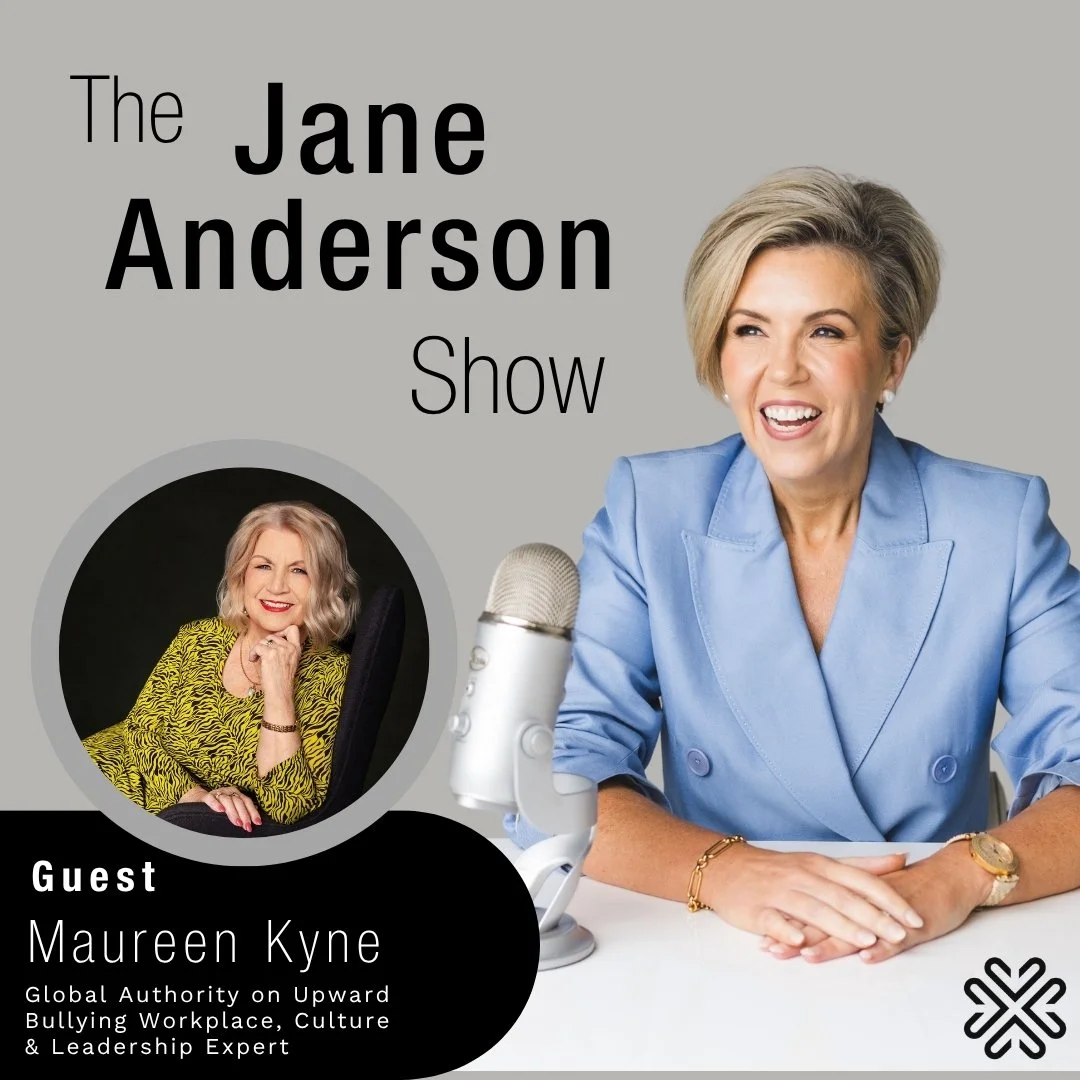
Podcast is also available on the versions below:


Get Notified Of Future Episodes on Apple Podcasts | Spotify

What does it take to scale a bookkeeping business when you have never been a bookkeeper, and you are not sure you are ready to be the face of your own practice?
In this episode of The Jane Anderson Show, I sat down with Sharon Francisco, a business coach for bookkeepers and a mentor to accountants. I first worked closely with Sharon from around 2017, and I have shared her story with many people since. She helped grow a bookkeeping business, and she is the first to tell you she has never been a bookkeeper.
What Sharon does have is a deep understanding of how bookkeepers work, a sales and business development background, and a no-fuss approach to the thing she believes holds most practice owners back: confidence. This article draws out the lessons from our conversation, whether you are a bookkeeper or accountant ready to grow, or an expert in any field working out how to build a practice that is truly yours.
A Business Coach for Bookkeepers Who Is Not a Bookkeeper
Sharon is a coach and mentor who works with bookkeepers and accountants to scale their businesses. Her background is in sales and business development, including time working with people like Brad Sugars and Thought Leaders Business School, which gave her a strong understanding of how to work with experts, particularly those who struggle to sell themselves.
She now runs a one-to-one program and a group program for bookkeepers and accountants, helping them with the things she sees as the real barriers: unconscious blocks, growth mindset, and the confidence to sell their services, lead a team and price well.
What makes her different is that she does not pretend to be something she is not. In her branding video, she laughs and says she is not even a bookkeeper. As I said to Sharon, that is a vulnerable thing to say, because so many of us get caught up in our credibility. But you do not always have to have been the exact person you serve. If you know how to work with that market, and you get them results, that is what counts.
From Employee to Business Owner: The Three Months That Changed Everything
When Sharon and I started working together, she was still an employee. She negotiated with her employer so that she could take part in the work, and she could already see where she wanted to end up. The tools were practical and she could use them. What took longer was catching up in her head.
At one point she reached a fork in the road. Her sister had often encouraged her to take time out, even suggesting six months. Sharon took three. She had received a good tax cheque, and she justified using it to step back and think. She describes that decision as one of the most important she has ever made.
During that time, everything she had absorbed over the previous twelve months with me, along with the books, podcasts and thought leaders she had watched, started to come together. By the end of the three months she was clear that she needed to take the step. She also noticed that when you create space like that, doors seem to open.
For Sharon, one of those doors was an existing relationship with a bookkeeping company that has a system called Pure Bookkeeping. She had been working for them one day a week selling their program, and she had a good relationship with the founder and CEO. They ran a webinar together, and, in her words, it all started from there.
I think this happens for many people building a practice. You have to find your own version of the idea, and often it is not until you start applying it that the imposter syndrome kicks in: What if it does not work? What if I get found out? It takes a degree of surrender to trust a process and simply get in and have a go.
Why Confidence Is the Core of Her Coaching
Ask Sharon what the main challenge is for the bookkeepers and accountants she works with, and the answer is not technical. “I say cash is king,” she told me. “I believe confidence is king.”
Her approach starts with fear. Whatever fear comes up, she treats it as a tap on the shoulder, a prompt to ask what it is and go further into it. Most of us are conditioned to do the opposite: if something feels like it will hurt, we run back to our comfort zone.
Sharon shared an analogy she had heard from someone (she could not remember who). In the United States tornado belt, communities are devastated every few years, yet people rebuild and stay, because that is their physical home. She believes we do the same with our emotional home. We keep going back to what feels familiar and comfortable, even when it is holding us back.
She also described fear as “our dirty little secret”. Many of us feel we cannot talk about it because we will be found out, which is the imposter syndrome many experts will recognise. If that resonates, Dr Michelle Gibbings has a similar story about writing her first book despite the fear on another episode of the show.
Borrow a Framework From Someone a Few Steps Ahead
One of Sharon’s most useful habits has been to find someone who is already doing what she wants to do and ask how they do it. Sharon has always believed that if somebody else can do something, so can she, and she just has to figure out how.
When she decided to run a marathon, she looked for a woman in her running group of a similar age, with kids and a full-on job, who was one of the best runners in the group. Sharon was nervous to approach her. She asked her out for a coffee and asked about her training program, her coach, what she ate and how she slept. Then she took that framework and templated it for herself.
“If she can do it, so can I,” Sharon said, adding that she was certainly not as fast as her. She took the same approach with me. She watched me standing up in front of a room of women, thought I could do this, and applied what she was learning to her own world. She is also honest that it sounded easy but involved a lot of pain, and that she was willing to go deep into the fear that came up.
Helping Bookkeepers and Accountants Step Out of the Compliance Grind
Many of the bookkeepers and accountants Sharon works with have been in the profession for 10, 20 or 30 years. A lot of them, she says, are done with the grind of compliance work and do not want to keep working weekends and nights by themselves.
Sharon points out that a handful of bookkeepers and accountants have seen a model that lets them scale: have bookkeepers work for you, in Australia and overseas, and manage the whole thing without ever doing compliance work again. It is exactly what she did when she worked with her sister-in-law to scale a bookkeeping business, with three accountants and nine bookkeepers doing the work and bringing it in, even though she was not a bookkeeper herself.
I raised the crunch points in the year, such as end of financial year and BAS time, when practice owners work around the clock. Sharon’s response was that there is a personality dimension to this. Using personality-profile shorthand, she describes herself as a “high I” with a good chunk of “D”, someone who protects her personal space and is comfortable saying no. Bookkeepers, in her experience, are generally “high S’s and C’s”. They come from a place of serving and giving back, so they rarely say no and will keep working to do the right thing by the client.
A big part of her work is helping them see that they do not need to keep doing that. They can create a business that serves them as well, and still deliver the same outcome for their clients, in a way they can manage so it is not eating up every hour of the day. It is also a message about permission: permission to manage your boundaries, put systems in place, and recognise that peak periods need focus but do not need to be a daily flogging.
Applying a Proven Method, and Showing Up on Video
Asked which of the methodologies she had implemented, Sharon’s answer was simple: everything. She credits the tools around Think, Sell, Deliver as the pieces of the puzzle that gave her the confidence to take action.
Video is a good example. Sharon did not realise how much of an impact appearing on video would have. When I suggested she do more of it, her first reaction was that she did not really want to. She did it anyway, and it worked.
She also made a point that her time as an employee made it harder at first. If she had been in her own business, she thinks she would have known what her intellectual property was much sooner, and applied what she was learning more quickly. Once she had her own business, she applied the methodology. Her image for it is an elastic band that had been stretched back and back and was finally let go.
Sharon says she followed what she was taught with faith and without questioning it, and she believes that when you follow someone who has already done what you want to do, it is easier if you do not argue with each step. She is now asking her own clients to do what I asked of her. They have a closed, very active Facebook group, started only a couple of weeks before we recorded, where they post videos. Some of them, she says, are hilarious, and the group interaction is working well because everyone is heading in the same direction.
Being Yourself Is the Differentiator
One of the most memorable parts of our conversation was about authenticity. Sharon has a branding video that is not just her talking to camera and saying she works with bookkeepers. It shows her having coffee with clients and working through their notes, and it includes footage of her in a personal training session with her girlfriends, because she talks a lot about health and wellbeing.
What it captures is energy, warmth and connection, and I think that is what people are really drawn to. They do not just want to scale their business, they want the Sharon Francisco version of it: the big smile, the laughter, the sense of having a great time.
Sharon said that people have long told us to just be ourselves, and if it were that simple we would all do it. She grew up in the country, in a place with few people, and felt centred enough there to be herself. Then she went out into the world and corporate life knocked her around, to the point where she felt she had to become something to survive. She found that one of the most inauthentic feelings there is.
Part of what changed that was the mirror I held up to her: this is what is good about you, and this is what people like about your video. “You kind of gave me the permission to be me,” she said. She describes being yourself as the most liberating feeling, and the icing on the cake is when people buy into that, take your advice and then see success.
That is also a theme in my Women With Influence community, which Sharon joined when it first kicked off, and where she and I did some one-on-one work as well.
How Sharon’s Coaching Programs Work
Sharon has two programs: a one-to-one program, with two hours of coaching a month delivered fortnightly, and a group program that meets twice a month for an hour and a half. Around 24 bookkeepers were in her program at the time of recording.
When I asked about pricing, I was thinking of how easy it is for women to undervalue their work. Sharon’s honest answer was that you do not know to begin with, so you test the market. She started at a lower rate and has since increased it.
Looking ahead, she wants to help people realise what they can do, especially bookkeepers and accountants who have had enough of working alone. She and the CEO of Pure Bookkeeping have talked about a face-to-face summit, though it was not fully planned at the time. She is confident they will get everyone together at some point.
Sharon’s Advice for Growing Your Practice
I asked Sharon what she would say to someone struggling to step into themselves or to grow their practice. Her answer ties back to her approach to fear:
Treat what comes up as a tap, not a stop.
Whatever appears in front of you is a prompt to work out what it is. It is generally about self-worth, and whether we believe we can do something.
Question the story you are telling yourself.
Stories are not always true, so find one that works for you and gets you the outcome you want.
Put the right resources and people in front of you.
For Sharon, I was the first step in seeing the path to the other side. It still took her a couple of years to realise that, and the three months off to decide she could do it.
Do not use timing as an excuse.
However long it takes, she says she will “never give up until the day I die” and will keep trying.
To sum up what I took away: be yourself, give yourself permission to be yourself, get the right people around you, get a mentor, and work out your own version of the path.
Frequently Asked Questions
Do you need to be a bookkeeper to be a business coach for bookkeepers?
No. Sharon Francisco has never been a bookkeeper and does not claim to be. Her strength is understanding how bookkeepers work, combined with a sales and business development background, and she coaches them on confidence, selling, leading a team and pricing.
Why does Sharon Francisco say confidence is king?
Sharon says cash is king, but she believes confidence is king. In her coaching she focuses on fear and unconscious blocks, encouraging clients to go further into whatever fear comes up rather than running back to their comfort zone.
How did Sharon Francisco help scale a bookkeeping business?
Sharon describes the model as having bookkeepers and accountants do the work while you manage the business. When she scaled a bookkeeping business with her sister-in-law, she had three accountants and nine bookkeepers working for her, even though she was not a bookkeeper herself.
What does Sharon Francisco coach bookkeepers and accountants on?
She works on confidence, mindset and the practical steps to sell their services, lead a team and price well. A big part of it is helping people who have spent 10, 20 or 30 years doing compliance work see they can build a business that does not eat up every hour of their day.
How long did it take Sharon to act on what she learned?
Sharon says it took her a couple of years to realise how much the tools and resources had given her, and three months off to decide she could do it. She was still an employee at the time, and thinks it would have happened more quickly had she been in her own business.
What is Sharon Francisco’s advice for growing a practice?
She suggests treating whatever comes up as a prompt to work out what it is, questioning the story you tell yourself about your worth, and putting the right resources and people in front of you. She also says timing is not an excuse, and that you should keep trying.
Conclusion
Sharon Francisco’s story is a reminder that building a practice is rarely about knowing more. It is about being willing to feel the fear, find someone who has done it, apply what they teach, and become the version of the expert that only you can be.
For Sharon, it took time out, a framework she trusted, a decision to appear on video, and the courage to say she was not even a bookkeeper. For bookkeepers and accountants who are tired of the grind, and for any expert building a practice, her approach is worth borrowing.
About Sharon Francisco
Sharon Francisco is a business coach and mentor who works with bookkeepers and accountants to scale their businesses. She helped scale a bookkeeping business, and she uses a no-fuss approach to help clients uncover their blocks, build a growth mindset and gain the confidence to sell, lead a team and price themselves well.
Work With Jane Anderson
If Sharon’s story resonated with you, here are some ways to take the next step:
Women With Influence: Join a community of B2B women consultants, coaches and advisors building world-class practices.
Grow With Influence: Coaching for independent B2B experts who want a clearer, more profitable practice.
✨ Tune in to hear a candid conversation about confidence, being yourself, and building a practice that works for you.
Key Takeaways from Today’s Episode:
-
Jane Anderson introduces her podcast, "The Jane Anderson Brand New Show," designed for experts aiming to enhance their impact, influence, and income in their careers or businesses. She highlights the focus on women, particularly those with consulting practices, who share insights, learnings, and advice on growing their practices. Jane encourages listeners to subscribe for future episodes and connect with her community through her website. She introduces Sharon Francisco as today's guest, a coach and mentor specializing in helping bookkeepers scale their businesses. Despite not being a bookkeeper herself, Sharon brings unique expertise in understanding bookkeepers' challenges and promoting growth mindset and confidence.
-
Sharon Francisco shares her journey, initially as an employee, negotiating with her employer to access coaching services, leading her to envision her own practice's growth. Reflecting on a pivotal three-month break, she credits it for consolidating her thoughts and pushing her towards starting her coaching practice. Her background in sales and business development, including experiences with Brad Sugars and Thought Leaders Business School, laid the foundation for her coaching career. Sharon describes her transition into coaching bookkeepers, leveraging her expertise in business development to guide them in scaling their practices. Despite not being a bookkeeper herself, she excels in motivating and understanding bookkeepers' challenges.
-
Sharon discusses her coaching programs, emphasizing confidence-building as key to success in bookkeeping businesses. She believes in addressing fears and challenges head-on, rather than retreating to comfort zones. Sharon highlights the importance of identifying and overcoming emotional barriers that hinder growth. For bookkeepers, transitioning from compliance work to scalable models presents a significant challenge, which Sharon helps them navigate.
-
Sharon continues to discuss the importance of confidence over cash in business, emphasizing the need to confront fears and expand comfort zones for growth. She draws parallels between emotional and physical homes, suggesting that individuals tend to retreat to what feels familiar, even if it inhibits progress. For bookkeepers seeking to scale their businesses, Sharon advocates stepping out of compliance work and embracing scalable models, leveraging her coaching to guide them through this transition.
-
Sharon Francisco reflects on her journey of overcoming fear and imposter syndrome, emphasizing the importance of confronting fears and finding inspiration in others' achievements. She shares personal experiences, such as seeking advice from a fellow runner and adopting a similar approach in her business endeavors. Sharon credits her willingness to delve into fear and discomfort for her growth, highlighting the pain and challenges she faced along the way. Jane acknowledges Sharon's consistent commitment to growth and how she always showed up despite discomfort, attributing much of her success to this perseverance.
-
Sharon credits Jane's methodologies, particularly Think, Sell, Deliver, for providing the framework and confidence needed to take action in her coaching practice. She acknowledges Jane's guidance in areas like video content creation, pricing structures, and business systems. Sharon reflects on her transition from employee to business owner, noting the significance of applying Jane's teachings once she had her own business. She emphasizes the importance of faith in the coaching process and the benefits of following guidance without question, highlighting the pivotal role Jane's methodologies played in her success.
-
Jane and Sharon discuss the future of Sharon's practice, focusing on empowering bookkeepers and accountants to build businesses that prioritize their well-being. Sharon aims to help practitioners realize they don't need to sacrifice personal time and energy to serve clients effectively. She highlights the challenges faced by individuals with high S and C personality traits, who tend to prioritize serving others over their own needs. Sharon's vision includes creating a supportive community where practitioners can thrive while still delivering exceptional service to their clients. She discusses pricing structures and future plans for in-person events, indicating her commitment to fostering a vibrant community of empowered practitioners.
-
Jane and Sharon discuss the importance of authenticity in coaching and business leadership. Jane emphasizes the need for coaches to embody the principles they teach, serving as living examples of their methodologies. Sharon's branding video is highlighted as a powerful representation of her authentic self, showcasing her energy, warmth, and unique approach to coaching. Sharon reflects on her journey of self-discovery, acknowledging the challenges of maintaining authenticity in a corporate environment. She expresses gratitude for Jane's role in helping her embrace her true self and acknowledges the profound impact it has had on her coaching practice. Sharon encourages others to prioritize authenticity and self-discovery, emphasizing the liberating and transformative power of being true to oneself.
-
Sharon offers advice for those struggling to step into their authentic selves or grow their coaching practices. She emphasizes the importance of confronting self-doubt and limiting beliefs, encouraging individuals to rewrite their narratives and pursue their goals relentlessly. Sharon shares her commitment to continuous growth and persistence, noting that success often requires resilience and determination. She highlights the value of seeking support from mentors and surrounding oneself with the right people to facilitate personal and professional development.
-
Jane concludes the discussion by summarizing the key takeaways from Sharon's journey, including the importance of authenticity, mentorship, and personal identity in coaching success. She invites listeners to connect with Sharon through her website, sharonfrancisco.com, and expresses admiration for Sharon's achievements. Sharon expresses gratitude for the opportunity to share her story and reflects on the positive impact of her collaboration with Jane. The episode ends with mutual appreciation and anticipation for future collaborations.
Full Show Transcript:
-
[Speaker 2] (0:09 - 4:59)
Hi there, my name is Jane Anderson and this is the Jane Anderson Brand New Show. It's the podcast for experts who want to have greater impact, influence and income for their businesses and careers. Hi there and welcome to the Jane Anderson Show.
I am so thrilled that you are here today and that you are joining us on today's episode. Today, as you know, with all the podcast episodes, we speak to women in particular, more often than not, who have their own consulting practices or looking to be able to grow them. I interview those that I've worked with previously or been part of our programs and implemented some of the methodologies and talk about some of the things that they've learned, what they've realized that they should have been doing and perhaps some advice for you if you're thinking about trying to grow your practice and perhaps find some of those opportunities where you could do that in terms of your own practice and achieve the success that they have had as well. If you want to subscribe to future podcast episodes, make sure you hit the subscribe button.
Also, you can reach out to us, you jump onto the Jane Anderson website, go to www.jane-anderson.com.au. You can subscribe to the community, you'll see the option there, you'll hear from us each week and you'll also hear about new episodes that are coming out, events that are coming up and all those types of things. So we'd love to stay in touch. In the meantime, I'm going to share with you a little bit about our very special guest today.
So our special guest today is a woman called Sharon Francisco. Now, Sharon, I worked with back in 2017 through to about 2019. And I know Sharon quite well.
We've worked closely together and I just love working with her because as part of her journey, she had lots of things to implement and she had the courage to just get in and have a go and get started. Some things were she was within a role in employment and she was employed in a role, but some things she implemented and some things she's now really implementing even more so today and down the track. So Sharon is a coach and a mentor and she particularly works with bookkeepers to scale their bookkeeping businesses.
She scaled a bookkeeping business from just one bookkeeper to 12. So that's her own particular practice. She understands and promotes the practical steps to assist people in helping them to achieve everything they desire from a bookkeeping business.
She uses a no fuss approach to gain traction fast with her clients as they're taken through steps to uncover things like their unconscious blocks, develop growth mindset and build the confidence to really sell their services, lead a team and price themselves really well. She is super enthusiastic. She's really passionate.
She's got this incredible energy and essence to be around her and she's really supportive coach. The kind of person you want by your side, particularly if you're trying to go through that personal growth and particularly if you have a bookkeeping business and to achieve that success. What makes Sharon really unique is that she has never been a bookkeeper.
So and she doesn't claim to be. What I love about her, she really steps into her authentic self and she says, you know, I'm actually not that great with the numbers, but what I am really good at is I really understand how bookkeepers work and she understands because she's done a lot of work. Her background was working with people like Brad Sugars, Thought Leaders Business School and being able to, she understands how to work with experts.
In particular, people who struggle to really sell themselves and to be authentic in that. So I'm thrilled she's on the podcast today. I'd love for you to reach out.
Let me know. I would love to hear what you take away from the interview with Sharon today. She's so awesome.
Make sure you reach out to her. But yeah, make sure you let me know. I'd love to hear what lessons you're taking away from the podcast today.
Enjoy the episode. All right.
-
Hi, Sharon and welcome to the podcast today.
I am so thrilled to have the opportunity to speak with you. It's been a while since we've caught up and I've been dying to catch up with you, particularly for this podcast because, you know, you have been such an inspiration to work with. You are truly extraordinary.
Your energy, your essence, and you have created this incredible phenomenal practice. We've known each other for some time and I feel like, okay, now's the time we're going to listen to Sharon and to be able to share your story. And I tell your story a lot to people.
I use examples and all the sorts of things. So it's so nice to finally be able to speak with you and hear what you have to say. So thanks for being on.
And are you happy to share a bit about your practice, you know, how it works? How did it all start and where it all came from?
[Speaker 1] (5:00 - 5:43)
I am, but I feel like we should go back a couple of years. Well, no, I feel like it's always when you see people that have implemented and got to where you look at people. Like I know when I was in your group, I'd look at other people and go, I wonder how they do that or wonder how they got there.
And it kind of feels like if you're not there yet, it feels like, is it real? Is it like, and I feel like this, this question in here, it's like, oh yeah, they've done it. Like I feel like there was so much pain and growth to get to here.
It just doesn't happen. It just doesn't happen. Like boom, you're there.
And I think, yeah, what was the question?
[Speaker 2] (5:43 - 6:21)
Sorry. Tell us about your practice and how you started it. But, you know, you were talking about, but particularly over the last couple of years, past few years, because we started working together, I think it was about 2016, 2017.
And we worked together. You were in our women with influence community when we very first kicked it off, but we were doing some one-on-one type work as well. And yeah, and then you sort of now have come into your practice.
You particularly work with bookkeepers, but yeah, how did you end up in this space of working with bookkeepers and having this whole amazing practice that you've got coaching bookkeepers?
[Speaker 1] (6:22 - 9:00)
Well, definitely the seed was really, so because I was an employee when we started working together. I negotiated with the employer to bring us together. And to me, from there to where I am, I could feel it, I could see it.
And I just, I knew that the steps that I had to take, obviously the practicality of the program to get to where I am now. But it kind of took me a while to catch. So yes, you gave me all the tools to be able to do what I needed to do, but I kind of had to catch up in my head to do that.
And to the point, Jane, where I kind of had, there was a fork in the road for me. And I, my sister quite often over the years have said to me, just take some time, Sharon, take some time. She always wanted me to take six months.
And like, who can take that kind of time? But it's almost like I took three months. I made a decision, I got a good tax check.
And in my little head, I could justify, let's take that tax check and justify taking three months off. And I would say that was one of the most important decisions that I've ever made, because I feel like that's when it all came together in my head of just like the 12 months with you and seeing all the amazing thought leaders that you work with and all of those things mulling around in my head and thinking about it. And I think at the end of that three months, I was quite clear that I needed to take the step.
And it's kind of like things happen. When you take time like that, things come out of nowhere. I don't know if you've ever experienced that where things just seem to line up for me and it just doors opened, I'm sure, because I had all this stuff happening in the background of knowledge that you've taught me and books and podcasts and seeing other thought leaders do it.
It's kind of like the doors just opened for me. And I did, I started working, I had a relationship with a bookkeeping company that has like a system called Pure Bookkeeping. And so I used to work for them one day a week selling their program and had a really good relationship with the founder and the CEO.
And we did, we've done webinars together before and we started with a webinar and I guess it just all started from there. So I do like a one-to-one program, a group program for just bookkeepers and accountants. So it's more sort of accountants that are part of Pure Bookkeeping.
[Speaker 2] (9:00 - 10:56)
Yeah. So if we go back, like even before then, Sharon, so your background really, like you come from a sales and business development background. You'd work for people like Brad Sugars who is just this global phenomenon of the books he's written and the global programs he's done and helping people build their businesses.
And then you've come into spaces like thought leaders and then Pure Bookkeeping. So you've come from, you know, this focus on business development. And I remember working with you and was always around, you know, you have this beautiful authenticity and connection that you have.
You have this warmth. I use you as an example in some of my presentations when I talk about humanness and warmth in video and things like that. But you sort of started, you came into this space around, you know, working around people who are experts in their space.
And then, but now where you've kind of gone is being able to connect those two where you're now the expert in being able to leverage and build and grow and scale a bookkeeping practice. So you're a coach in that space. You're not necessarily a bookkeeper by trade.
And I love that. I was watching your video recently where you make you laugh and you say, actually numbers are not my forte at all. I'm not a bookkeeper, but I'm great at being able to motivate and work with bookkeepers because you know their practices so well and how they operate.
So now you're working with bookkeepers. So you essentially have a group type program or a mentoring program with them where you work with them over sort of a 12-month period. And they, so what are some of the things that you do with them?
If you're not knowing, talking about numbers, what are some of the things then, like what are the challenges that bookkeepers have that you help them with?
[Speaker 1] (10:57 - 11:44)
Yeah, I think going back to me not being a bookkeeper, that gives, I guess, it's gotta be a cool thing for people to know as far as if you're, to build a business that you don't even know. Like what, I was so frightened when I was building that business. I had no idea.
And sitting in front of a council was our major sort of strategy to get business through the door. It was so fearful to begin with. And just to build that business and get the, gain the confidence that I needed to fill us up as far as our clients were concerned was, I think just a, I don't know, it's gotta be an encouraging thing for other people building business that they are in their environment.
So being outside of that is, yeah, it's, I don't know what I'm saying, sorry. That's all right.
[Speaker 2] (11:46 - 11:48)
So- The challenges that they have, Sharon.
[Speaker 1] (11:49 - 16:02)
Yeah, so with the group coaching and the one-to-one, the main area that I kind of work on is, it's around confidence. I say cash is king. I believe confidence is king.
So if you can figure out where your stops are, and this is the main thing that I work with, whatever fear comes up, I think that's like a little tap to say, well, what is it? Go further into that and figure out what that is. And I think what we're so used to and conditioned to is run away from fear.
So if that feels like it's gonna not, if that's gonna hurt or it's not really a nice feeling, you run away from that and go back to your comfort zone. I was listening to somebody the other day, I can't remember who it was. He was saying, you know, in America, there's that whole tornado belt.
Yes. Every few years, all the tornadoes go through. Yes.
It's devastating, right? And they go, I can't remember who it was that I listened to. And he said, but they rebuild and they're there again.
And because that's their physical home, that feels like home, they stay there. And so I think we do the same thing with our emotional home. So we keep going back to what feels good.
And if it feels good to not step out of your comfort zone and stay in your lane, and I know for bookkeepers and accountants, they stay in doing the compliance work, doing the do and not sort of saying, I mean, there's a handful of bookkeepers and accountants out there that have seen the model where you can actually scale that, have bookkeepers work for you here in Australia and overseas and manage that whole thing and never have to do any compliance work again. Because I know a lot of the people I work with, they're done with that.
They've been doing it for 20 or 30 years and they're sick of doing that grind. Yes. And certainly that's exactly what I did when I was with my sister-in-law to scale the bookkeeping business, not being a bookkeeper, I had 12 or three accountants and nine bookkeepers working for me, doing all the work and bringing that in.
So I think it's the big thing that I think I'll work on is just stopping whatever fear comes up and going deep into that and understanding that more and knowing that whatever that is, I feel like it's our dirty little secret. I feel like whatever fear comes up, it's like, well, we can't talk about that because we're going to get found out. You're going to get found out and that whole imposter syndrome that comes up.
I remember when I was in that group with you and I'd look at you with standing up in front of all those women and doing it. It was like, I can see it, I can feel it, but I don't know, like I feel this. And that's, to me, it was like, I had this thing and I've always had it since a little girl.
If somebody else can do it, so can I. It's just, I've just got to figure out a way around it. It's like, and I think that's kind of the overarching thing of my program.
It's like, I remember the first time I was going to, I decided I wanted to run a marathon. And I looked for, I was in part of a running group and I looked for another woman, similar age to me, that had kids, that had a full-on job. And I thought, I'm just going to go and meet her.
She was one of the best runners in the group. And I was nervous again to meet her because I'm not a great runner. And I said to her, Karina, can we have a coffee?
And I took her out for coffee and I asked her like, what's your training program? Who's your coach? What do you eat?
How often do you sleep? Like, how do you make all that work in your world? And I just took her framework and just templated it and did it myself.
Like if she can do it, so can I. And certainly not as fast as her. I mean, she's a really fast runner, but I think I did that kind of with you.
I looked at you and I thought, I can do this. I know I can. You're just another woman, just like me.
And I can take what you're teaching and apply it to my world. And I think that's what I did. But it sounds easy.
I think I feel like there was a lot of pain that I feel like I went through to get to the other side of that. I was willing to sort of go deep into the fear that came up for me.
[Speaker 2] (16:02 - 16:58)
Right. And like, so based on, you know, if we think about all the things that you've implemented since that time, like, because I think the big thing too, that you really did, and I always really admire you, is that even if you're going through that, you always showed up. Like you'd always go, okay, I know I'm in the right room.
And even if I'm feeling uncomfortable, I know I'm in the right space. You used to say that all the time. You know, if you think about over the time that we've worked together and the things that you've implemented, so whether it's been creating content, whether it's lead gen, whether it's marketing systems, whether it's designing programs or presenting or mindset type stuff, what have been the things that have stood out to you that you think, you know, you think back to that time when you're starting out to where you are now, where you've got this phenomenal practice and you've implemented all these things, what have been some of the main things that you feel like you've implemented in the methodologies we've worked with?
[Speaker 1] (17:00 - 17:50)
Everything, Jane. I honestly sit here so often and think, and I'm always referring to your books. It's like, I think it's just your, it's just the whole thing, like everything.
And I think that all of that, again, is surrounded in this, it's like all the different tools that you had around Think, Sell, Deliver was the pieces of the puzzle that helped me get the confidence that I needed to take the action. So even to the point, like you mentioned before about the videos, like I didn't know that me being on video would have that much of an impact. And I think, you know, when you said to me, Sharon, I think with the way that you come across on video, you should do more videos.
I'm like, oh, really? I don't really want to do that.
[Speaker 2] (17:52 - 17:58)
But you did nearly 40 a day in them. Even though you didn't feel like doing it, you did them.
[Speaker 1] (17:59 - 19:02)
Yeah. And it worked, didn't it? Like, and I mean, just that, like just, I think you've had so much experience around what works and what doesn't.
And I think I've noticed, I was talking to my business partner the other day and I said, I feel like part of what's made it work, even with the bookkeeping, when I started the bookkeeping business and the founder, Debbie Roberts, at the time, it's like, at the time when I was doing it, it was folders, right? Now it's all online. Yeah.
And I'd ring her every, about every six weeks, two months ago, Deb, I'm stuck. What do I do? And she'd tell me what to do and I'd just go and do it.
Right. And I was kind of like, that's what kind of frustrated me so much, why it kind of took me a little while to, and it took me that three months of like, what is it that I need to do? Because I was still an employee.
I wasn't even, I think if I was in business, I would have had an idea of what that, my IP was and had that figured out. So I kind of had to figure that out. But I think that's why it works so well.
As soon as I had the business.
[Speaker 2] (19:03 - 19:04)
Yes, you could start applying.
[Speaker 1] (19:05 - 19:37)
That's it, I applied your methodology. It's just like, I think the analogy is that the elastic band's been stretched back, back, back. And you were doing that back, back.
And then it's just finally been let go and it's just been phenomenal. Absolutely phenomenal. So I think it's the faith that I had in what you taught me.
And I just blindly have followed that without any question. And, you know, with people, when you work with them, when you just follow what somebody's done that you want to do, it just makes it a lot easier if you don't question it.
[Speaker 2] (19:41 - 21:19)
And that three months, I think is sometimes, I think this happens for a lot of people in their practices is that they have to find their version of it. And it's not till you have a go and start to apply it. All those things kick in, the imposter syndrome.
And what if I try it and it doesn't work? Or what if I get found out? Or what if people see I'm not really as good as I think I am?
But you've got to sort of get in and just have a go. And it takes a lot of surrendering to trust a process, doesn't it? And to go, okay, I'm relinquishing a little bit of control here and I'm handing that control over to go, okay, I will do this.
I'll have a go. And I'm trusting this process and I'll just get in and do it. So today, like for where you're at now, so you have the program that you've got.
So now you're creating your content, you're delivering programs. So you're delivering them virtually and some face-to-face or mostly all virtual. And you've got how many clients in your current program?
You've got something like how many bookkeepers? Around 24. 24.
And just to get some idea, because I think one of the things I struggled with when I started was I was going, how much do people pay for this kind of stuff? Like for us as women, it's really easy to undervalue. Like just to get an idea of pricing, like do you have a range of pricing that people pay for?
Is it a set price? Is it monthly? They pay for a year.
How does all that work? If you're happy to share.
[Speaker 1] (21:20 - 21:52)
Yeah, I was the same. To begin with, it's like, well, what is it? And I think that's where, to begin with, it's like you don't know.
So I guess testing the market. So to begin with, I kind of started off on a lower rate, but now on my one-to-one program, which is two hours a month, fortnightly coaching is 2,200. And for my group is twice a month for an hour and a half.
That's $9.95 inclusive of GST. Oh, so you have two different programs.
[Speaker 2] (21:52 - 22:18)
You have a coaching program that's one-on-one and then you've got a group one, yeah? Yeah, that's it, yeah. Yeah, great.
And do they do things like, do you do get-togethers? Like do you do an annual event or do they get to socialize together at any point? Because we're coming out of lockdown, right?
So it's been hard to get people together. Is that something that they do or do you have anything like that that you'll do in future, do you think?
[Speaker 1] (22:18 - 22:35)
I'd say so in the future. So I've had a few people, I actually have a closed Facebook that is very active and I'm getting them to do all the things you've made me do. So they have to post a video.
I said, it's been a lot of fun. There's been some hilarious videos in there. It's been- Oh, has it?
[Speaker 2] (22:35 - 22:37)
So they're doing video now?
[Speaker 1] (22:38 - 23:07)
Yeah, I'm getting them to do videos. And also, yeah, just the interaction's really good because they're all sort of trying to go towards the same thing. So it's good to have that group together.
And I've only just started that about two weeks ago. So it's been really good. Yeah, so we were talking, the CEO and I of Pure Bookkeeping, we're talking about getting together a summit that's face-to-face.
So that's not been fully planned yet, but I'd say we'll get everyone together at some point, for sure.
[Speaker 2] (23:07 - 23:34)
And Sharon, what's the dream for you for your practice? Like, where do you want it to go from here? Because you've had a phenomenal year and a super successful year where you've gone from, you know, really just starting out to applying all these things, getting the leads.
And I think the big one is just being yourself and trusting yourself. But what do you want the future to look like for you and your practice?
[Speaker 1] (23:35 - 23:58)
Yeah, look, my big thing is, we were just talking before, like to help people realize what they can do, especially people that have been in business, bookkeepers and accountants that have been doing this for, you know, 10, 20, 30 years that have just had enough. They just don't want to do this anymore by themselves, working weekends and nights.
[Speaker 2] (23:59 - 24:17)
And particularly things like where it's end of financial year, right? And like when they're going to do BAS and for their clients. Like I'm thinking all those times where they're sort of, those crunch time sort of times where they're having to work around the clock.
You're sort of doing that, helping them to ease that pressure a bit. Is that right?
[Speaker 1] (24:18 - 25:41)
Yeah, and also too, Jane, I think for like, for people like you and me, like I'm a high I in desk, you know, and like high I with a good chunk of D in there. So for people like you and me, we're probably, we protect our sort of personal space well. And if we don't want to do something, we're quite comfortable saying.
Whereas bookkeepers are generally high S's and C's. And so they come from a place of serving and giving back. So they are not generally going to say, no, I can't do this.
Or they'll just keep working and working and working to get the job done, to help the client, to do the right thing by the client. And I find it just so helpful and satisfying. And a big part of what I do is to be able to get them to see that they don't need to keep doing that.
They can create a business that's that's going to really serve them, but they also still get the same outcome for their clients, but in a way that they can manage it. So it's not eating up every single hour of their day. That's what, for the future for me, I want to be able to help as many bookkeepers and accountants see and realise that like you did for me.
See that you can do it, Sharon, you can really do this yourself. I want to be able to do what you've done for me, for bookkeepers and accountants.
[Speaker 2] (25:43 - 29:48)
Right. Yeah, well, you know, I think you bring up a good point because for a lot of us as coaches, like for them is we've got to walk our talk. So we have to be demonstrating what we're trying to get our clients to do, because otherwise it's not the lived experience, like we're saying, but we're not doing.
And so, because if you're doing, then you're providing the walking example. If Keith Abraham was here, he'd say, you've got to be the walking example. If you're walking example, then you're like, oh, okay.
So that's how they do it. So if they can do that. And then, like you said, is that belief that you can do it.
But then secondly is to say, well, but then what is my version of that? So, okay. So I get to bring, because I know you talk a lot about authenticity and just being the real version of you.
And I think that's a real, I'm imagining for your clients, there's a lot of permission that comes with it. There's the permission that I can do something for myself. I can still get the right outcome for a client, but I can manage my boundaries and I can manage myself and I can put certain systems in place.
But you don't have to be in this flogging yourself at these moments that things can be better. It's just because these times of the year require a more focused effort, but it doesn't have to be that way. And there is a different way.
And I think that permission that we give people, but you walk your talk with that. When we see, what I love about what you do is that it's not about, we're not saying, even the video, if you get to see Sharon's video, I might even put a link with the podcast. If you get to see it, Sharon has got this video.
It's a branding video. It's essentially like a positioning video, if you like, for Sharon's practice. And it captures the essence and the energy of who you are.
So it's not Sharon just talking to camera and going, hi, my name is Sharon. I work with bookkeepers, blah, blah, blah. But there's the footage captures this energy and this warmth and connection that you have with your clients as you're having coffee and working through it.
And you're working with them. Like you're looking together at some of the chat, like you're writing things down. But then there's footage of you.
You talk a lot about your health and wellbeing and looking after yourself. There's footage of you in a personal training session with your girlfriends. And so, I think it's a great reminder that you share is that whilst we have a category or there's a service that we deliver, which is working with bookkeepers to help them scale their practices.
What is it that makes you unique? And that uniqueness is, I love you. You'd laugh in the video and you go, I'm not even that great with numbers.
And I'm not even a bookkeeper. You know, that's hugely, that's really quite an incredible and a vulnerable thing to say because we can get so caught up in our credibility. And I've done this, but your experience has been a slightly different angle and that we don't always have to have been the exact person at that market that we're working with.
But if you know how to work with that market and you know how to get the most out of them and you're getting those results and they're, because they're going, well, I wanna be shown when I grow up. That's essentially, that video you've done is essentially what you're selling. Not just, yes, the scaling, but I wanna be, I wanna feel like I have that energy.
I wanna feel like I have that vitality. You know, you have this incredible energy around you and that essence so that people go, yeah, I wanna feel like Sharon. She comes, she's got a big smile on her face every day.
She's like, we're doing this. She's laughing. She's having a great time all the time.
Like, how do I get some of that? I wanna, I don't wanna just scale my business because anybody could do that. But I want the Sharon Francisco version of that.
Yeah?
[Speaker 1] (29:48 - 31:26)
Yeah, yeah. And I think, you know, over the years, you read and you hear and people say, just be you. And if it was that darn simple, wouldn't we all do that?
And I think, you know, my upbringing and, you know, coming from like a country upbringing where, you know, out in the middle of nowhere, I grew up in a place where there was not many people. I was so excited to see people when we went to town. It was, I think, I actually came from a really sort of rounded, centered place where I could be me.
And then, you know, you go out into the world and you get knocked around. And you go back into yourself and you think, oh, okay, now I have to create this version. And I think going through corporate and doing all that kind of interesting journey through corporate, so it does knock you around a bit.
And it shapes you in such a way that you have to become something to survive. And I found that probably one of the most inauthentic feelings to try and do something and be somebody that I wasn't. And coming out and being, and you, I think through the program with you and the mirror that you put up to my, and I tell this to so many of my clients, the mirror that you put up to my face to say, hey, this is what's good about you, Sharon.
This is what people like about the video and all the little steps that you gave me. It was like, that's who I am. But don't I get to do something else?
[Speaker 2] (31:26 - 31:27)
I can do that.
[Speaker 1] (31:29 - 32:17)
So you kind of gave me the permission to be me. And I think that was the best gift that anyone could give me, because to be yourself is the most liberating, beautiful feeling ever. And then the icing on the cake of that is when people buy that.
Like when they go, okay, I really like that about you. And I'm gonna take on your advice. And then you see success with what they're doing.
And some of my clients have had some massive wins and successes. And it just gives you that reassurance that it's okay to be me. And it's gonna make a difference.
And holy cow, it feels good. It's so nice, it's so good.
-
[Speaker 2] (32:18 - 32:38)
So what advice would you have, Sharon? If someone's sitting here going, okay, I'm struggling to step into me. And or if they were trying to grow their practice, what would be one or two tips that you might have for them to say, you know, if I were you, here's what I would do.
Join your program.
[Speaker 1] (32:39 - 34:06)
Yeah, but that's the thing. So I've got this thing with my clients. It's like, if you want to achieve something, whatever comes up in front of you, that's not gonna be a stop.
It's just a thing to go, okay, here's a little tap. I've got to figure out what that is. And whatever that is, and it's generally around our self-worth, whether we think we can do something or not.
Whatever story you've got, and we know a lot about stories are not so true sometimes. So whatever story we're telling ourselves, figure out a story that's gonna work for you to get your outcome. And I think whatever resources, tools, or people you need to put in front of you to help you with that, do that.
And certainly for me, you were the first step for me to start seeing what that trail to get through to the other side was. So you gave me the tools and resources. It took me a couple of years to realise that, and the three months off to go, yes, I can do this.
I think if I was in a business at the time, it would have happened a lot quicker. But I don't feel like timing is an excuse. So however long it takes you, and I think you sort of referred to this before, I will, and I've always said this, I'll never give up until the day I die, I'll keep trying.
[Speaker 2] (34:06 - 34:07)
Yeah, you do.
[Speaker 1] (34:08 - 34:12)
And I think, you just throw enough mud at the wall.
[Speaker 2] (34:15 - 35:12)
You are the master of persistence, and continuing to just keep having a go and keep trying. I just love that. Thank you so much for being on today, Sharon.
If people wanna connect with you and to reach out to you, I think the big things are taking away today is be yourself, have the permission to be yourself. There's nothing more liberating than that. Get the right people around you, get a mentor.
You said, and I know that that's why you're in this space, because you've had fantastic mentors in the past, not necessarily me, but other people that you've connected with as part of your journey. And work out your version of that. I love that you've just tried your own path.
You've taken all those things on, but you've worked out your version and your identity and who you are to make that happen. So if you want people to reach out to you, where would you like them to go?
[Speaker 1] (35:13 - 35:16)
Oh, I've got a website, sharonfrancisco.com.
[Speaker 2] (35:18 - 35:34)
And yeah, or you can connect with me there. Fantastic. Thank you so much for being on the show.
We'll put the links on the show notes if you're looking for them. Thanks so much, Sharon. We are in awe of your success, and we can't wait to have you back on the show in future.
[Speaker 1] (35:35 - 35:38)
Thanks, Jane. I've really appreciated the time w