Podcast is also available on the versions below:

Get Notified Of Future Episodes on Apple Podcasts | Spotify
Why do some experts keep turning up on television, radio and in print, while others send pitch after pitch and hear nothing back?
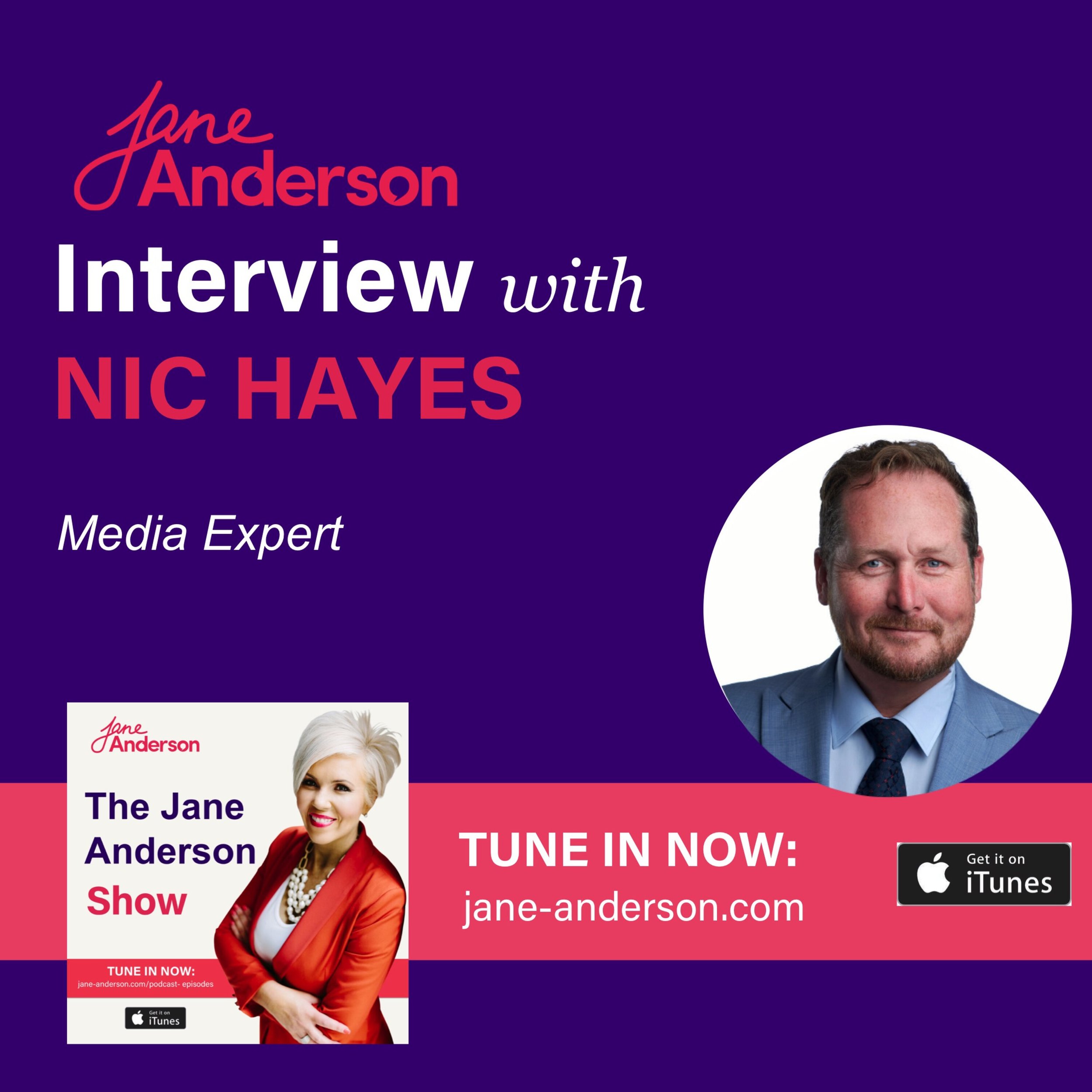
In this episode of The Jane Anderson Show, I sat down with Nic Hayes, founder of Media Stable, to ask exactly that. Nic and his team connect experts with journalists, producers and editors across radio, television, print and online. I have partnered with Media Stable for somewhere between 18 months and two years, and I refer my clients to them because I'm not a PR expert. I don't receive referral fees. I send people there because the work Nic's team does goes above and beyond what I've seen from any other agency working with the media.
We recorded this conversation in February 2020, so some of the examples and event dates belong to that moment. It is the thinking behind them that I want you to take away. If you've ever wondered whether the media would want to hear from someone like you, this one is for you.
Why Media Stable Flips the PR Model
Media Stable was due to turn eight that June, or nine if you count the beta testing the year before. Nic explained that it was always designed to connect experts and media the way media wants to connect with experts, and the way experts need to connect with media.
His view is that the day of the press release is over. There is no one at the other end receiving press releases and working out who you are. So Nic flipped the system. Rather than promoting five clients continually, Media Stable works with 300 to 400 clients and acts as a source of content and experts for the media. "We really work for the media," he said, and the experts benefit from that work. He describes the result as a communications bridge to radio, television, print and online.
What I love about Nic is how visible he is about it. He is a relationship builder and a promoter of everybody, constantly putting his media contacts, including editors, in the spotlight alongside the experts he connects them with.
Who the Media Wants to Hear From
Some of you listening may wonder whether an agency like this would work with a leadership expert or a resilience expert. Nic's answer was that he works with everyone, as long as they have at least 10 years of experience.
He particularly likes working with business owners. They're flexible and nimble, and they can say what they really think, whereas a large ASX 200 company is, in his view, held back by its brand. His test is simple: if you have an opinion you can back with facts and evidence, and you want to make an argument or leave a legacy, you're an expert. It's just a case of how you present it. He was clear that evidence matters, and gave climate change denial as an example of a view he would not back because it ignores the science.
The news cycle also shapes what is needed. During the Australian bushfires in December and January, we needed leadership experts. At the time of recording, Nic said, we needed resilience experts, because there was rebuilding to do. His point was that there is space for everyone. The task is matching the right expert with the right media.
Follow the News Cycle and Plan Ahead
Nic told me the media cycle isn't difficult to follow, and that what happened this time last year is very much what will happen now. The big-ticket areas he named were professional and white-collar topics such as accounting and law, and health, which he called massive. Coronavirus was dominating conversation then, and Nic was worried about the false information circulating.
His tip for listeners has two parts.
Follow the news. Ask what contribution you can make that is different from the average person's, or what slightly different angle you could bring. Then you're ready to deliver your opinion when the call comes.
Plan ahead. Look at the dates coming up, such as Easter, the middle of the year, end of financial year, school holidays and religious celebrations, and find places to contribute before the moment arrives.
The media is always looking for fresh talent and new opinions, Nic said, and everyone listening is potentially who they're looking for. They just don't know who you are yet.
Your Angle Doesn’t Have to Be Your Program
From my own experience, your angle doesn't need to describe what you sell. When I've appeared on Sunrise or on Mornings on Channel 10, I've had to ask what my expertise looks like to the viewer. At the start of the year, people are thinking, "I hate my job. Do I really have to go back after the school holidays?" So I've come in on personal branding, communication, getting through interviews and career change. That isn't necessarily what I help people with day to day, but I have over 10 years of experience in it and it helps on morning television. You're still positioning yourself as the expert, even if you don't have a coaching program on that theme.
Don’t Be Niche
Nic agrees, and goes further. "Don't be niche," he said. If we all picked narrow niches, we'd be a very small media with very little attention. A leadership expert has lots of underlying topics to talk about, and can always bring the conversation back to leadership. "Get your foot in the door" is what he and his team always say.
He added one caution. Don't do what a politician does and give a pre-designed answer. Answer the question that was asked, and then, if you can, lead it back to your topic and expertise.
How Experts Get Media Coverage: Put Your Hand Up
I asked Nic the question I hear constantly from solopreneurs without a marketing team: how do you find these opportunities, and do you have to keep submitting press releases?
His first answer was to put your hand up and say which topics you can talk about. Media Stable creates a one-page profile for each expert, and the key part is the keywords you can speak on. If Media Stable knows you can talk about a topic, it knows to share you with the media.
He gave a recent example. The day before we recorded, Channel Nine News rang looking for a branding expert to comment on Holden's announcement that it was exiting the market, which had been made only minutes earlier. Nic said he could have put me forward, but the story was in Perth. Within minutes, Media Stable had a branding expert heading to the studios that afternoon. Eighteen months earlier, he said, they wouldn't have known who that person was, because they hadn't put their hand up. The media can search Media Stable's database and find you by keyword.
The second part is marketing your expertise through opinion pieces and short thoughts and views, which Media Stable does through its Media Board. You may not be picked up straight away, but Nic described your name appearing in front of around 700 key journalists at the time. Three months later, a 3AW host such as Tom Elliott might want an interview because of something he saw from you earlier. Nic put it plainly:
"The media will not find you. They're not coming to hunt you down."
In the past, he said, producers could pull out a little black book. Today there is no one in the studios or production area to do that work, so Media Stable does it for them.
Build a Content Engine and Say Yes
Media Stable clients receive a fortnightly email, and Nic records a video on what the media is looking for. I didn't want everything to bottleneck with me, so one of my team also watches it each fortnight. On Mondays we hold a media meeting. We call it Meet the Media because we're so used to Nic's event. We ask what Nic said this week, what we should get out to him and what we're noticing in the media.
If you have a business manager, consider doing the same. Get your team aware of what's going on in the news. It reduces the bottleneck and lets you react quickly, because it's not unusual to get a call saying, "We have this story we want to run, and we need to run it tomorrow morning. Are you available?" If you want to do this work, you have to say yes.
Nic didn't soften it. "Say yes to everything," he said. If you really want to say no, this isn't right for you, and if you're not ready, get ready. The fact that you're being asked is an amazing opportunity. He called what I'd described a content engine: use the people around you, and set up Google Alerts for your area of expertise. He has members who don't watch the news, yet they get upset when they miss the chance to speak on a topic.
His number one tip for getting talked about is to get into the news. In his view, there is no greater social media post than a snapshot of you on the set of The Today Show, demonstrating what you do best. It reminds your clients why they work with you, and it prompts a few other people to wonder why they aren't.
Do You Need a Book to Get on TV?
Some people think they can't call themselves an expert because they haven't written a book. Others have written one and ask whether they can now go on TV to talk about it. Nic has three libraries at his office, all full of books, so he's a fan. Published carries a little extra edge, he said, but he doesn't mind whether a book is published or self-published. What he cares about is what's in it. A book is the best business card you'll ever produce.
His second piece of advice matters more. Build your experience with the media before you deliver your book, because writing one won't get you on air by itself. After a couple of interviews, "I've got a book coming out" becomes a reason for them to invite you on.
Media Is Brand Building, Not a Sales Channel
The other question I'm always asked is about leads. People appear on a show or in a magazine and then say, "I've got no leads. I need sales out of it."
Nic started with history. When there was one newspaper, plus radio and television, the sales funnel from an appearance was stronger because there was little competition. Today newspapers are thin and there is far more competition. Being on TV, radio or in print doesn't automatically mean the phone will ring off the hook. "The reality check here is no," he said. What you're really building is your brand, trust and standing in your space, and each engagement makes someone more likely to want to work with you. He mentioned Sam Jackson, a health coach Media Stable works with, whose books were full for the next three months after a piece on Sunrise. But it depends on the product, the service and what else is going on.
If you go in purely for the purchase, he warned, you're going in with the wrong mindset. Anyone can do a transaction. It's tougher to build a relationship with clients and to build your standing and authenticity.
That matches what I tell my own clients. The first thing I look at is revenue. If you aren't selling anything at the moment and you go on TV expecting people to rush to buy, you'll be very upset. When I started my practice, I was on Today Tonight and did a full story with them. The opportunity came to me, and I wasn't investing in PR at the time. But I encourage you to look at it in the context of your practice and not put pressure on yourself to sell a set amount off the back of an appearance. This is a brand-building exercise about trust, influence, authenticity, connection and credibility. It will help your revenue over the long term, but it doesn't work like "media appearance, sale".
Nic had a blunt addition. If you want to sell your products and services, buy advertising. You can own that space, and he supports advertising as part of a communications budget. But if you want to change how people think and be seen as the leader in your industry, be in the media. Its audience wants to be educated, informed and entertained, and if you can do all three, you build an expert profile that goes beyond any transaction. "Transactions will come," he said.
He added that two mutual friends, Rowdy McLean and Marty Wilson, have each told him that even after two years off TV, people still come up and say, "Saw you on TV." Nic's theory is that those people more likely saw them on their website while researching them, so something from two years ago can feel like yesterday. As he put it, if he's going to work with someone, he wants to work with someone the media works with.
Amplify Every Media Moment
I told Nic that the biggest missed opportunity in PR is the lead-up. Rowdy McLean made the most of it. He shared photos of himself preparing, then of the film crew arriving, then footage of the interview. He told everyone it was on Today and repurposed the content for his social media audience.
Nic said he's not supposed to have favourites, but Rowdy's approach was brilliant. He had 120 comments on his LinkedIn post before he even went to air, and the media loves that because it raises the profile of the program too. The media flew to him and filmed in his backyard. What he did before, during and after the interview turned an eight-minute piece on weekend television into an eight-day saga.
The same thinking applies to anything you do:
Use throwbacks and Facebook memories, put the piece on your website and add it to your online course.
Ask the broadcaster for the footage, ask a radio station what you can use and, for print, ask for a copy of the article.
Send it to your clients and put it in your next newsletter.
I'm a big fan of repurposing content. Don't just let it sit on Channel 9's website. It helps you, and it shows you support that network or show.
Meet the Media: Face to Face With the People Who Decide
I've been to Nic's Meet the Media event, and I think it's one of the best-value days in the calendar. I'll admit I was scared before my first one. I wondered whether I could pitch to all those people and whether I was good enough. When I went, it was a dream.
Nic reframed the nerves for us. That feeling is adrenaline and a little anxiety, and if you didn't feel it, you wouldn't be ready for media. The 2020 events were scheduled for 19 May in Perth, 26 May in Sydney and 28 May in Melbourne. Nic said the Sydney line-up included ABC Q+A, 60 Minutes, The Daily Telegraph, 2GB and The Sydney Morning Herald, with the Channel Nine, Seven and 10 chiefs of staff, The Age and 3AW also on his list. Those dates and the discount code he offered have long passed, so check Media Stable's Meet the Media page for current details.
Nic explained why it works. Experts often reach out to the media, hear nothing and conclude they're insignificant. That's not the case. The media gets 400 pitches a day and takes two or three, so it simply doesn't have time to reply. Meet the Media puts real people in front of each other, eyeball to eyeball, so a producer can say, "I could use you in my program." The pitching side, he said, isn't hard. It's a short introduction of who you are, what you can talk about and your position on a timely topic. For the media, it's a win because they leave with new contacts. For experts, Nic said, you walk away with connections that might take two or three years to make, in one half day.
When I attended, there was Q&A with the media about what they're seeing, how they operate day to day and how they receive information. Then we worked in small groups with people from places like Channel Nine and The Today Show, sharing our expertise and our pitch or angle. What surprised me most was how much nicer they were than I'd feared. They were respectful of everyone, asked questions and gave feedback such as, "The angle you're coming from is probably this, and I'd come at it this way." They were accommodating, educational and helpful to every person I saw.
Nic said that's exactly what they go for. He told us media people aren't rodents with claws out. They're really nice people, and they enjoy the event because they spend five hours in a room with people who might enhance their work. If you're not right for a particular show, they'll tell you where you might fit better. He also loves it when two competing outlets start fighting over an expert, and he reminded us that the media needs human stories. Many experts go in thinking, "I must sell this." Forget that, he said, and start giving yourself. When you give, you build bigger circles and communities, and other people start referring to you.
His other tip is to follow up. When you appear, send the producer or journalist a personal note and the piece, and ask for their opinion, authentically. Nic told us that a piece of media will be the greatest source of income you'll ever have, and will keep working for you for years. He recently reposted a piece he did on Qantas Radio with Alan Kohler four or five years ago, and it picked up another 40 or so listens. Doing media, in his words, is about building assets. I hadn't thought of it that way, and it fits how I teach content: it's a highly valuable asset you can use over and over, with a high return for your business.
For me, Meet the Media was the best $500 I've ever spent. Take a notepad and your questions, think about your pitch and, if you can't afford to go the night before, take an early flight. Nic made the same point: if you're in Brisbane, fly to Sydney or Melbourne.
Back Yourself and Find Out if Media Is Right for You
Nic left us with a few final thoughts. Believe in yourself, take a risk and back yourself. If you have doubts, ask: if I don't do it, what will I regret later?
He was realistic, too. Some experts try media and decide it isn't for them, and Nic has heard people say that Meet the Media saved them five years of heartache and paying a PR firm. But he doesn't want people to go in with that mindset. He wants experts to arrive thinking: I'm a business owner with something to say, so I need to find out how this works.
If you put your hand up, the media won't automatically say yes, but they will say, "I do know you." One of his favourite opening lines with media is, "Hi, I met you at Meet the Media." It tells them you understand the media cycle and the time pressure they're under, and that you invested time to learn it.
Media also changes a lot, with new producers coming and going. Forget blanket press releases, Nic said, and start sending to your relationships. When the relationship is mutual, you win. "There's no tricks to it. There's no smoke and mirrors." It's all about relationships and content.
Frequently Asked Questions
Who does Media Stable work with?
Nic says he works with anyone who has at least 10 years of experience, and he particularly likes business owners because they're flexible, nimble and can say what they really think. In his view, anyone with an opinion they can back with facts and evidence is an expert.
Do you have to be niche to get media coverage?
No. Nic's advice is "don't be niche". The media is looking for breadth, so use your wider experience to get your foot in the door, then lead the conversation back to your own area of expertise.
How do experts get on the media's radar?
Put your hand up. Media Stable builds a one-page profile with keywords you can speak on, so journalists can search for you, and it shares your opinions and story ideas through its Media Board. Nic's warning is that the media will not come hunting for you.
Will a media appearance bring in sales?
Not automatically. Nic says the phones won't necessarily ring off the hook, and that media builds your brand, trust and standing. Some experts do get busy, such as the health coach whose books are filled for three months after a Sunrise appearance, but he says it depends on the product and service. For quick sales, he suggests advertising.
Do I need a book to get on TV?
No, and having one won't get you on by itself. Nic cares about what's in the book, not whether it's published or self-published. He suggests building your media experience before the book comes out, so you can then say you have a book coming.
How do I get the most out of a media appearance?
Amplify it before, during and after, as Rowdy McLean did. Ask for the footage or article and reuse it in your newsletter, website and courses. Nic also suggests sending the producer or journalist a personal note with the piece.
About Nic Hayes
Nic Hayes is the founder of Media Stable, an Australian business that connects experts with journalists and producers across radio, television, print and online, and the organiser of the Meet the Media events. Media Stable is also a sponsor of the national convention of Professional Speakers Australia. Learn more at the Media Stable website.
Conclusion
My conversation with Nic comes back to one idea: the media won't find you, so you need to be findable, useful and easy to work with. That means putting your hand up with a clear profile, following the news cycle, being broad enough to get your foot in the door and being ready to say yes at short notice.
It also means being realistic about what media does. As Nic and I both said, it builds trust, credibility and connection rather than delivering a sale from a single appearance. Then it asks you to do your part: amplify the moment, repurpose the content, follow up with the people who put you there and keep building relationships.
Work With Jane Anderson
If this conversation with Nic resonated with you, here are some ways to take the next step:
Women With Influence: Join a community of B2B women consultants, coaches and advisors building world-class practices.
Grow With Influence: Explore my coaching for B2B practices.
1:1 Coaching: Work directly with me on your personal brand and business growth strategy.
Toolkit: Use scorecards and diagnostics to see where your practice stands.
✨ Tune in to hear Nic Hayes on how experts get media coverage, why you shouldn't be niche and how to turn every appearance into an asset.
Key Takeaways from Today’s Episode:
-
A one-page profile built around the keywords you can speak on lets journalists find you when a story breaks. Channel Nine found a branding expert within minutes of the Holden news.
-
Nic says the media wants breadth. Use your wider experience to get your foot in the door, then lead the conversation back to your own expertise.
-
The media cycle repeats year to year. Watch the news for a different angle, and look at upcoming dates such as Easter, end of financial year and school holidays.
-
Get your team to watch the media, set up Google Alerts and be ready when a producer asks if you're available tomorrow. If you're not ready, get ready.
-
A book is a great business card, but Nic says what's in it matters. A few interviews first make it easier to be invited on to talk about it.
-
Look at your revenue first, and treat appearances as brand building. If you want fast sales, Nic suggests buying advertising.
-
Rowdy McLean turned an eight-minute segment into an eight-day story. Ask for the footage or article, then reuse it in your newsletter, website and courses.
-
Meet the media in person, follow up with a personal note, and send your pitches to your relationships, not in blanket press releases. Each piece of media you earn is an asset that keeps working.