Podcast is also available on the versions below:


Get Notified Of Future Episodes on Apple Podcasts | Spotify | Youtube
If you sell your expertise, does putting your own name on your business make you look small?
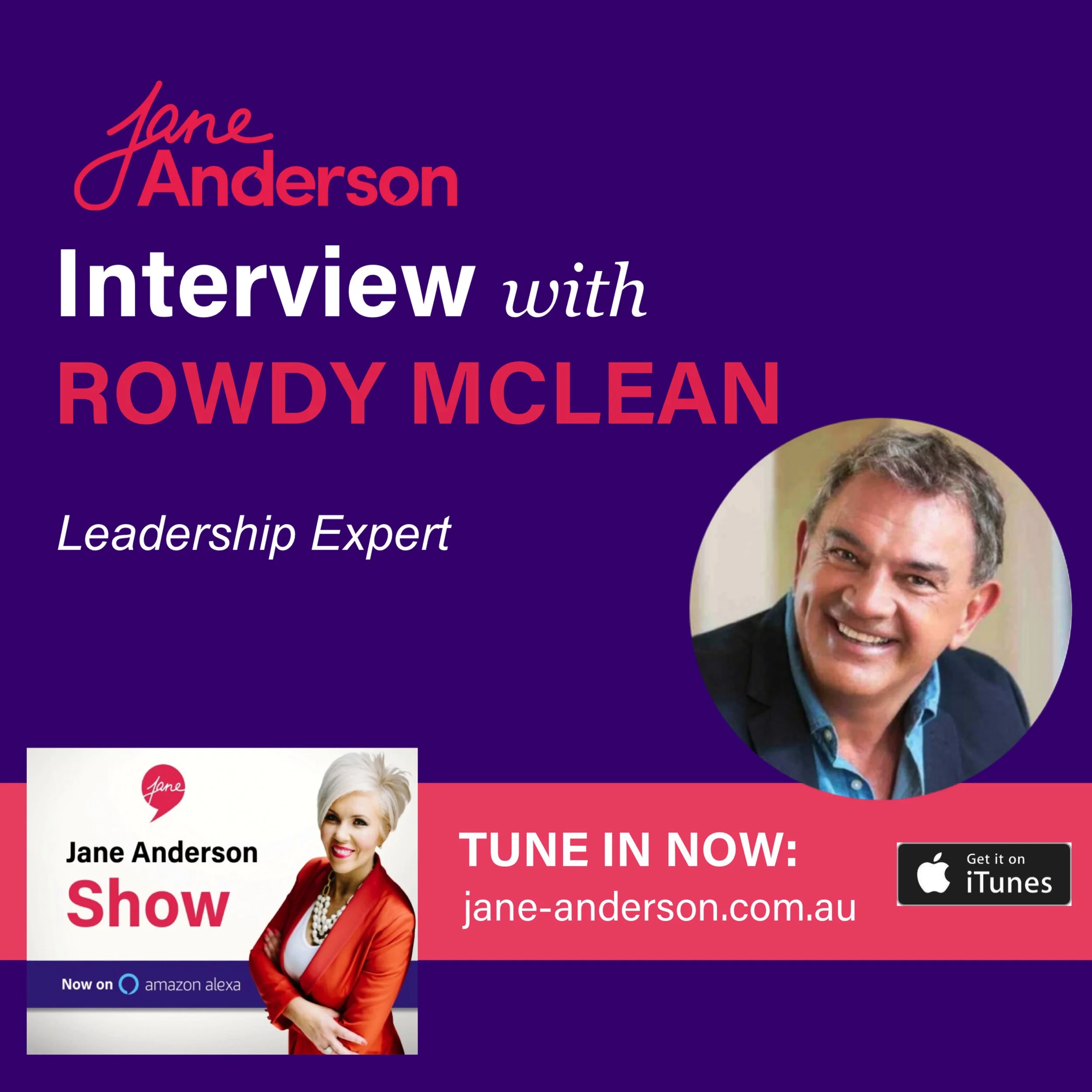
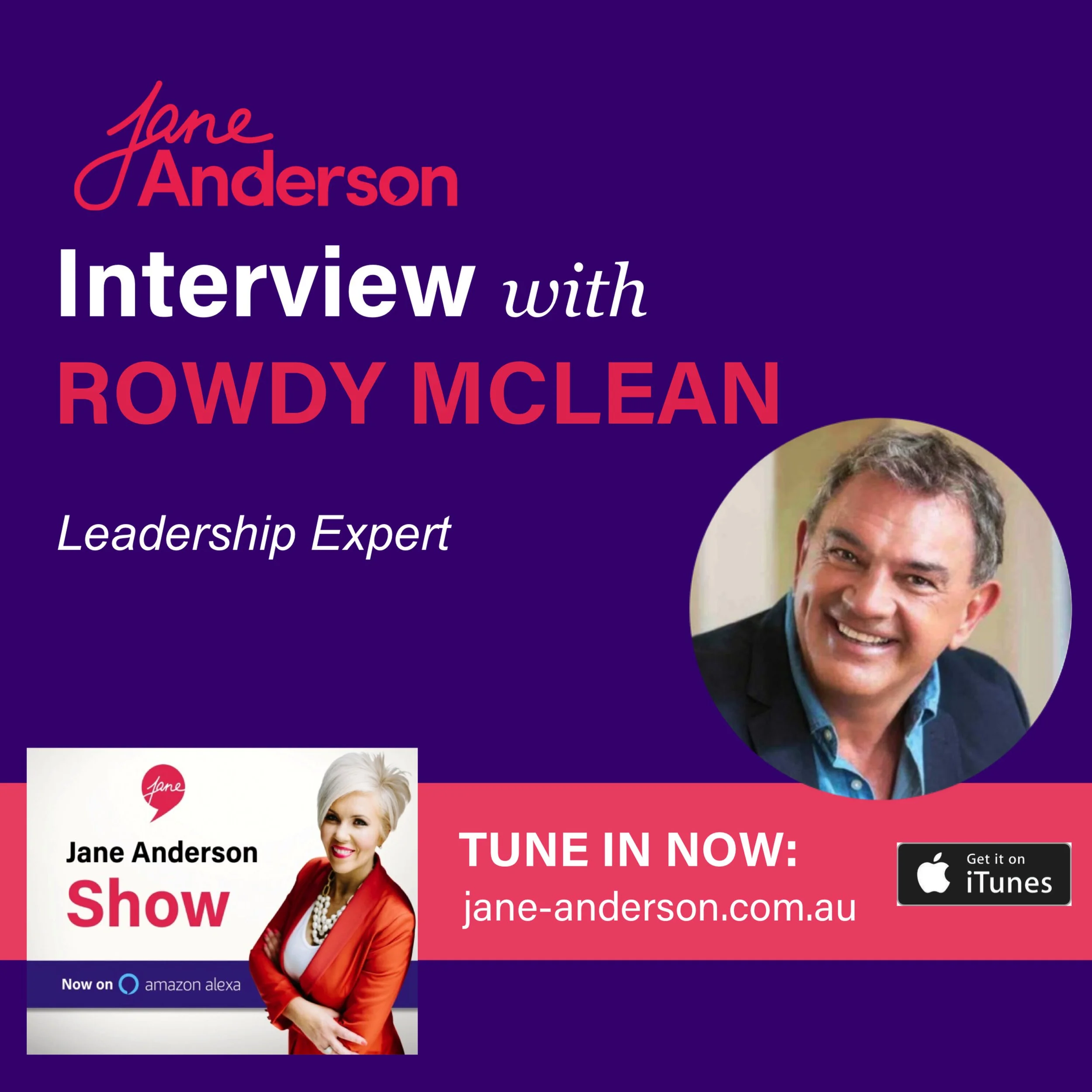
That was the starting point for my conversation with Rowdy McLean, an international keynote speaker, author and business and leadership consultant. It is one of the questions I hear most often from experts, and one I wrestled with myself. When I started my business I had a different name, and I was scared of coming out under my own. Rowdy is known for helping people play a bigger game, and his own business sits at rowdymclean.com, so I wanted to hear how he sees it.
In this episode of The Jane Anderson Show, which we recorded as we headed into 2017, Rowdy explains why using your own name gives you room to grow, why people buy you before they buy your work, and what he wishes he had done from day one. He also shares what he was planning next. As I said in my introduction, Rowdy retired at 34, got bored, and went on to build and lead companies. When we recorded, he had spoken to more than 250,000 people across the US, Europe, Asia and Australia, and his book, Play a Bigger Game, had been published in seven countries. You can also listen on Apple Podcasts.
Playing a Bigger Game Is Not About Doing More
Rowdy describes himself first and foremost as a speaker. He speaks at conferences and events, and his main topic is playing a bigger game: how people achieve more, be more, do more and have more than they ever thought possible. He also runs single or multi-day immersions, 12-month programs and executive mentoring programs. Some of his clients tell him that working with him is like "climbing into an express elevator of a 100-story building", getting to the top much faster and more smoothly than they expected.
I asked whether that was really about taking people to the next level, and Rowdy added an important point. Achieving more, he said, is not about doing more. Sometimes it is about getting rid of things you are doing that are not serving you, your team or your organisation, so he spends as much time stripping baggage away as he does motivating people and adding to what they do.
Because we were recording as people were getting ready for 2017, Rowdy offered one tip: make sure whatever you choose to do is the right next thing. Not the easiest thing, and not the thing your friends, partner or colleagues want you to do. Spend time identifying the right next thing for you, then do that and only that. In his book, he describes a method for ranking a group of things, say five options, to clarify what matters most. He said people are often surprised by what ends up on top, and he has covered it on his Play a Bigger Game podcast.
Does Using Your Own Name Make You Look Small?
This is one of the things I hear most often from people who are nervous about putting their name on their business. They ask whether using myname.com means they are small, or not a big enough business. So I put it to Rowdy directly: here you are, the expert on playing a bigger game, and your business is your name dot com.
His answer was a clear yes, you can play a big game under your own name. If you are selling your intellectual property, he said, "then you are the business", so it makes sense to use your name. If you are weighing up the same decision, you may also like my conversations with Dr Monique Beedles in Episode 74 and Gillian Smith in Episode 99, which looks at personal brand versus business brand.
Why a Name Gives You Room to Grow
Rowdy gave a practical reason as well. If you lock your business name into a single piece of content, such as Play a Bigger Game, you are locked into it and have no flexibility. With rowdymclean.com, he can be Play a Bigger Game, Remarkability, customer service and many other things under one banner, because the brand is about who he is as an individual and the intellectual property he can deliver.
He pointed out that he might come up with a new piece of intellectual property in 2017, and he would not want to build another website around its name. Instead, he can tell his clients to visit his website to see the new program, and while they are there they will see everything else he does. In his words, he is promoting himself all in one spot.
I put it this way: you do not have to keep having a personality transplant every time you bring something new in. You are you, and people are buying you. For Rowdy, that means he can keep adapting and evolving without starting over.
People Buy You First, Then Your Work
Rowdy picked up on something I had said at the start of the episode: people buy from people, and they buy from people they trust. He described how that plays out online. Nobody visits a website called leadership.com and decides to buy because it sounds like good leadership. They go to rowdymclean.com, watch his showreel, read the blogs, listen to the podcast and download some of the diagnostics. Then they decide they like his style and the way he sounds, and that they can trust him. On a generic leadership site, he said, there is no opportunity to build a relationship.
I added, as I believe Seth Godin says, that the people who buy from you are the people who know you. If you have built that relationship, they are the ones who trust what you say. Rowdy agreed.
Authenticity Matters More Than a List of Adventures
I asked Rowdy whether people come to him because they are captivated by what he has achieved: Kilimanjaro, the gorillas in Rwanda, the marathons, the Serengeti. He said those things build trust. "They're all real, and they're all me." If you are going to talk about playing a bigger game, he explained, you have to have walked the talk. He has content, including seven ways to play a bigger game and the pillars of playing a bigger game, and he does not belittle it. But in the first instance, just as I had said, people buy him. Then they buy his work.
That is why his website matters. It lets people experience what he is like and build enough trust to want a conversation with him, and as he put it, "I might even have a cup of coffee with him."
So what if you have not done those kinds of things? I asked Rowdy what helps someone connect with their audience through their name when they have not climbed mountains. "Authenticity," he said, more than anything. He gave the example of a friend who was about to leave the corporate world to run a business called Baking Cakes. For years she had made birthday cakes, Christmas cakes and wedding cakes, magnificent creations for people, and eventually people started asking whether she would make one for them. All she needs to do, he said, is create a website with pictures of the cakes, her expertise, her approach and her passion. People who want cakes will buy them, as long as she is being herself. But if she were to say she had never really made a cake and wanted to be an expert in making cakes, "people will see through that."
Share the Passion, Even If You Are Not an Expert Yet
Rowdy took the example further. Imagine you are not yet an expert at baking cakes, but you are pretty good and you have a massive passion for it. All you need to do is share that passion. What do you love about making cakes? Why do you think it is so fantastic? What impact does it have on a child's birthday party or someone's 60th wedding anniversary? What role does the cake play? It is easy, he said, to create a story from your passion, and people will buy into it.
That reminded me of a woman I spoke to not long before we recorded. As best I recall, her daughter had autism, and she wanted to create online learning for parents of children on the spectrum. She had discounted the idea because she was not a psychiatrist, had no formal training and had not done a university degree. I told her to hold on. Parents who work with experts in that field often find that the experts do not understand what it is like to live with it 24 hours a day. You do not necessarily need all the degrees. Your lens and your experience matter, and they show up in your passion too. Rowdy said that definitely holds true.
He then came back to the baker to make the point about domain names. If her website carries her own name and she starts making cookies, that is fine. If her website is cakebaking.com and she starts running a buffet delivery service, she has to create another website. With your own name, he said, it is just so much easier.
What Rowdy Wishes He Had Done From Day One
I told Rowdy I wished I had known that much earlier, and I asked whether he had always started with his own name. He had not.
Choose a Name That Says Something
His first company was called Creating Synergy. He wishes he had thought it through: say it over the phone and it sounds like you have had a few drinks, and it does not tell anybody anything. Why, he asked, would anyone look up Creating Synergy? It was, in his words, a stupid name, and he is stuck with it as a brand. It is dying off a little, he said, because more people now go to rowdymclean.com and ask for the services that Creating Synergy provides.
Build a Database From Day One
Asked what else he would do differently, he did not hesitate. He would build a database from day one, and be attentive to how valuable it is. If he had done that, he said, he would have a database of a million people. That makes life so much easier when many people know the brand under your name, because you can communicate with them and create special things for them. He only got diligent about it in the last five years.
Go for Quality From Day One
His second lesson was to go "as high quality as you can from day one." He said his speaker reel was the first documentary-style reel in speaking, which is now common, and that he was the first speaker to put QR codes inside a book so readers could watch a video instead of reading a chapter. He wishes he had invested more at the high-quality end earlier, rather than trying to do everything on a shoestring.
He was careful to add that you do not have to spend thousands and thousands of dollars. Whatever your budget, create a high-quality version rather than a massive one. He would rather see a three-page website that is really great than a 30-page website that is so-so.
I agreed that quality is part of branding and trust. If you cannot invest in making your own quality stand out, how will you deliver quality to a client? Rowdy had rebuilt his brand and website that year, and more often than not the contacts he now receives start with, "Hi, Rowdy. I really love your website." He said it did not cost him that much, only a little more than doing it himself or doing it on the cheap.
Show Up the Same Way Everywhere
I mentioned that if you visit Rowdy's website, Facebook or Instagram, you get a feel for what life is like in his world. He lives on the Gold Coast, and his posts often show him at the beach, travelling or in his office. For anyone who wants to play a bigger game, that creates an aspiration: he is playing one himself, and he lives a four-hour workweek without going hell for leather.
Rowdy said it is authentic and real, and you do not have to spend a lot of money to do it. He pointed out that people decide quickly whether they trust you. He recalled that I often say people need something like 10 experiences of you before they buy. Those experiences come from his website, Instagram, LinkedIn, Facebook and other touchpoints, and each time someone turns up it all gels. It is not one brand here and another brand there.
Some people will see all of that and decide Rowdy is not for them. The people he wants to work with see it and think, "he's my man." They reach out, they have a conversation, and then they do the work. It is pretty simple, he said, and he joked that they get it all done between breakfast and lunch on Monday so he can play golf.
What Rowdy Is Doing Next
I asked what is next, and whether there is anything he has not done yet. At the time we recorded, Rowdy had these plans:
Adventure: The following year, he planned to raft the Colorado River from one end of the Grand Canyon to the other, in a wooden dory rather than a tourist rubber raft. Not long after that, he wanted to camp in the Amazon jungle, which he said is disappearing fast.
Business: The second edition of Play a Bigger Game was due out in February the following year, rebranded, with content changes to suit where he is now. He also had another book in the wings, and he thought he might be working only five or six hours a week.
I joked that he would be working overtime on a five-hour week.
Don't Play Small
I asked Rowdy to leave us with a message for 2017. His answer was short: "Don't play small." Even for me, he said, and he knows I am playing a bigger game, we have no idea what we are capable of if we start to step into it. He talks about this every week on his Play a Bigger Game podcast. If you do not allow people to shut down your dreams, you will be amazed at what you are capable of.
"There's nothing I've done that anybody listening to this couldn't do," he said. He did not know that a kid with long hair from Guyra would end up where he has. He started to dream, and he started to execute on the dreams.
If you want to see where you stand, I mentioned that when we recorded, Rowdy's website had a downloadable questionnaire you could fill out with your details to see how big a game you are actually playing, and what to do next. He described it as a bit of fun and a bit of a test to see whether you are a bigger game player.
Frequently Asked Questions
Should you use your own name for your business?
Rowdy McLean says yes if you sell your intellectual property. In his view, you are the business, so it makes sense to have your name on it. It also lets you add new programs and ideas under one banner without building another website.
Does using yourname.com make a business look small?
Not according to Rowdy. He runs a business centred on playing a bigger game at rowdymclean.com. Using your own name, he says, lets you promote everything you do in one place and build a relationship with the people who find you.
Why do people buy from you before they buy your work?
Rowdy says people decide quickly whether they trust you. They visit your website and other touchpoints, see your style and how you sound, and decide whether they want to talk. He says people buy him first, then they buy his work.
What if you have not done the things your guest has done?
Rowdy's answer is authenticity. You have to walk the talk on the subject you teach, and you should be yourself. People will see through anyone who pretends to be an expert.
How can you share your expertise before you are a recognised expert?
Share your passion. Rowdy suggests telling people what you love about your craft, why you think it is fantastic and what impact it has on people's lives. He says it is easy to create a story from the passion you have, and that people will buy into it.
What did Rowdy wish he had done differently?
He wishes he had chosen a clearer business name than Creating Synergy, built a database from day one and invested in high quality earlier. He says that for any budget, a small high-quality website is better than a large one that is so-so.
About Rowdy McLean
Rowdy McLean is an international keynote speaker, author and business and leadership consultant. He retired at 34, then returned to build and lead companies, and now helps individuals, teams and organisations play a bigger game through keynotes, immersions, 12-month programs and executive mentoring. He holds an MBA and the Certified Speaking Professional designation. At the time of our conversation, he had spoken to more than 250,000 people, and his book Play a Bigger Game had been published in seven countries.
Conclusion
Rowdy's message runs through everything we discussed: you can play a big game under your own name. When you sell your expertise, your name keeps you flexible, lets people experience who you are and gives them a reason to trust you before they ever pick up the phone. He said the same about quality and about building a database early. The brand name he chose first was not clear, and he wishes he had invested in a list and in quality sooner.
If you take one thing from this episode, make it his question: what is the right next thing for you? Not the easiest, and not the one other people want. Choose that thing, do it well, be authentic about it, and do not play small.
Connect with Rowdy McLean: Visit rowdymclean.com to explore his work. You can also find him as Rowdy McLean on LinkedIn and Twitter, and as Play a Bigger Game on Facebook. When we recorded, his Play a Bigger Game podcast was listed on his website.
Work With Jane Anderson
If Rowdy's story resonated with you, here are some ways to take the next step:
Women With Influence: Join a community of B2B women consultants, coaches and advisors building world-class practices.
Grow With Influence: Explore my coaching for B2B practices.
Toolkit: Explore my scorecards and diagnostics to see where your practice stands today.
✨ Tune in to hear Rowdy McLean on using your own name in business, why people buy you first and why you should not play small.
Key Takeaways from Today’s Episode:
-
Not the easiest thing, and not what friends, partners or colleagues want. Spend time identifying what is right for you, then do that and only that.
-
Rowdy says that when you sell your intellectual property, using your own name makes sense.
-
A name tied to one piece of content locks you in. Your own name lets you add new programs under one banner and promote everything in one place.
-
Your website, social profiles and other touchpoints let people experience your style and decide whether to trust you.
-
Walk the talk on what you teach. People see through anyone who claims expertise they do not have.
-
If you are not yet an expert, tell the story of what you love, why it matters and what difference it makes to people.
-
Rowdy wishes he had started both earlier, and says a small, high-quality website beats a large, so-so one.
-
You have no idea what you are capable of until you step into it, and nothing Rowdy has done is out of reach of the people listening.