Podcast is also available on the versions below:


Get Notified Of Future Episodes on Apple Podcasts | Spotify | Youtube
If you are an expert, you have probably been told to be more visible. You may also have a nagging worry that every post you publish tips you from helpful into pushy.
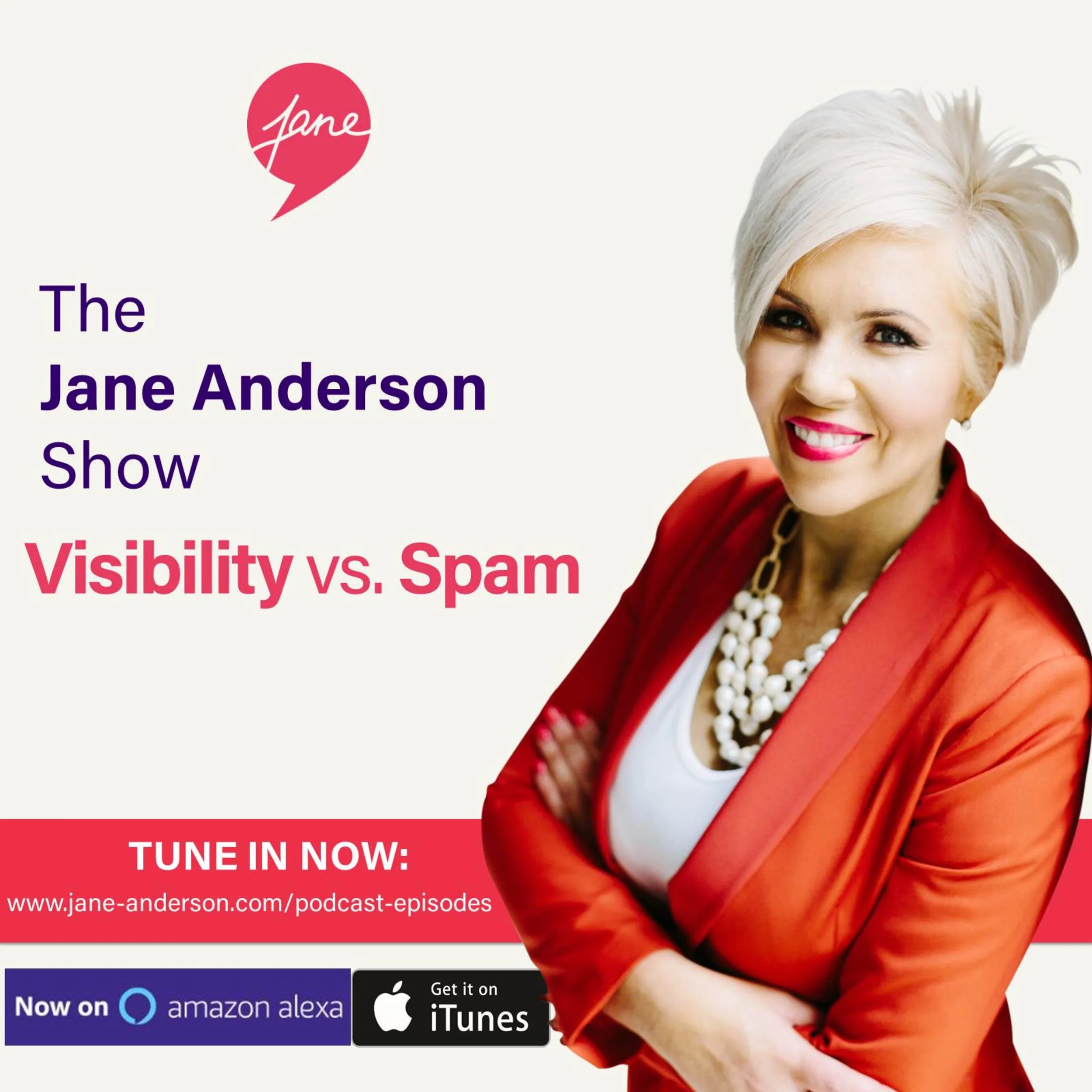
In this solo episode of The Jane Anderson Show, available on Apple Podcasts, I take on that tension directly. When I talk to experts, one problem comes up again and again: they are hard to find, hard to see and hard to remember, so people struggle to recall them when they need something. Their pipelines dry up. But I also see the opposite problem, which is plenty of content and still no pipeline.
In this article I walk through how to tell visibility from spam, the content mix I recommend, why likes are the wrong measure, and how to plan so you are not scrambling for an idea every morning.
When Visible Isn't Enough: A Story From My LinkedIn Course
I recently ran a course on LinkedIn for lead generation. I usually run these programs inside large corporates, but this one was public, for a small group of female entrepreneurs.
One attendee told me she thought she had been really visible. She had been putting lots of content out there, positioning and marketing herself, and yet her pipeline had dried up. She was beside herself, so stressed she did not know what to do next.
I knew her well. I had been a client of hers and I knew her business, so I understood the frustration. After a chat, and a look at what she was doing, it was clear she was definitely visible. But all of her content was about her and about selling her stuff.
That is the trap. When we put a lot of content out, the line between adding value for our audience and marketing, or even spam, can get blurry.
Why Constant Promotion Backfires
When you are trying to reach your audience, it is tempting to keep putting out ads: your latest course, your service offering, your coaching program. The problem is that people get a little bored with it, and a little irritated.
I am connected to a couple of people whose feeds I have turned off. The more of their promotion came through, the more annoying it became. Your connections have that option too.
The Fear Behind the Silence
If you are asking yourself, "How do I know what to put out there?", you are not alone. People tell you to be more visible, but you worry you are running out of things to say. You want to keep your pipeline from drying up, and you also want to sell. Where is the balance?
There can be a fear underneath it as well: the fear of putting your face out there and being called a know-it-all. Here in Australia we have the tall poppy idea, where it is not cool to stand out or to say "look at me". If you have seen the Australian show Kath & Kim, you will know the line. It can feel attention-seeking.
What tends to happen is that we procrastinate and do nothing at all, and that leaves us in a worse position.
Earn the Right to Sell
Michael Port, who wrote Book Yourself Solid, talks about earning the right to sell. Gary Vaynerchuk talks about this a lot too, including what he calls generosity marketing, and so does Seth Godin, the author of marketing books such as Tribes, Linchpin and Purple Cow. What they all say is true.
For your content, it starts with being clear about what you are trying to do, what you are trying to sell and what your positioning is. Two principles follow from that.
Principle One: Stay On Message
Whatever appears next to your face and your name in my feed, whether it is LinkedIn, Facebook or anywhere else, needs to be consistent about what you want to be known for.
Say you want to be known for resilience: bouncing back, mindset and related ideas. Ideally I should not see anything come through with your face and name that is not on that subject, or very closely related, or part of the programs you deliver.
That includes what you like and share. If your message is resilience and I see you liking or sharing content about marketing, or about performance, which could be related but is a bit of a stretch, people get confused. They will not understand what you stand for.
Principle Two: Get the Content Mix Right
In my book Connect, I suggest a content plan of roughly 80/20. If you are a thought leader you can get away with a little more, because your job is to advance the thinking in the space. Matt Church, the founder of Thought Leaders Business School, talks about this a lot, particularly in some of his blogs and posts. I am a mentor at Thought Leaders Business School, and I mentor a number of students there who are experts in their field.
For people with personally branded businesses, I think there is an advantage over the big players. It is about your generosity and your giving to your audience, not all about you.
Here is how I suggest splitting it:
About 80% curated content, built around your message. If you want to be known as a content marketer, everything I see from you should be about content, data, research and what other people are saying on the subject. I should not see you sharing posts about leadership or kindness.
The remaining 20%, or a little more, is your own original content and your call to action to sell. By then you have earned the right to share it.
If 100% of what you publish is designed to sell, you are going to be annoying. It becomes obvious you are trying to sell to me, and you are not sharing ways for me to learn. If you have given first, with plenty of content and advice you have found across the net, I am more likely to trust you.
On this show it is always about people getting to know you, like you and trust you. The more you try to sell through your content, the more it feels like the used car salesman: a bit sleazy, a bit underhanded, like I am being used so that I can be sold to.
Be Mindful of Who You Are Reaching
When this episode went out in June 2017, I noted that LinkedIn had more than 400 million people on it, which is a big opportunity. Make sure your connections are the right ones, the people you want to sell to. Then act in their best interest. Think about what you want to be known for with that audience and what you can share in relation to it.
And bear in mind that this is not a popularity contest.
Measure Consistency, Not Likes
People give up really easily, and I find it is because they are using the wrong metrics. They look at the likes and the comments. "I shared this and nobody liked it." "I'm sharing stuff and nobody's commenting."
If your focus is there, it tells me you are losing your conviction because you are looking to others for validation. That is not the right space to be playing in. I talk about the metrics that matter in one of my other podcasts, in some of my blogs and in Connect.
What matters is that you keep consistent.
Audit Your Activity Feed
One of the first things I do when I start working with a client, even when I am just on the phone with someone making an inquiry, is audit their activity feed. How visible have they been? Do people know them? Then I look at the quality of that visibility. Have they stayed on message? If not, I know that is one of the reasons they are struggling.
You can have a rockstar profile. You can create all the connections, advance conversations and build your funnel and your leads. But if you have not built trust, it will not carry you.
I often think of a date I went on many years ago. The man turned up with a backpack. I thought he was heading to the gym, so I asked. He said, "No, you never know, everything might go all right." I thought he was joking, but he had actually brought the backpack thinking it would go so well he would not need to go home.
Your audience can feel the same way. If you turn up with "I want to sell to you" before you have given anything through your content, I am more likely to think, "Who are you? I haven't even met you yet." It is like arriving with the backpack. It repels people and can scare them off.
Keeping visible, but in service of your audience and not making it all about you, means they get to know you, like you and trust you.
Plan Your Content So You Stop Procrastinating
A content plan has to involve some planning, which is why it is called a plan. At the time of recording, mine was built out to about the end of 2017.
Be clear about what you are selling for the rest of this year and what you plan to sell next year. Is it exactly the same thing? Will you be rolling out new programs? Your plan should be clear about what you are doing over the next 12 to 18 months. Without it, you reach each day and ask, "What am I going to share today? What am I going to like today? What am I going to blog on?" We procrastinate because we suddenly have to come up with an idea in that moment.
I keep a spreadsheet of the topics I need to cover. When I sit down to write a blog or record a podcast, I refer to it, so I do not have to invent an idea on the spot. I know overall what I am doing for the next 12 to 18 months, and I list the specific pieces of content, which I work on each quarter. In practice, I am generally working a quarter ahead.
The benefits are momentum and productivity. You can get the content out and keep moving.
Build a Curation Plan
To stay visible and on message, you also need a curation plan. When I recorded this episode, I mentioned a few tools.
Scoop.it: At the time it had a free account. You choose one word, for example resilience, and each week it emails you articles it has found on the web in relation to that word.
Others: I mentioned a new curation tool in Klout, and I believed HubSpot and Hootsuite might have one as well.
A note for today's readers: these were the tools I named in 2017, and the landscape has moved on. Klout, for example, shut down in May 2018, so check what is currently available before you choose a tool.
Be Memorable and Easy to Refer
If you are not visible, people forget who you are. So you have to keep visible, keep educating and be memorable. Without memorability and presence, you will miss out.
The person you are connected to might not need your help right now, but you want to be easily referable. Someone may ask them, "Do you know a resilience expert?" and they answer, "Absolutely. This person I'm connected to on LinkedIn, have a chat to her." If you are doing a good job, you will notice you get tagged in comments. I get tagged a lot when people are looking for help with LinkedIn: "Have a chat to Jane Anderson."
Questions to Ask About Your Own Visibility
Go through your activity feed, which you can reach from your LinkedIn profile. Remember that everybody sees what you have liked, or at least your connections do. It is different from Facebook. Then ask yourself:
How visible have I been? Have I been visible every single day?
Has every piece of content been on message, including anything I liked or shared?
Do I have a content plan?
Do I have a curation plan set up?
Do I have a plan for my original thought leadership, so that I procrastinate less and stay strategic and on message?
Frequently Asked Questions
What is the difference between visibility and spam?
I describe the line as blurry. Visibility adds value for your audience, while spam is content that is all about you and about selling your stuff. The attendee on my course was definitely visible, but her content was all about her and what she was selling, and her pipeline had dried up.
What content mix do you recommend?
Roughly 80/20. About 80% should be curated content built around your message. The remaining 20%, or a little more if you are a thought leader or have a personally branded business, is your own original content and your call to action to sell.
Why is my pipeline drying up when I post so much?
In the case I describe, the content was all about the person and about selling. When everything you publish is designed to sell, it becomes annoying and obvious, and it gives people no way to learn. Check whether you have given first, and whether you have stayed on message, because trust is what the rest depends on.
Should I measure success by likes and comments?
I do not think so. Judging yourself by likes and comments means you are looking for validation from others, and I find it is a common reason people give up. The thing that matters is staying consistent.
How far ahead should I plan my content?
I plan overall for the next 12 to 18 months, then list the specific pieces and work on them each quarter, so I am generally a quarter ahead. Knowing what you are selling for the rest of this year and next makes the plan clearer.
How do I stay on message on LinkedIn?
Everything that comes through with your face and name should relate to what you want to be known for, including what you like and share. Review your activity feed regularly, because your connections can see what you have liked.
Conclusion
The thread through this episode is that visibility only works when it is in service of your audience. Be clear on what you want to be known for, stay on message, give first through curated content, and earn the right to share your own work and to sell. Measure yourself by consistency, not by likes, and plan ahead so that you are not facing a blank page each morning.
If you do one thing this week, go through your activity feed and ask whether every piece of content, including what you liked, supports what you want to be known for.
Connect with me: You are very welcome to connect with me on LinkedIn. My book, Connect: How to Leverage Your LinkedIn Profile for Business Growth and Lead Generation in Less Than Seven Minutes Per Day, is available on my website and on Amazon, including Kindle.
Work With Jane Anderson
If this episode resonated with you, here are some ways to take the next step:
Women With Influence: Join a community of B2B women consultants, coaches and advisors building world-class practices.
Grow With Influence: Explore my coaching for B2B practices.
✨ Tune in to hear me on the difference between visibility and spam, the 80/20 content mix, and how to plan your content so your pipeline does not dry up.
Key Takeaways from Today’s Episode:
-
Content that is all about you and your offers can leave you highly visible and with a dry pipeline.
-
Share useful content before you ask for the sale, so people get to know, like and trust you.
-
That includes what you like and share, so audit your activity feed against what you want to be known for.
-
About 80% curated content built around your message, and the remainder, or a little more if you are a thought leader, your own content and your call to action.
-
Looking to likes and comments for validation is a common reason people give up.
-
A content plan removes the daily scramble for an idea and builds momentum.
-
Use a curation tool to find content on your one topic, and stay memorable so people name you when someone asks for an expert.