Podcast is also available on the versions below:


Get Notified Of Future Episodes on Apple Podcasts | Spotify | Youtube
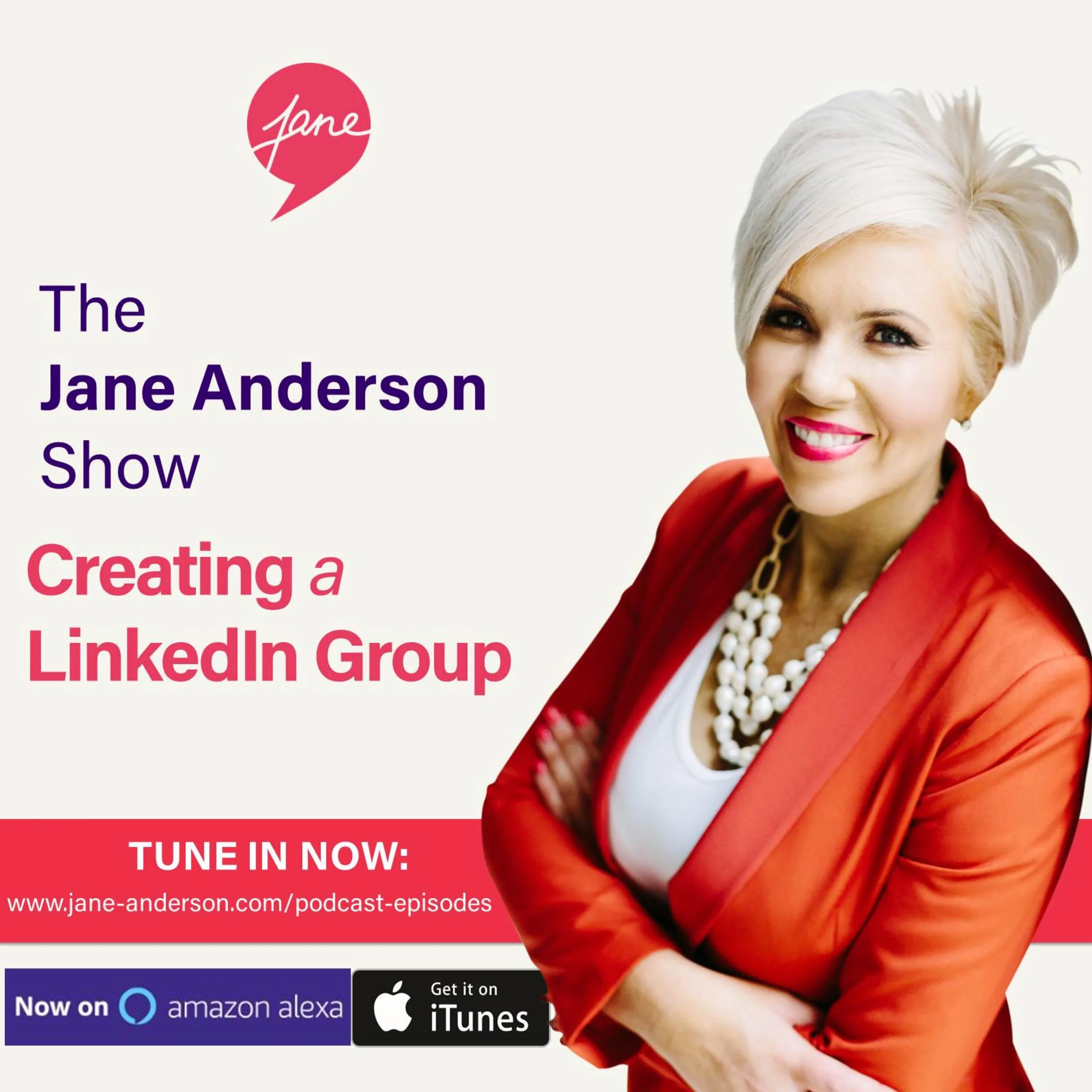
People buy from people they know, like and trust. If you are an expert building a business under your own name, one of the questions I hear often is whether a LinkedIn group can help you become known, and whether it is worth the work.
In this episode of The Jane Anderson Show, I talk through exactly that. I look at how LinkedIn groups can build your personal brand, the benefits and disadvantages of joining one, the benefits and disadvantages of running one, and how to set up a group well if you decide to go ahead.
My answer is that a group can be a useful tool for the right person, with the right purpose, and the right amount of time. It can also quietly drain your week if you start one for the wrong reasons. Here is how I think about it.
Why LinkedIn Groups Can Support Your Personal Brand
If you have a business that carries your own name, one of the ways to build your positioning and profile is to show that you are the expert at something. That means showing that you know how to do things, answering people's questions and sharing useful content. LinkedIn gives you a place to do that through groups.
The scale is part of the appeal. At the time I recorded this episode, LinkedIn was up to nearly 400 million people, with around five new profiles created every second. That gives you the ability to connect with, and invite, a very large number of people to a group if you are building one.
You may already belong to a group. I am a member of a number of them, and you may notice that other people in your groups are similar to you. That is the point. A group puts you in a room with people who share your interests, or who face the problem you solve.
Finding Where Your Customers Gather
One of the benefits of groups is that you can identify where your customers are spending time on LinkedIn. At the time of recording, a profile could belong to up to 50 groups, and there were thousands to choose from.
Some groups are open, so you can join without a particular qualification. Others are restricted to people in a certain industry. I once did a lot of work with women who work in superannuation funds, and there was a group for exactly that audience. I applied to join and was rejected, because I do not work in superannuation. That is fair enough. The group was keeping to the rules it had set for itself.
The lesson is to be realistic about which groups you can enter, and to think about what you are trying to achieve. Depending on your goals, groups could be an opportunity for you.
Seth Godin's Tribes and the Purpose of a Group
In his book Tribes, Seth Godin makes the point that the people most likely to buy from you are the people who already know you. He talks about creating connections with a tribe: people who operate like you, think like you, like you and understand what you are saying.
A group can be one way to build that. The purpose of a group is to connect with like-minded people, or with people who share a problem you may be able to solve. You will see plenty of industry groups, but if you are positioning yourself as an expert and a thought leader under your own name, a group may suit you well.
Should You Join or Run a Group?
The questions I am asked most often about running a group are why you would do it, what the advantages are and what the disadvantages are. I find it easiest to separate being a member from being the owner, because the trade-offs are quite different.
Benefits of Being a Member of a Group
You can appear in more search results. When someone searches for a skill set, say a productivity expert in Sydney, the people who appear are first, second and third level connections. At the time of recording, there was one more group of people who could appear: those who belong to the same group as the person searching.
You can contribute to discussions and share your area of expertise.
You get a more direct line to your ideal audience. Rather than putting information into a feed, you can reach people a little more directly.
Your contributions send a clear message about your expertise, interests and passions, provided you stay on message and do not waver.
Your profile views can increase, because your search results are working harder.
You build your own knowledge and expertise.
Disadvantages of Being a Member of a Group
Managing the information. If you belong to many groups, the email can pile up. Check your settings and set up rules so you are not reading updates in your inbox every day. Unless you are managing the group, I do not think you need anything daily. A weekly look is enough. If you are in 50 groups, that is a lot of email.
It can feel closed. If you focus too heavily on one group, you may close yourself off to other opportunities.
Benefits of Running a Group
It positions you as a leader in your industry, and you can become the go-to person.
You can include your website address in the group description.
You have a responsive audience. The group owner has influence in the group, and your job is to maintain its direction. That is a real leadership role.
You get visibility across your areas of expertise, and you are often among the first to hear what is happening in your industry.
Your group is visible on member profiles. When someone joins, the group details and logo appear on their profile, which raises the group's visibility again.
Disadvantages of Running a Group
It can be very time-consuming. Some features help, such as automated welcome messages.
It is a long commitment. At the time of recording, once you started a group you could not close it, so think about how much time you are prepared to give it.
Analytics were limited. LinkedIn did not provide very good analytics at the time, so it was hard to get data on your return on investment. That matters if you are weighing the time against your other marketing.
You have to manage conflict and spam. Your job is to run the group. That includes dealing with conflict and people being spammy. If your group has high potential for conflict, ask yourself what your message is and whether you are strong enough to manage it.
You need clear ground rules. You have to be very clear about your expectations and the rules for the group.
LinkedIn changes its features and limits from time to time, so check the current group settings and options before you commit.
Start With the Purpose of Your Group
If you are considering starting a group, the first thing I would do is get clear on its purpose. Is it to position you? To keep you visible? To help you turn up in search results? Is it all of those? Is it a tool to build your sales funnel?
Say you are a leadership expert who specialises in feedback, or in high-performing teams. Your group is probably designed for HR managers, leaders or CEOs. Make it clear that this is who the group is for. Then you can decide what to do about lead generation: calling people, dropping them a line or keeping in touch more personally.
Starting a group for the sake of it, because everyone else is doing it or because it looks like the cool thing to do, usually goes one way. You lose momentum and focus, and the group dribbles away. Then members do not feel they are getting value either.
How to Set Up and Run a LinkedIn Group Well
If you decide to go ahead, here is what I would do.
Complete Every Field and Set Clear Guidelines
Complete all the fields, and make sure members know the guidelines and expectations. Clear expectations help you manage the group more efficiently, especially if you end up with a member who is not complying and you have to deal with them. Do not expect people to behave on their own. You have to manage it.
Tell Members What to Expect From You
Make sure members are clear about what they can expect from you. Will you check the group daily or weekly? Will you post something weekly? Perhaps you will co-manage it with someone. Being clear about this can ease some of the pressure on you too.
Use Automation, But Do Not Add Work
Think about automation features, such as autoresponders when people join. They can reduce your workload a little. Just be mindful that they do not create extra work. You want the group to be a leveraging tool, not one more thing that has to be done.
Keep Contributing Topics
Maintain engagement by contributing topics. Do not expect people to set up a group and have it self-manage, with everyone looking after it. That just does not happen.
I was once in a career group where the person managing it seemed to be running it full time. It became reasonably clear that they probably did not have a lot of work in their job, and they were frustrated that members were not contributing as much as they were. I ended up leaving, because it became a bombardment of requests: put this article up, write this, do that. The lesson for me is not to be demanding. Your job is to run the group and take the lead, including contributing the articles and posts. If you do not want to run it, or you do not have the time, do not do it. Focus on your other activities.
Give Encouragement and Feedback
A group should not be a one-way stream of information. When people comment or contribute, validate them. Thank them, read what they have said, and perhaps highlight something you found interesting.
That helps make the group feel safe. When I work with clients on LinkedIn, many are scared to put content out there. I have literally had to teach people how to like something, and you would be surprised how often. We have a tall poppy culture, particularly in Australia, and people are afraid of looking stupid.
So create a safe environment where people feel able to share their thoughts and ideas. One tip: in your welcome email, you could mention that some people are a little nervous about posting, and invite them to contact you for feedback before they put something up. Be kind, compassionate and understanding, and do not become frustrated or resentful that people are not contributing.
Is a Group the Right Activity for You?
The main thing to remember is that a group is about visibility and credibility. Think about what else you have going on as part of your yourname.com business and your positioning as an expert. If you are doing a lot of speaking, that may be working better for you. A group needs to link to the purpose of the rest of your activity and fit with it, because other activities could give you a much better return on your time.
Frequently Asked Questions
Are LinkedIn groups worth the time and effort?
It depends on your purpose and your time. A group can help with visibility and credibility, but it can be time-consuming to run, and at the time of recording LinkedIn did not provide very good analytics for measuring your return on investment. Other activities, such as speaking, may give you a better return.
What is the purpose of a LinkedIn group?
To connect with like-minded people, or with people who share a problem you may be able to solve. Drawing on Seth Godin's Tribes, a group can help you bring together people who think like you and understand what you are saying.
What are the benefits of joining a LinkedIn group?
You can appear in more search results, contribute to discussions, share your expertise, reach your ideal audience more directly, send a clear message about your expertise and interests, increase your profile views and build your own knowledge.
What are the disadvantages of joining a LinkedIn group?
The volume of information and email can be hard to manage, so adjust your settings and set up rules. A group can also feel closed if you focus on it too heavily and miss other opportunities.
What are the benefits of running a LinkedIn group?
It positions you as a leader in your industry, lets you include your website address in the group description, gives you a responsive audience and visibility across your areas of expertise, and displays the group's details and logo on members' profiles.
What are the disadvantages of running a LinkedIn group?
It can be time-consuming, you have to manage conflict and spam, and you need to set clear ground rules. At the time of recording, you could not close a group once you had started it, and LinkedIn's analytics made it hard to measure return on investment.
What should I do before starting a LinkedIn group?
Get clear on its purpose and who it is for. Then complete all the fields, set clear guidelines, tell members what to expect from you, consider automation features, keep contributing topics and give members encouragement and feedback.
How do I make members feel safe to contribute?
Thank people when they comment, read what they have said and highlight what you found interesting. You could also invite nervous members, in your welcome email, to contact you for feedback before they post.
Conclusion
A LinkedIn group can be a good way to build visibility and credibility under your own name, but only if you are clear about its purpose and prepared to lead it. As a member, you can show up in more search results and build your knowledge, as long as you manage your settings. As an owner, you become the go-to person for a community, and you also take on the time, the conflict management and the commitment.
My advice is to be honest about your time and your other activities. If you do start a group, run it with a clear purpose, clear guidelines, regular contributions and plenty of encouragement. I would love to hear how you go, and how you can use your personal brand and message to build a tribe of people who love what you do. Even if they do not buy from you, they are often going to refer you.
If you want to go deeper on LinkedIn, my book Connect, which covers leveraging your LinkedIn profile for business growth and lead generation, is on my Books page.
Work With Jane Anderson
If this episode resonated with you, here are some ways to take the next step:
Women With Influence: Join a community of B2B women consultants, coaches and advisors building world-class practices.
Grow With Influence: Explore my coaching for B2B practices.
✨ Tune in to hear whether a LinkedIn group is worth your time, and how to set one up so that it builds your visibility and credibility.
Key Takeaways from Today’s Episode:
-
Its purpose is to connect you with like-minded people, or people who share a problem you solve, the kind of people Seth Godin says are most likely to buy from you.
-
Being in the same group as someone can help you appear in their searches, give you a more direct line to your ideal audience and increase your profile views.
-
Change your group notification settings and set up rules so updates are not filling your inbox daily.
-
You gain leadership and a responsive audience, but you also take on the time, the conflict and spam management, and a long commitment.
-
Decide whether the group is for positioning, visibility, search results or building your sales funnel, and who it is for. Starting a group because everyone else is doing it leads to lost momentum.
-
Complete every field, share the guidelines and tell members how often you will check in or post.
-
Contribute topics regularly, and do not expect a group to manage itself or demand content from members.
-
Thank people, highlight what you found interesting and invite nervous members to ask for feedback before posting.
-
A group is about visibility and credibility, and something like speaking may give you a better return on your time.