Podcast is also available on the versions below:


Get Notified Of Future Episodes on Apple Podcasts | Spotify | Youtube
What makes people remember you, trust you and want to work with you? Very often, it is a story.
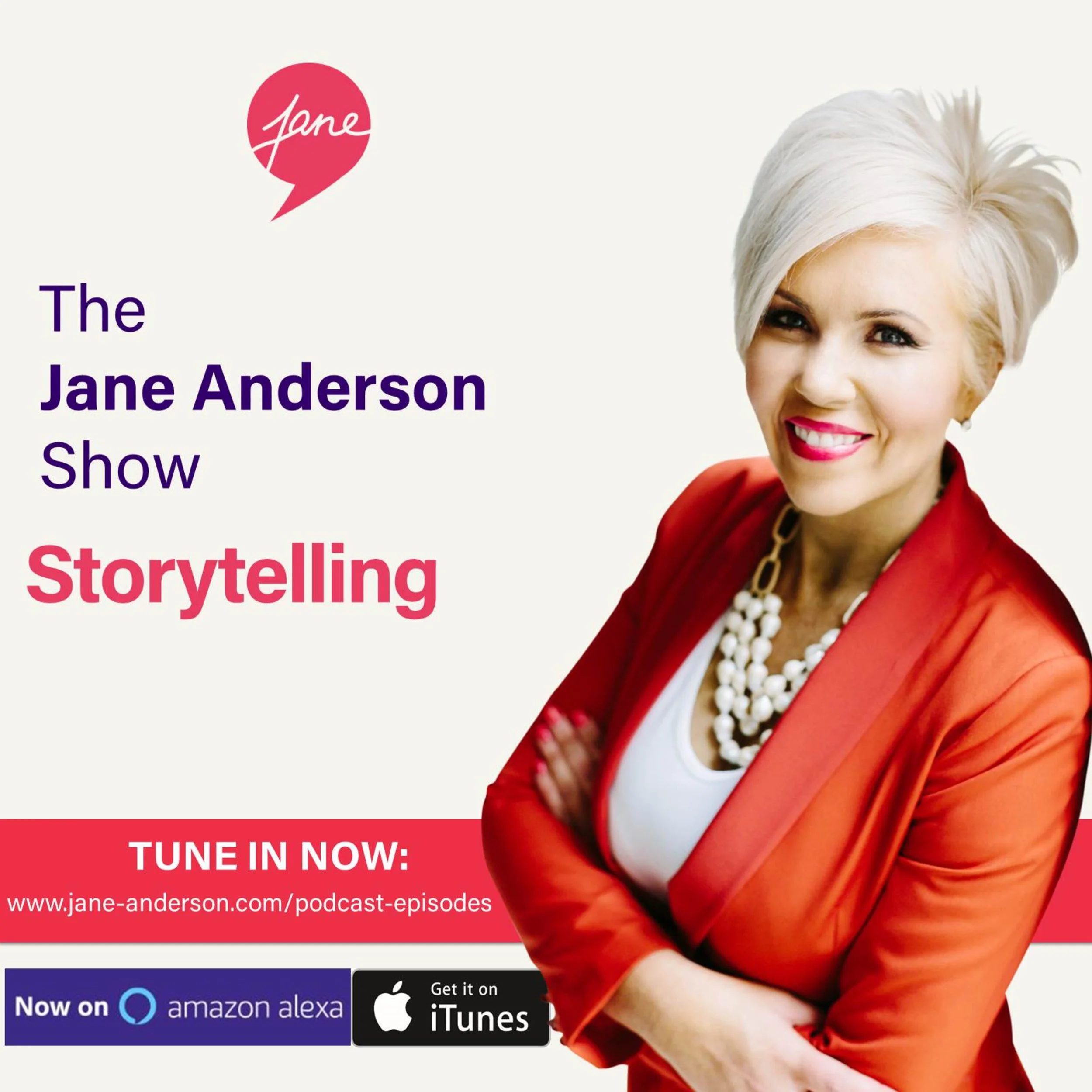
In this episode of The Jane Anderson Show, first released in 2017, I talked about storytelling and how it fits into a personally branded business, particularly if your business is branded as yourname.com and you are the go-to person. You can listen on Apple Podcasts.
I opened with a trip to my favourite city, Las Vegas, and a conversation with a security guard that showed me storytelling at work inside a business. From there I looked at why stories connect so strongly, what makes a story worth telling, and how to decide which story belongs where.
Why I Love Las Vegas
One of my favourite things to do is travel, and my favourite place in the world to go is the US. I love the vibrance and energy, and I find Americans generally really optimistic. I think they are big-picture thinkers who live in a world of possibility.
My favourite place to visit in the US is Las Vegas. I fall in love with it every time. It is so stimulating for the eyes, and I could walk through hotels for hours looking at the designs and the ideas people have. It is bigger than Ben-Hur, yet there is so much attention to detail. I also love the theatre, whether it is musicals, comedy or something else. I did a lot of drama at school, so it switches me on.
I am not a gambler. The other reason I love going, particularly to the US, is that I love customer service.
The Trip That Changed How I Think About Stories
In 2012, I was at a point with my business where a lot of negative things were happening in Queensland. We had a change of government, and large numbers of people were made redundant from the public service. I found the mindset a little flat and was finding it hard to be inspired. So I thought, "You know what? I'm just going to get on a plane and get out of here." Off I went to Vegas for a week.
One reason I chose Vegas was something that had always been on my wish list: to walk through the Wynn Encore and have a look at some of the hotels Steve Wynn owns. If you are Australian, you probably do not know who he is. He is a property developer who started a number of the hotels on the Las Vegas Strip, and he became close friends with Frank Sinatra. There is a Sinatra restaurant in the Wynn Encore.
The Encore was quite new at the time, and it is an absolute feast for the eyes. There is not a single part of the hotel untouched by beautiful fabrics, lighting, architecture and sculpture. I literally felt like Dorothy in the Emerald City. It was breathtaking.
The Security Guard and the Story to Tell
I arrived at 3 o'clock one afternoon. Lunchtime had just passed and it was not quite dinner time, and because I had just landed from Australia, finding something to eat was the first thing I wanted to do. As I wandered around, a security guard came up to me and said, "Ma'am, you're looking a little bit lost. Can I help you?"
I said most things seemed to be closed for lunch and opening for dinner later, and asked whether there was anywhere I could go for afternoon tea. "Of course, ma'am," he said. "Let me check for you."
He took a piece of paper out of his pocket with a list of all the activities for the day. At the bottom of the page it said, "Have you got a story to tell? Share your customer story if you went above and beyond for a customer today."
I was a bit cheeky, because I knew what it meant, but I wanted to see what he would say. So I asked him. He quickly brushed it aside and said it was no problem, just something they do internally. He folded up the paper, put it in his pocket and started telling me where I could go for afternoon tea.
I told him I hoped he did not mind me asking, but I had heard about the storytelling work Steve Wynn does in his hotels, and I would love to learn more from his perspective. Here is how he said it works. If you have gone above and beyond for a customer that day, you email the story to your management team. If they decide it is good enough, then at your team management meeting, film crews come in immediately and film the story. It is uploaded to the intranet straight away, and Steve Wynn sees it. You are acknowledged for going out of your way to solve customer problems.
How Storytelling Builds a Service Culture
There is an interview with Steve Wynn on YouTube, hosted by Peter Robinson of the Hoover Institution. In it, he says he has everyone out there trying to find him a problem, which I think is fantastic.
When we work with customer service, and I think particularly in Australia, where service is pretty ordinary most of the time, the branding that works and the customer service that comes from branding mean that team members are actively out looking for problems. They are not hiding from them. How many businesses have you walked into where there is obviously a problem and people happen to be looking the opposite way, accidentally on purpose? "Oh, I'm sorry, I didn't see that." In this case, the staff are deliberately out there trying to find problems to solve.
In that interview, the point comes through that what lets each person live and breathe the brand can be found in one word: culture. To create a service culture, one of the best ways is to raise the individual employee's self-esteem, and one of the best ways to tap into that self-esteem is storytelling. You can have employee of the month, but that relies on being noticed by your manager. It does not tap into the self-esteem of the individual.
Why Problems Are Opportunities
Another point from that discussion is that problems are opportunities. If a customer is a bit lost and needs guidance, or a team member is personally delivering coffee to a room, there is an opportunity. Those opportunities are how you connect with, engage and inspire your customers.
I also remember watching a documentary in which one team member was so determined to be part of the Wynn organisation that he applied to work there for free. That is how badly he wanted to work there. I think it is a great example of how certain people align with the values of certain businesses, and of how a clear vision can matter more to them than a salary. I find that extraordinary. People want to be inspired. They want to be part of something, and that kind of workplace is priceless.
What Don Meij Shows Us About Personal Branding Stories
The other person who comes to mind for good storytelling is Don Meij, who was the CEO of Domino's Pizza when I recorded this episode. His background is that he came through the ranks. He started as a pizza delivery driver and worked his way up. He owned franchises, went on to be a regional manager and operations manager, and then became CEO.
His story is unique and memorable, and it aligns with his purpose and what the organisation is all about. It is also a great story for his personal marketing. Not everyone is lucky enough to have that kind of story for their CEO.
Why Storytelling Is Such a Powerful Branding Tool
I believe it was in the Australian Financial Review in February 2014 that storytelling was identified as one of the top skills leaders will need to master for the future. It is also one of the best branding tools you can use as part of your personal brand.
The reason it is so powerful is that it creates an emotional connection with your customer. When I say customer, I mean whoever you are connecting with: a colleague, a team member, a client, an audience member or a person reading your blog. Storytelling connects, engages and inspires them.
Aristotle said that the key to influencing somebody is that you need three things: ethos, logos and pathos. The Stanford Encyclopedia of Philosophy sets out these three means of persuasion in its entry on Aristotle's Rhetoric. Here is how I think about them in business.
Ethos is credibility, such as the background you have in your field.
Logos is logic, meaning the evidence or data that supports your claims.
Pathos is the emotional connection. It is the empathy that engages.
If you can connect emotionally, it fast-tracks to your customer's brain.
Two Questions to Test Your Storytelling
Yamini Naidu and Gabrielle Dolan are the authors of Hooked: How Leaders Connect, Engage and Inspire with Storytelling, and they are global thought leaders in storytelling and business communication. They say there are two things you need to be good at when you use storytelling in your business.
The first is whether people hang on to every word you say. Can they remember what you say, and can they repeat it? If you have a story as part of your brand, do you hear it coming back to you?
The second is how purposeful you are with your storytelling. What message do you want your stories to contain?
Bring Your Why to Life Through Your Stories
If you are an expert in your field, a thought leader, a professional services provider or someone going out on your own under yourname.com, this links to Simon Sinek's work on Start with Why. You have to understand your why, and one of the best ways to bring your why to life in your personal branding is through storytelling.
Stories often sit in keynotes, and more often than not they sit on your About page on your website. Some people ask me whether a story goes in the summary area of a LinkedIn profile. Nine times out of ten, I say no. But if you have a story like Don Meij's, I would say that is a pretty good story for a summary.
I would also start keeping a journal of your stories. Even a file in your inbox will do. Capture the stories and experiences that make up your brand and your personal brand.
When I Could Not Get a Job
On my About page, I have a couple of stories about the significant moments in my career and business that are the reason I do what I do. The first was when I got divorced, had to move back to the city and start my life all over again, and I could not get a job. Isn't it ironic? This was many years ago, before I had my business.
My mum said to me, "I think it's about time you have a chat with Centrelink, because clearly what you're doing is not working." I said to her, "This just doesn't seem fair. I know I'm good at this stuff. I know I can do this, but it's so much harder when it's yourself."
The job market had changed, I could not get a straight answer, and the old ways of doing things were not working. I had been on recruitment panels, and here I was struggling myself. So one of the reasons I do what I do is the way we struggle to market ourselves, particularly when we lack confidence and need to stand out.
When I Started Again Under My Own Name
My other story is about my business. I had a business called Inside Out Training and Coaching, which I still have. I built it up, then we had a change of government and all sorts of things happened. I started again, but this time under yourname.com, which for me is Jane Anderson. And wow, everything moved faster.
So another reason I do what I do is that people find it difficult to sell themselves, particularly Aussies. We are a pretty laid-back bunch. I am not a selfie taker. I hate selfies. I am not a centre-of-attention person, and I do not like a lot of "look at me" kind of stuff, but I get that I have to do it as part of my job. I also do it to inspire my customers to feel that it is okay, and it is going to be all right. When you have a brand new business, you have to get comfortable doing that, and your personal brand will come through your storytelling and your why.
How to Choose the Right Story for the Right Place
There are a couple of things I think you should consider. The first is your purpose. Be really clear about what you are trying to create when you tell stories. What is the message you are trying to send, and what connection with your audience do you want to establish?
The second is the medium. Is the story told verbally, in a presentation, online, in a podcast like this one, in your LinkedIn area, or on your About Us page?
One of the things I really struggled with when I was learning about storytelling was that people were not giving me clear direction about which story went where. They just said, "You can use it in these areas." So I think you want to be quite deliberate and ask yourself a few questions:
What is the purpose of this page or this medium?
How does the customer absorb this story?
Is it in the context of what I am trying to sell, influence or persuade?
Will it connect and make sense for them, so that I can help them?
When you first start, it can feel as if you are dumping a whole lot of material into your personal branding collateral. I totally understand. I have been there. It can feel like having all the pieces of a jigsaw puzzle and no idea where they go.
You have to think about which story matches your customer's motivation at exactly that moment in time. If your customer cannot see themselves in your story, no matter how good it is, it will fall on deaf ears. If the story connects with people who are going through the same problem, then your story needs to amplify that problem.
So the challenge for you, as part of your personal branding, is to ask who you are trying to persuade, and which stories you are going to use to engage their hearts and minds so they want to connect and work with you.
Frequently Asked Questions
Why is storytelling so powerful in personal branding?
I believe it is because storytelling creates an emotional connection with your customer, whether that is a colleague, a team member, a client, an audience member or someone reading your blog. It connects, engages and inspires them, which makes it one of the best branding tools for your personal brand.
What are ethos, logos and pathos, and how do they apply to storytelling?
They are the three things Aristotle said you need to influence somebody. Ethos is credibility, logos is the logic and evidence behind your claims, and pathos is the emotional connection and empathy that engage people.
How do you know whether your story is working?
Yamini Naidu and Gabrielle Dolan suggest two questions. Do people hang on to every word you say, and can they remember and repeat it? And how purposeful are you, meaning what message do you want your stories to contain? If you have a story as part of your brand, you should hear it coming back to you.
Where should you use your personal brand stories?
Stories often sit in keynotes and, more often than not, on your About page. Nine times out of ten, I say no to the summary area of a LinkedIn profile, but a story like Don Meij's might earn a place there. What matters is being deliberate about the purpose of the medium and how your customer absorbs the story.
How do you choose the right story for your audience?
Match the story to your customer's motivation at exactly that moment. If your customer cannot see themselves in your story, no matter how good it is, it will fall on deaf ears.
How can storytelling help build a service culture?
At the Wynn hotels, staff email stories of times they went above and beyond for a customer, and good ones are filmed and shared on the intranet. In the interview I mentioned, a service culture grows by raising an employee's self-esteem, and storytelling is one of the best ways to tap into it.
Conclusion
Storytelling is a powerful part of personal branding because it creates an emotional connection with the people you want to reach. The security guard at the Wynn Encore showed me what that looks like inside a business, where team members are acknowledged for solving customer problems and are inspired to keep looking for them. Don Meij's story shows what it looks like for a leader.
For you, the work is more personal. Keep a journal of your stories, be clear about your purpose and your medium, and ask who you are trying to persuade.
If you would like to find out more about storytelling, I do a little bit of work on it in my Impact book. You are very welcome to have a look at the Books page on my website, where you will see my other books. The latest at the time of recording was Connect, on how to leverage your LinkedIn profile for business growth and lead generation in less than seven minutes a day. Follow my blogs, feel free to connect with me on LinkedIn, and of course, show me your stories. Tag me in them, because I would love to see them.
Work With Jane Anderson
If this episode was useful, here are some ways to take the next step:
Women With Influence: Join a community of B2B women consultants, coaches and advisors building world-class practices.
Grow With Influence: Explore my coaching for B2B practices.
✨ Tune in to hear me share what a Las Vegas security guard taught me about storytelling, and how to choose the right story for the right place in your personal brand.
Key Takeaways from Today’s Episode:
-
It connects, engages and inspires your customer, whether that is a colleague, a client, an audience member or a blog reader, which is why it is one of the best branding tools for your personal brand.
-
Credibility, logic and emotional connection are the three things Aristotle said you need to influence somebody, and an emotional connection fast-tracks to your customer's brain.
-
At the Wynn hotels, team members share stories of going above and beyond for customers, and storytelling is one of the best ways to tap into an employee's self-esteem.
-
Teams that go looking for problems to solve, rather than looking the other way, get the chance to connect with, engage and inspire their customers.
-
Naidu and Dolan's two questions are whether people can remember and repeat your story, and what message you want your stories to contain.
-
Your why shows up through the stories on your About page and in your keynotes, and a story like Don Meij's can earn a place in a LinkedIn summary.
-
Capture the experiences that make up your personal brand, even if it is just a file in your inbox.
-
If your customer cannot see themselves in your story, it will fall on deaf ears, so be clear about your purpose, your medium and who you are trying to persuade.