Podcast is also available on the versions below:


Get Notified Of Future Episodes on Apple Podcasts | Spotify | Youtube
When your name is your business, where do you draw the line between your professional life and your personal one?
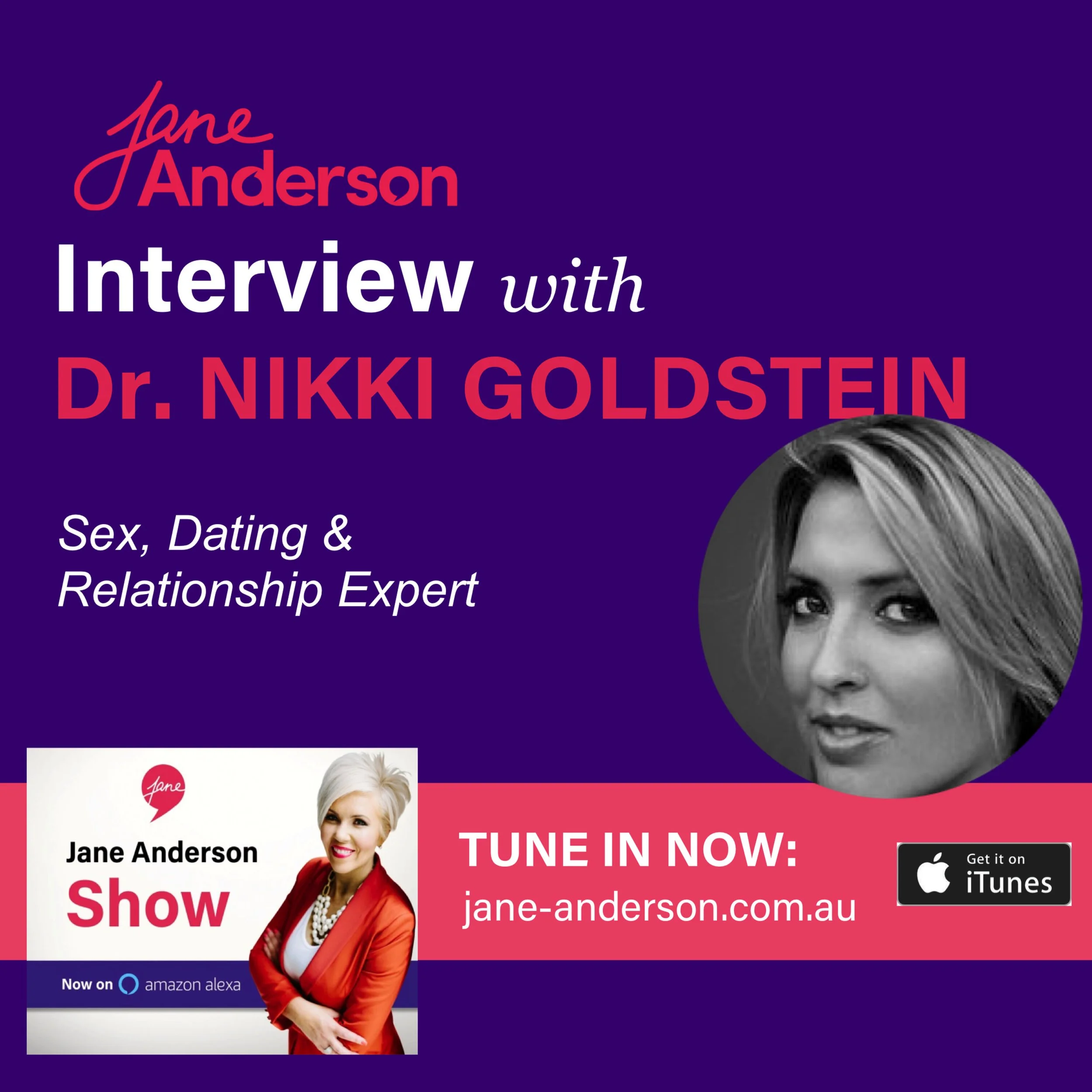
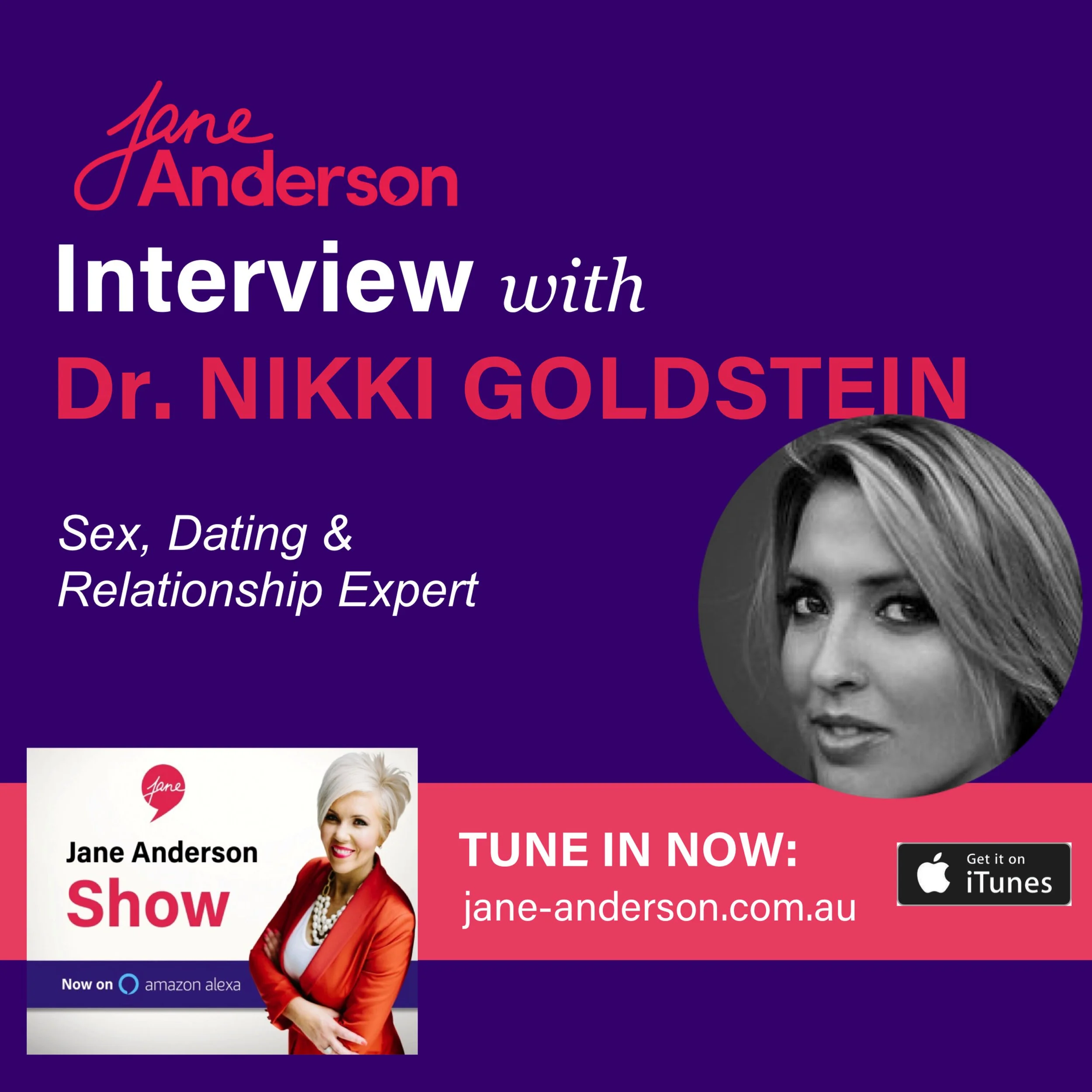
That question ran through my conversation with Dr Nikki Goldstein, whom I introduced on the show as Australia's modern-day expert on sex, dating and relationships. In this episode of The Jane Anderson Show, which first appeared on Apple Podcasts in June 2017, Nikki talks about authentic personal branding: what it takes to build a business that carries your own name, and the choices that come with it. When we spoke, her first book, #singlebutdating, had only recently launched.
Nikki has appeared as an expert on the Seven Network, and she was voted Australia's best sex educator in 2012 and 2013. What I valued most was how openly she talked about the trade-offs of personal branding: stepping back to see yourself as a business, planning for a future brand you cannot yet see, protecting the people close to you, and staying authentic when so much of what we see online is filtered. If you are an expert, consultant or coach thinking about putting your name and face on your business, her story is full of practical thinking.
From G-Girl to Dr Nikki: Realising You Are the Business
Nikki told me her path was "all very trial and error." In the beginning she had no idea what she was doing business-wise. She knew she wanted to do something different, something she felt people needed, and she did not want to work nine to five. She wanted to be able to do it herself.
While she was studying for a degree in human sexuality, she was offered the chance to appear on Channel 7 as an expert. At the time she had a blog called The Adventures of G-Girl, which began as a mystical character who blogged. Then she saw her own name with that title underneath it, "Nikki Goldstein, The Adventures of G-Girl," and thought it was not really her, and not the reason she was doing this. She had found a platform to talk about important issues, but the name did not match the purpose.
She also never saw herself as a personality. By her own account she was very humble and simply saw a great opportunity. Then people started talking to her about her branding and her profile, and she realised that "you are the business."
Stepping Back to See Your Brand From a Bird's-Eye View
What Nikki does next is the part I find most useful. To run a business that is you, she says, you need to step away from yourself and look at it from a bird's-eye view. She thinks of herself as two people: Nikki, and Dr Nikki. She looks at Dr Nikki and works out what she should be doing, what she should not be doing, and how the rest of the world sees her professional capabilities, "because that is the structure of the business."
I asked whether that is hard, since it is almost disassociating yourself from you. Nikki said it is, because you are emotionally invested when you are the brand, and there can be reasons to do things other than financial gain. She keeps coming across content she feels women need to know, or that men need to start talking about. The temptation is to work for free, but "this is a business and it has bills." Writing a book is a great opportunity, she said, and it still comes with bills.
So the bird's-eye Nikki asks what the long-term implications are and how each idea fits the job, while the part of her that wants to get on a soapbox keeps churning. When I asked whether it keeps coming back to purpose, she agreed that it does.
Planning Your Future Personal Brand Before Google Does It for You
When you start out, Nikki said, you have no idea what you are doing and you do not really consider a future. You get in there, give it a crack and see what happens. Once things start to formulate, you need to ask where you are going in the next five years and what that will look like.
She has learned that everything can be Google searched. She said there is nothing she is ashamed of, but she is now doing a lot of work in the dating and relationship space and on supporting women. In the beginning she was very sex focused, and her label was always sexologist. She worked for Sexpo and describes it as a great opportunity. Now she wants people to know she can support and help women, and that she is not just someone who can talk about what happens in a bedroom.
So she keeps asking herself three questions. What am I doing now? Where might I want to go in the next five to ten years? What impact will my business and personal decisions today have on what I want professionally later?
Why a Name-Based Brand Gives You Room to Flex
On this podcast I often talk about the benefit of building your business under your own name because of the flexibility it gives you. Imagine branding yourself around a single topic instead, something like sexexpert.com. I asked Nikki whether having her own name has let her plan ahead and flex as well.
Her answer was that you have to be flexible, because when you are the name of your business there is a parallel between your personal and professional life. She chooses how open to be about her own life. Her name lets her connect with her audience and identify with them, but she has to be conscious of that parallel. At the time, she could talk about dating, single life and relationships. You would not find her bringing out a book on being sexy after having children, or on menopause, because if she wants to connect with her audience, that is not where her life is at.
That is where the flexibility comes in. As she goes through different stages of life, she can take on a new area. When she gets married and has children, there is another focus for her work. As she gets older and struggles with menopause, there is another aspect she can deal with. But she added a caution: you need some structure too, "because I think you can be too flexible."
Considering the People in Your Life Before You Share
I asked whether having her name on everything had ever made things harder. Nikki said definitely, because there are things she wants to say and she has to consider the other people in her life.
Her book was the first time she became really open about what she had experienced and who she had dated, and she found it a real struggle to look at those stories. She and her editor had to sit down and ask what the purpose of each story was: was it airing dirty laundry, or could her reader benefit from it? A lot of material came out. She also wanted to protect everyone's identities and be respectful to the people she had dated.
Nikki chose this life and understands the implications, but she is dating, and she has family and friends. Her parents "can't escape the fact that they are the parents of a sexologist," and someone might read the book and ask her mother whether she knew what her daughter got up to. The same goes for a partner. As Nikki put it, "your partner never chose to be a sexologist, but they did choose to date you."
She was taught by older sexologists to separate professional and personal lives. But she believes that in this era "we're looking to connect with people." That is where she sees the reality space, the online space, Twitter and Instagram becoming so popular. When experts or business owners get on their soapbox, we want to know something about them. Even with a product, understanding why someone created it, and whether they use it themselves, makes us connect with it more. Her caution is that you constantly need to challenge at what cost.
This is a fear I hear from clients who are considering a brand under their own name: the worry about making it more about themselves. A column in a magazine used to be enough. Now it is about connection, and to create connection I have to be in the world where the people who connect with my message are.
Why Authenticity Is a Matter of Credibility
Nikki's view is that the tricky part is being authentic. We have seen many people over-filter their photos and promote a lifestyle they do not really live. At first we were not aware of what goes on behind the scenes, but thanks to social media and online media, she said, we have seen those people come unstuck. If you are going to be in business, you need to monitor how much of your personal life you give away, and make sure what you do give away is your authentic self.
For Nikki, it comes down to credibility. As an expert, you sometimes need to practise what you preach. If she is lecturing women about loving their bodies and being self-confident, then maybe it is okay sometimes to post a photo that is not that flattering. She laughs it off and does not start editing her photos. It is also one of the risks of working in media, because you do not always get a say.
She gave me a recent example. A photo of her came up that day that she thought was not the best one. She screenshot it and sent it to her girlfriend with a laugh. If she were heavily editing, having the final say and asking for photos to be retouched, and that came out, "you would actually question then what I was preaching to other women." I put it to her that you would not have the parallels working.
Letting Your Support Network Show
I told Nikki how much I enjoyed her book launch on the Gold Coast, where her family was all there. It was a part of her authentic self, and it is the kind of thing that makes people think, "She's like me." We are a bit like mirrors: people see themselves in us. Someone looks at her family and thinks her brother-in-law looks like theirs.
Nikki agreed, and said that when your name is your business, you are not just a profession. One of the best things she did was keep a private Instagram account alongside her professional one, but she does show her personal life on the professional account. With her line of work, she wants people to see that she is "just a normal girl, really." She has a fun job title and some amazing opportunities, but she described herself as a 20-something trying to make it in the world with a lot of support from family and friends. Because she tells people a support network is important, whether in relationships or in success generally, she is happy to show it: "These are the people that keep me going."
She described her work as a world with "a flexible job title and no real job description," and said it is the people by her side who help her survive it. Her dad was on the credit card machine at the launch. More recently he rang her from a Dymocks bookshop at Pacific Fair to say he had taken her books from the middle shelf and displayed them nicely on the top shelf. Nikki said writing a book can be a really lonely process: it is exhausting and so much work for "this few bits of paper," and then selling it is another process. So you sometimes need all the help you can get.
The Story Behind #singlebutdating
Nikki came up with the title while sitting under a tree in Vanuatu at a rowing competition with her brother, which she described as very long and tedious. So she started writing a book. She was motivated by being constantly asked whether she was single or seeing someone, and she never knew how to answer. Over about five years she had gone in and out of relationships, dated people, had flings and kept things casual with others, yet she still had to declare herself single. She felt there was a stigma attached, and that people showed her pity when she was not lacking fun or male company.
It was not only about the label. Nikki's point is that as women we need to go out and experiment and work out what is right or wrong for us. "It's not a matter of being told the rules." It is about giving a woman the right tools so she can go out into the real world and discover what she wants, separate from what she feels she should want and what she feels is validating. I have been reading the book myself, and I can endorse it: the insights are fantastic and very funny.
A Book Is a Stepping Stone, Not the Money-Maker
Nikki had two aims. For starters, she wanted to write a book that was actually useful to women. As an expert, she said, you are always told you need a book, so if you are going to put in the effort, why not do something people will get something from?
From a business point of view, she sees a book as a great platform for other things, but not the money-maker many people think it is. That means looking at what can stem from it, and for her it meant looking hard at her terminology and coming up with something new and different. Just by having the title #singlebutdating, she was talking with her editor about a second and third book within a few weeks of writing the first. The title started leading into catchier ideas, and people spoke up about other branding opportunities, including online programs.
In her words, the book is the stepping stone to the next point, not the make-or-break financially. She sees it as a tool for speaking engagements, coaching, online programs and other books. She also acknowledged the pressure: if you want a second, third and fourth book, the first one has to sell well, because then people keep buying and publishers keep coming back with a contract.
Talking Directly With Your Audience Online
Nikki told me she was very active online. She invited people to contact her through her website, and she found her Facebook page easier for having conversations. She sees it as an amazing opportunity that we are all on our phones and connected to the internet, because you can have direct conversations with your audience and find out exactly what they want from you, rather than always going through traditional channels. People can tell her what they like and give feedback. It also motivates her to keep going when people get in touch, whether they are telling her they like what she writes or sharing a story of their own.
Frequently Asked Questions
What does it mean to be the brand in a personal brand?
Nikki Goldstein says it means that eventually you realise you are the business. To run it well, she steps away from herself and looks at the business from a bird's-eye view, asking what Dr Nikki should and should not be doing and how the world sees her professional capabilities. She says that is the structure of the business.
How do you keep an emotionally invested personal brand commercially sound?
Nikki says being emotionally invested can make you want to work for free, but a business has bills. Her bird's-eye view asks what the long-term implications are and how an idea will fit the job. For her it keeps coming back to purpose.
How do you plan a personal brand for the long term?
Nikki says that once things start to formulate, you need to ask where you are going in the next five years. She reminds herself that everything can be Google searched, and asks what her business and personal decisions today mean for what she wants professionally in five to ten years.
How much of your personal life should an expert share?
Nikki says she chooses her own level of openness and monitors what she gives away. She considers the impact on family, friends and partners, and asks whether sharing a story benefits her reader. She also believes people want to connect with experts, so she shares, but she keeps challenging at what cost.
Why does authenticity matter for experts online?
Nikki says it comes down to credibility. If you preach self-confidence and self-love to women but heavily edit your own photos, people would question what you are preaching. She laughs off unflattering photos rather than retouching them.
Is writing a book a good way for an expert to make money?
Nikki says a book is a great platform to other things but not the money-maker many people think. She sees it as a stepping stone to speaking, coaching, online programs and further books, and says the first book needs to sell well to open those doors.
About Dr Nikki Goldstein
Dr Nikki Goldstein is a sexologist, relationship expert and author. According to her publisher, she holds a Bachelor's degree in Psychology, a Postgraduate Diploma in Counselling and a Doctorate of Human Sexuality from the Institute for Advanced Study of Human Sexuality in San Francisco. She appears regularly on the Seven Network, and her first book is #singlebutdating: 10 Steps to a More Dateable You, published in 2015.
Conclusion
Nikki Goldstein's story is a reminder that building a business on your own name means making deliberate choices, again and again. She stepped back far enough to see herself as a business. She plans for the brand she wants in five to ten years, knowing everything can be Google searched. She asks what a story is for before she shares it, and she keeps the people she loves in mind while she does. She also looks for a book to lead somewhere, rather than expecting it to carry the business on its own.
As I said to her at the end of our conversation, this is a topic that can feel vulnerable, because it exposes so much of ourselves, and sometimes that is a bit scary. Nikki is shining a light on it, and I thanked her for that.
Work With Jane Anderson
If Nikki's story resonated with you, here are some ways to take the next step:
Women With Influence: Join a community of B2B women consultants, coaches and advisors building world-class practices.
Grow With Influence: Explore my coaching for B2B practices.
✨ Tune in to hear Dr Nikki Goldstein on being the face of your own business, sharing your personal life with care, and building a brand that can grow with you.
Key Takeaways from Today’s Episode:
-
Nikki sees herself as Nikki and Dr Nikki, and asks what Dr Nikki should and should not be doing and how the world views her.
-
Wanting to work for free or get on a soapbox is natural, but the business has bills, so keep asking about long-term implications and purpose.
-
Everything can be Google searched, so consider how today's business and personal decisions affect what you want professionally later.
-
Nikki can take on new areas as her life changes, while recognising you can be too flexible.
-
Ask what purpose a story serves, protect identities, and remember that family and partners did not choose a public life.
-
People want to know the story behind an expert, and Nikki weighs that against the impact on her personal life.
-
Practise what you preach. Over-filtered photos and a falsified lifestyle can come unstuck, and heavy retouching would make people question your message.
-
Showing the family and friends who keep her going helps Nikki come across as a normal person doing a fun job.
-
It is a platform for speaking, coaching, online programs and further books, and the first book has to sell well to open those doors.
-
Direct conversations show you what people want from you, and their feedback and stories keep you motivated.