Behind every high-performing practice are operating systems that create focus, consistency and capacity. They reduce chaos, support sustainable growth and give you practical routines that help your business thrive.
Many experts I work with are exceptional at what they do. They can coach, consult, speak or advise with confidence and consistently deliver great results for their clients.
But behind the scenes, it's often a different story. Client work, emails, proposals, marketing and admin drive their weeks. Without consistent routines, the business becomes reactive, with everything feeling urgent and competing for attention.
The result is chaos that limits growth. That's why operating systems matter. They provide the structure, consistency, and focus that allow a high-performing practice to grow with greater confidence and less overwhelm.
The power of operating rhythms
Creating operating rhythms isn't about making your business more rigid. It's about building enough structure through your operating systems so you spend less time reacting and more time leading.
Strong operating rhythms create focus, consistency and certainty while still leaving room for creativity and innovation. Instead of constantly deciding what needs your attention next, you can make intentional choices about where your time has the greatest impact.
When your practice feels calm and well organised, your clients notice. They see a business that's prepared, professional and reliable. That confidence builds trust, and trust creates opportunity.
Here, operating rhythms add more value by changing how your business feels, both for you and your clients.
Productivity expert Kerry Gleeson, author of The Personal Efficiency Program, suggests that most professionals are never taught how to work effectively. Instead, we collect habits and processes from different people, hoping they'll work together.
When combined with strong knowledge management, intellectual property, and business systems, operating rhythms become part of the discipline that helps your practice perform consistently rather than react constantly.
The FranklinCovey Time Matrix®
One of the best ways to understand why operating rhythms matter is through Stephen Covey's Time Management Matrix.
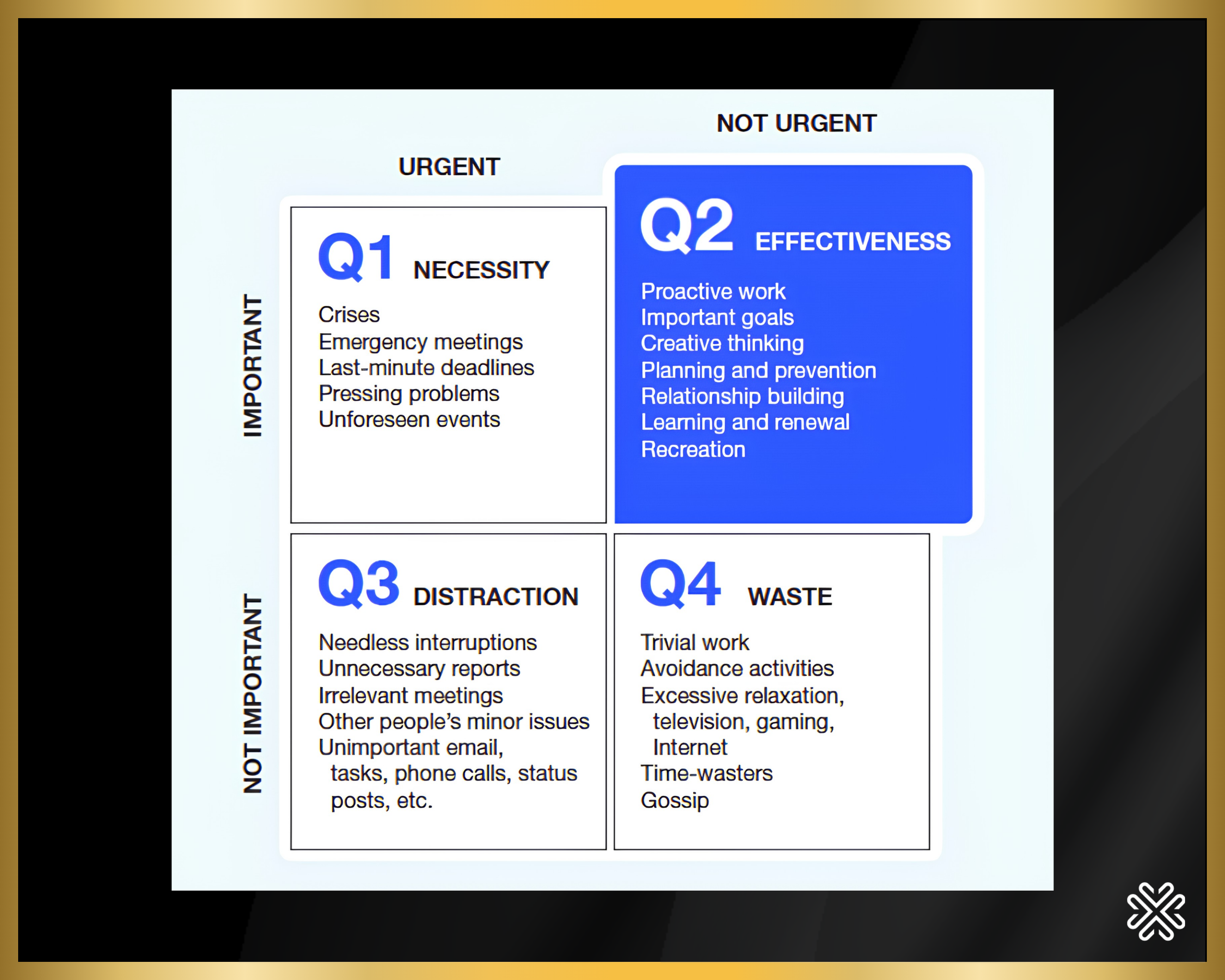
Source: FranklinCovey.com
This divides work into four quadrants based on two factors: urgency and importance. While each quadrant has its place, where we spend most of our time has a major impact on our performance and the health of our practice.
Covey found that people in average-performing organisations spend much of their time in Quadrant 1, where work is both urgent and important. Their days are dominated by solving problems, putting out fires and responding to whatever demands attention next.
High-performing organisations look very different. They spend far more time in Quadrant 2, where work is important but not yet urgent. This is where planning, improvement, relationship building and strategic thinking happen. Investing time here helps prevent problems before they become crises.
One of the most effective ways to make that shift is by establishing an operating rhythm for your practice. With consistent routines for planning, communication, and review, your operating systems help you spend less time reacting to urgency and more time focusing on the work that drives sustainable growth.
The challenge of constant distraction
Operating rhythms have always been important, but they're more essential than ever because the way we work has changed.
In her book Attention Span, Gloria Mark found that our ability to stay focused is shrinking. Just a few years ago, people could concentrate on a task for around two and a half minutes before being interrupted or switching their attention. Today, the average is just 47 seconds.
That's why operating rhythms are so valuable. They provide the structure that keeps your practice on track, even when distractions are pulling you in different directions. With strong operating systems in place, you spend less time reacting and more time focusing on the work that drives growth.
What operating rhythms actually look like
Every practice will have different operating rhythms depending on its size, team, and services. The goal is to build operating systems that create consistent routines, so your business runs proactively instead of reactively.
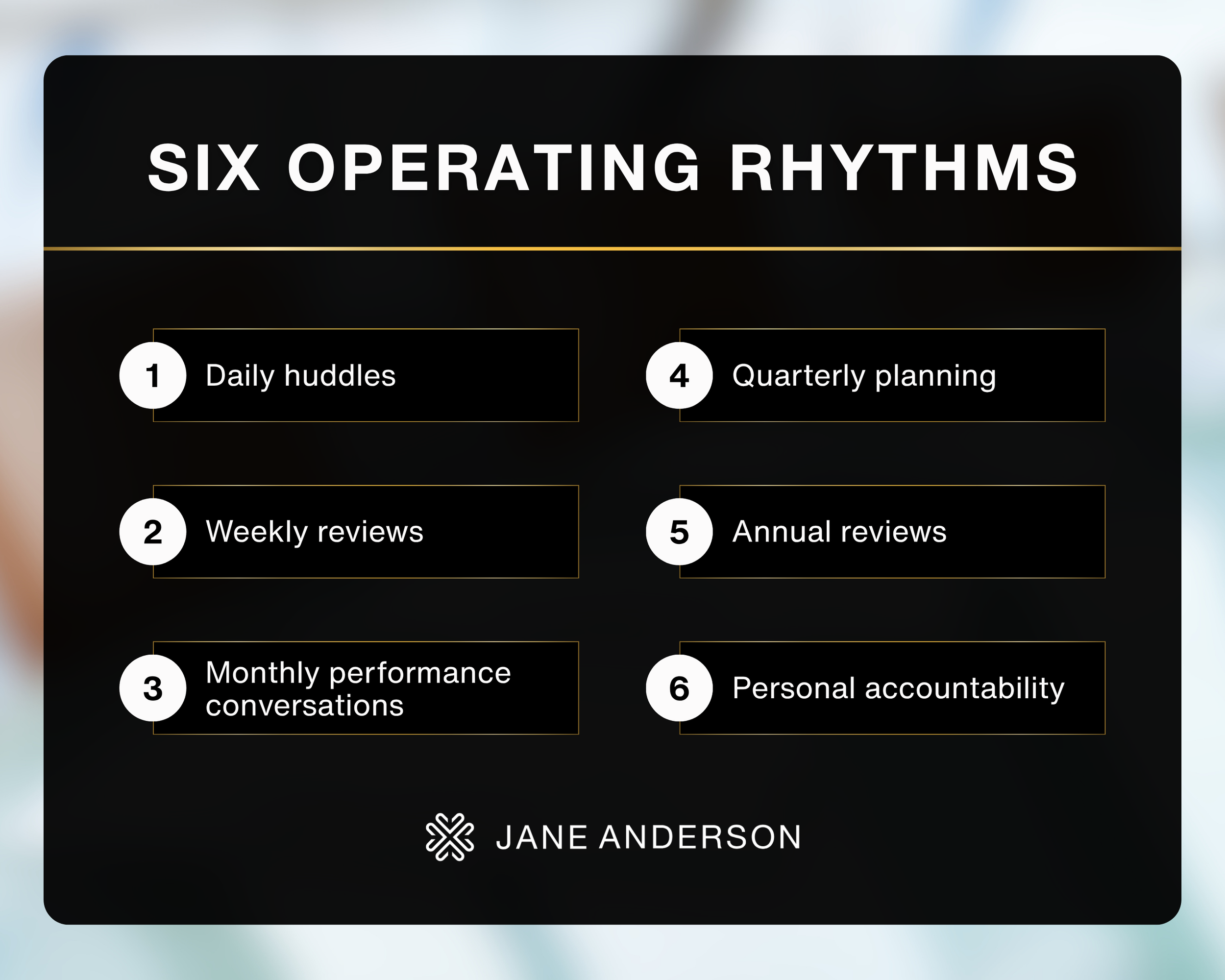
Here are six operating rhythms to include in your operating systems:
Daily huddles – Hold a 15-minute check-in each day to align priorities, remove roadblocks and keep everyone focused.
Weekly reviews – Spend 30 minutes reviewing upcoming work, project progress and marketing activities before they become urgent.
Monthly performance conversations – Check in with your team to discuss wellbeing, workload, support and opportunities for improvement.
Quarterly planning – Step back from daily operations to review priorities, set goals and align your team for the next 90 days.
Annual reviews – Reflect on the past year, celebrate progress, capture lessons and set clear priorities for the year ahead.
Personal accountability – Build accountability into your operating systems through regular check-ins with a mentor, mastermind or trusted peer to stay focused and follow through.
My own weekly accountability sessions with peers outside my team are an essential part of my operating rhythm. Without them, I'd still have a notebook full of unfinished ideas.
Remember, consistency makes the biggest difference. Strong operating rhythms create the structure that helps your practice stay focused, execute well, and grow sustainably.
Operating rhythms in practice
I'm working with a highly successful thought leader whose practice generates more than $1 million a year. She delivers large programs with a team of just two people. She's an excellent operator who has built an impressive business.
But despite that success, there were no clear systems or operating rhythms to keep everything running smoothly. Urgent and non-urgent communication were treated the same, so everything felt like a priority. Most of the knowledge also lived in her head, leaving the team unsure what needed immediate attention and what could wait.
This created what I call the "blind leading the blind" problem. The team wanted to help but lacked the information they needed, while the expert was too busy carrying everything herself to explain it.
Work became reactive, communication broke down, and everyone worked harder without making real progress. Over time, more things started slipping through the cracks.
They wanted to scale, but without the right systems, they simply didn't have the capacity.
So we introduced operating rhythms: regular touchpoints that brought structure and clarity. These included daily huddles, weekly reviews, monthly performance discussions, quarterly planning sessions, and annual reviews.
The changes were simple, but they transformed the business. Communication improved, everyone had greater visibility, and the team created the capacity to keep growing.
Creating your own operating rhythms
Operating rhythms don't need to be complicated. Start with one or two regular rhythms that will have the biggest impact, then build from there.
Ask yourself:
Where does my practice feel most reactive or chaotic?
What recurring meeting or activity would benefit from a regular rhythm?
Is too much of my business still living in my head?
What's one operating rhythm I could introduce this month to create more clarity for my team or clients?
With enough consistency, your operating rhythms become the foundation that keeps your practice running smoothly and supports long-term growth.
I’d love to know your thoughts . . .