I’ve worked in the personal branding space for over a decade, advising consultants, thought leaders, experts and founders on how to build their practice with their personal brand. And for over a decade, I’ve heard the same response: "I don’t want to become the face of the business. I don’t want it to be about me."
At the time, they weren’t ready to hear the conversation. But today they are. And that’s because we now understand founder-led growth much better.
What is founder-led growth?
Founder-led growth is the deliberate use of a founder's personal brand to grow a business. Rather than relying solely on the company brand to attract customers, the founder actively shares their expertise, ideas, and insights through channels such as speaking, LinkedIn, books, media, and thought leadership.
Your founder-led personal brand isn’t about becoming famous – it’s a commercial growth strategy
For many years, the world has confused founder-led growth with self-promotion. We picture oversized billboards, endless social media posts, and founders chasing attention for its own sake.
In Australia we’re still scarred by examples like the former CEO in Australia, who famously turned that professional membership body into a vehicle for his own profile, complete with television shows, billboards and a global push for his book. This went on until members and the media pushed back on the scale of spending and self-promotion. He was ultimately removed from the role but with a multimillion-dollar payout. We certainly don't like a tall poppy, and rightly so in this case.
Situations like this are why we haven’t been ready to take on founder-led growth. But today, founder visibility is no longer being viewed as a vanity project or an exercise in self-promotion. Instead, the conversation has changed, and today it’s increasingly recognised for what it really is – a commercial growth strategy.
The goal with founder-led growth isn't to build a personal following for its own sake. It's to build trust, create new opportunities and generate commercial growth for the business.
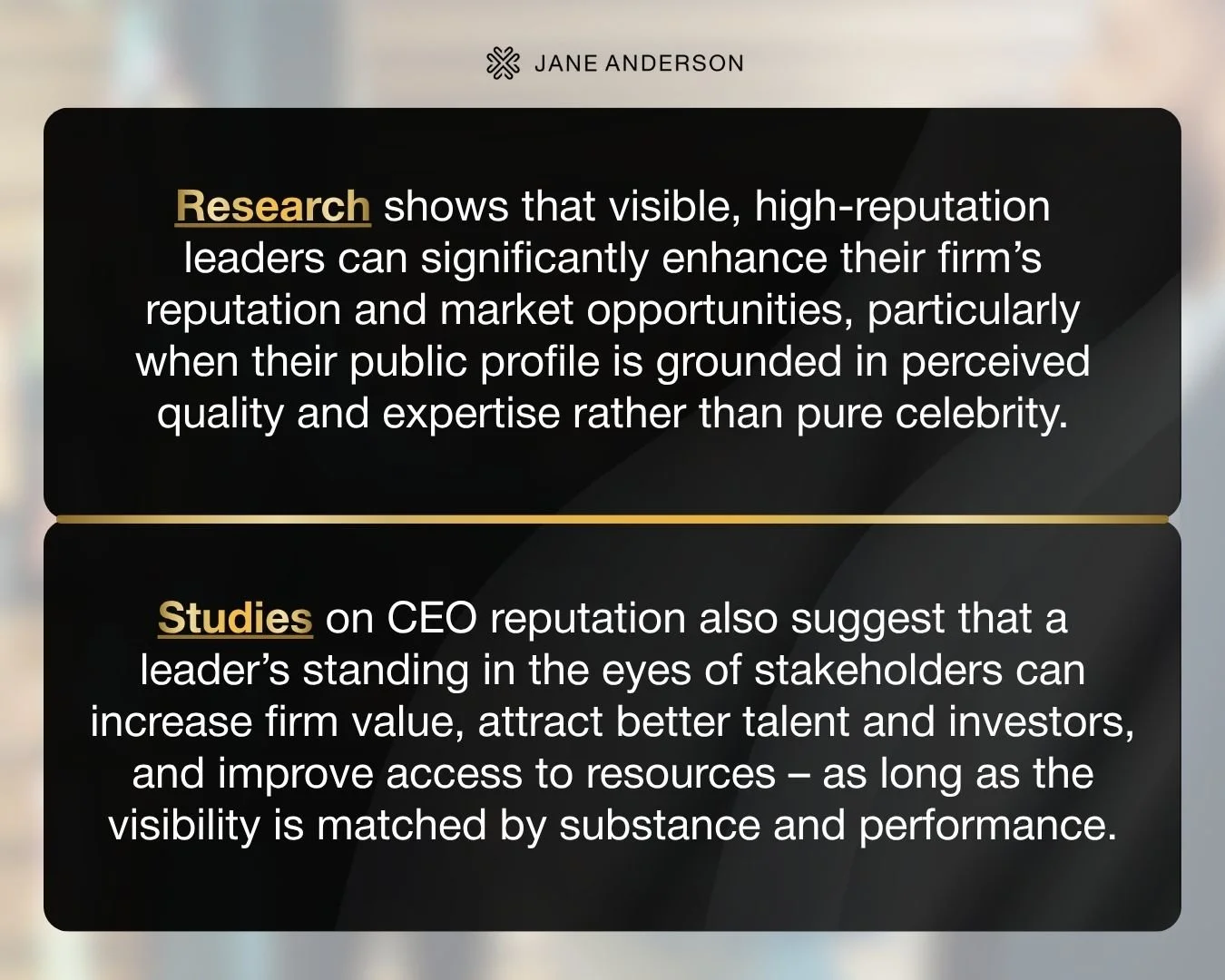
And the outcomes can be amazing. Research shows that visible, high-reputation leaders can significantly enhance their firm’s reputation and market opportunities, particularly when their public profile is grounded in perceived quality and expertise rather than pure celebrity.
Studies on CEO reputation also suggest that a leader’s standing in the eyes of stakeholders can increase firm value, attract better talent and investors, and improve access to resources – as long as the visibility is matched by substance and performance. In other words, when a founder uses their personal brand to consistently communicate value, insight and credibility, it can translate into measurable commercial growth for the business, not just more followers for the individual.
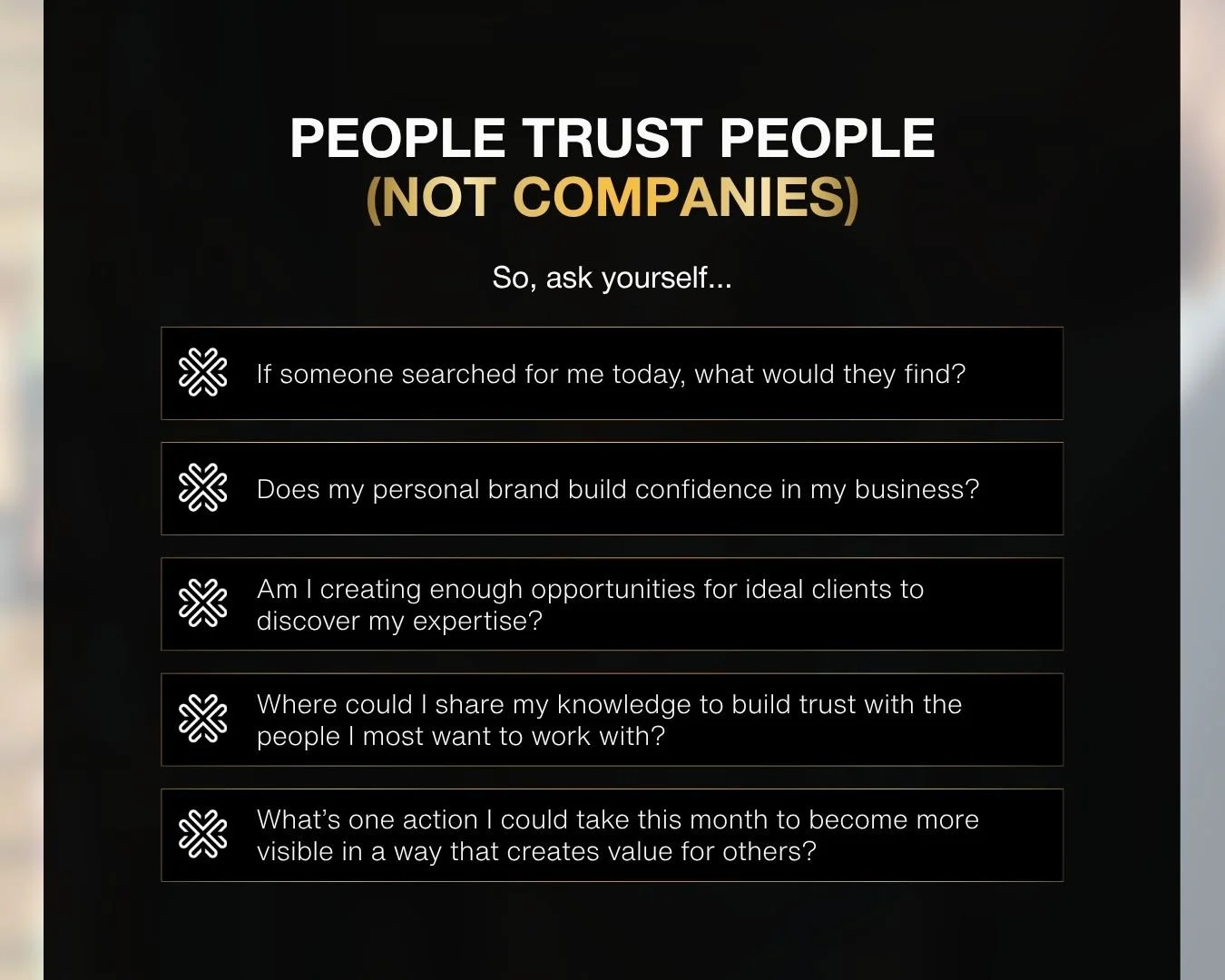
People trust people (not companies)
Your personal brand is not about becoming famous; it’s about growing your brand through trust, and that’s because people trust people, not companies. And that's because, long before people evaluate your credentials, compare proposals or calculate your ROI, they're already forming an impression of you.
Unfortunately, people don’t always make decisions completely rationally. Behavioural Daniel Kahneman's research showed that we make many everyday judgements using what he called System 1: the fast, intuitive part of our thinking. Only afterwards do we engage the slower, more analytical System 2, where we consciously weigh up facts and evidence.
By the time someone is reading your whitepaper or calculating the investment costs, they've often already formed an impression of the person behind the business. Which means they're asking themselves one question before almost any other: “Do I trust this person?”
Today, trust is harder than ever to earn. Artificial intelligence can produce polished images, persuasive copy and professional-looking brands in a matter of hours. But your customers know this. And because of that, they’re becoming more sceptical about what they see online… and more interested in who is actually behind a business. They’re asking “is this person the real deal?”.
When a founder leverages their expertise, credibility and perspective by sharing insights, teaching, speaking and demonstrating their genuine thought leadership, they reduce that uncertainty. They provide a human reference point for the business, so that people have something to trust beyond a logo. They can trust the person behind the promise.
This trust doesn’t replace the value of the organisation; it accelerates it. Because when your personal brand is done well, you aren’t the product at all. You’re just the tool that helps more people discover the business, trust you and the practice, and choose your services and products.
The courage foundation
I often describe founder-led growth as being commercially courageous. That’s because founder-led personal brands do require one thing that many people find uncomfortable: visibility. Whether or not you’re doing this to become ‘famous’ or not (and you’re not!), you’re still putting yourself out there, and that takes courage.
When you’re publishing your thinking, speaking at an event or putting your name to an idea, you’re allowing people to judge your expertise. Sometimes that happens before they ever become a client, or even have a sales meeting with you. That takes courage.
You also need confidence in the value you bring and a genuine commitment to helping the people you’re trying to help. And that takes courage. The good news is that when you focus on sharing expertise, solving problems, and building trust, visibility stops being about promoting yourself and becomes a powerful way to grow your business.
Examples of founder-led growth
A founder-led growth strategy doesn’t mean that every customer relationship and marketing strategy has to revolve around you as the founder. It doesn’t, and it shouldn’t. Your marketing, PR, advertising, content create, client experience, and overall brand all continue to play huge roles in your growth. But founder-led personal brand amplifies all those efforts.
One of my clients, Hayley in Sydney (not her real name but a very real client) came to me with an annual revenue of $600,000. We put together a deliberate founder-led 3-year growth strategy centred on her thought leadership, speaking opportunities, and building her personal profile. As a result, her business grew to approximately $1.6 million within the first year. Her book isn't even finished yet, and she's only at the beginning of the journey.
Another example is Nick, an entrepreneur in Brisbane whom I worked with a few years ago. Nick didn’t complete high school and yet brings in over 9 figures in his businesses. Nick has never sought celebrity status, yet by sharing his expertise through books and thought leadership, he significantly strengthened his business's growth. His personal visibility created opportunities that supported the organisation's expansion while allowing the company itself to continue growing.
These are two very different people, with three very different strategies. But they all share one important outcome. Their personal credibility became a growth asset for the organisations they built.
Your founder-led growth strategy
Founder-led growth isn't about putting yourself in the spotlight. It's about putting your expertise to work for the benefit of your business, your clients and the people you're here to help.