Don't Underestimate The Value Of Your Lived Experiences
Mark, my husband, and I are doing a little bit of renovation on our house at the moment. Before we got started, we had a couple of builders come by to give us a quote and to see what ideas they might have about some of the more unique (or challenging!) parts of the build.
One of them had plenty of ideas and was very confident. Whatever we asked about, his answer was essentially, ‘Yep. We can do that. Easy.’
The other builder took a slightly different approach. When we showed him a large beam in the garage that we weren’t sure what to do with, he talked us through similar situations he’d encountered on other projects. He showed us examples. He explained what he’d seen work, what hadn’t worked, and what the consequences could be if we took one approach over another.
In other words, he didn’t just tell us, ‘Yes, yes, we can do it’. He was able to draw on what he’d actually done before. His lived experiences. He let those experiences do the selling for him.
We chose him, despite the fact that his quote was actually the more expensive, because his experience gave us confidence that he knew what he was talking about and that we could trust him.

Trust is the bridge between expertise and being chosen
As an expert, a thought leader, a consultant, a business owner, or an executive, you likely have decades of experience, exceptional expertise, and an impressive list of qualifications and previous work. But before someone hires you, buys from you, or recommends you to someone else, they need to trust you.
You can think of trust like a bridge – a bridge between you and your potential client. And it’s the way that they ultimately choose to work with you. Unfortunately, right now, that trust is becoming harder to earn in the B2B space. People are looking for more from you than just your assurances. In fact, research shows that buyers are more informed than ever, yet deals are harder to close, and trust has become more difficult to establish.
Building trust
So how do you earn that trust? How do you show people that they should choose to work with you? You give evidence.
Last week I presented annual research on what CEOs have been doing, the decisions they’re making, trends in B2B marketing, and predictions about what might come next in 2027, to my community. Some interesting insights came out of that research (and I’ll share more of those in my next newsletter!), but one in particular stood out.
Research from LinkedIn found that 74% of buyers are becoming more sceptical of traditional marketing. That means that just telling people what you’re good at only goes so far. People want to see evidence of what you know, how you think, and what you’ve actually done.
Case studies, client results, and numbers can all help build trust. This is great evidence, and certainly we should continue to use it. But it’s not enough on its own, and we often overlook the value of sharing our lived experiences.
Your lived experience delivers real value
Why is lived experience important, and today more than ever? We’re living in a world where information is incredibly easy to access, much of it powered by AI. Today AI can answer questions, summarise research and produce enormous amounts of content in seconds. So, it’s not enough to just know things anymore.
But what AI (and the internet generally) doesn’t have is your lived experience. It hasn’t spent 20 years in your industry. It hasn’t led teams through change. It hasn’t watched a strategy fail, then discover what worked instead. And it certainly hasn’t sat across from your clients, listening to their challenges and needs.
You have.
Knowledge matters, but it’s just not enough. As Einstein is attributed with saying, ‘The only source of knowledge is experience.’
Those experiences are uniquely yours, and sharing them will build the trust you need.
Ask yourself:
What have you actually done?
What have you seen happen?
What have you learned from working through difficult situations?
What can you recognise now because you’ve encountered it dozens of times before?
These lived experiences give substance to your claims. It shows that your ideas haven’t come from something you’ve read, learned, or seen someone else do. They’ve been shaped and curated by doing the work.
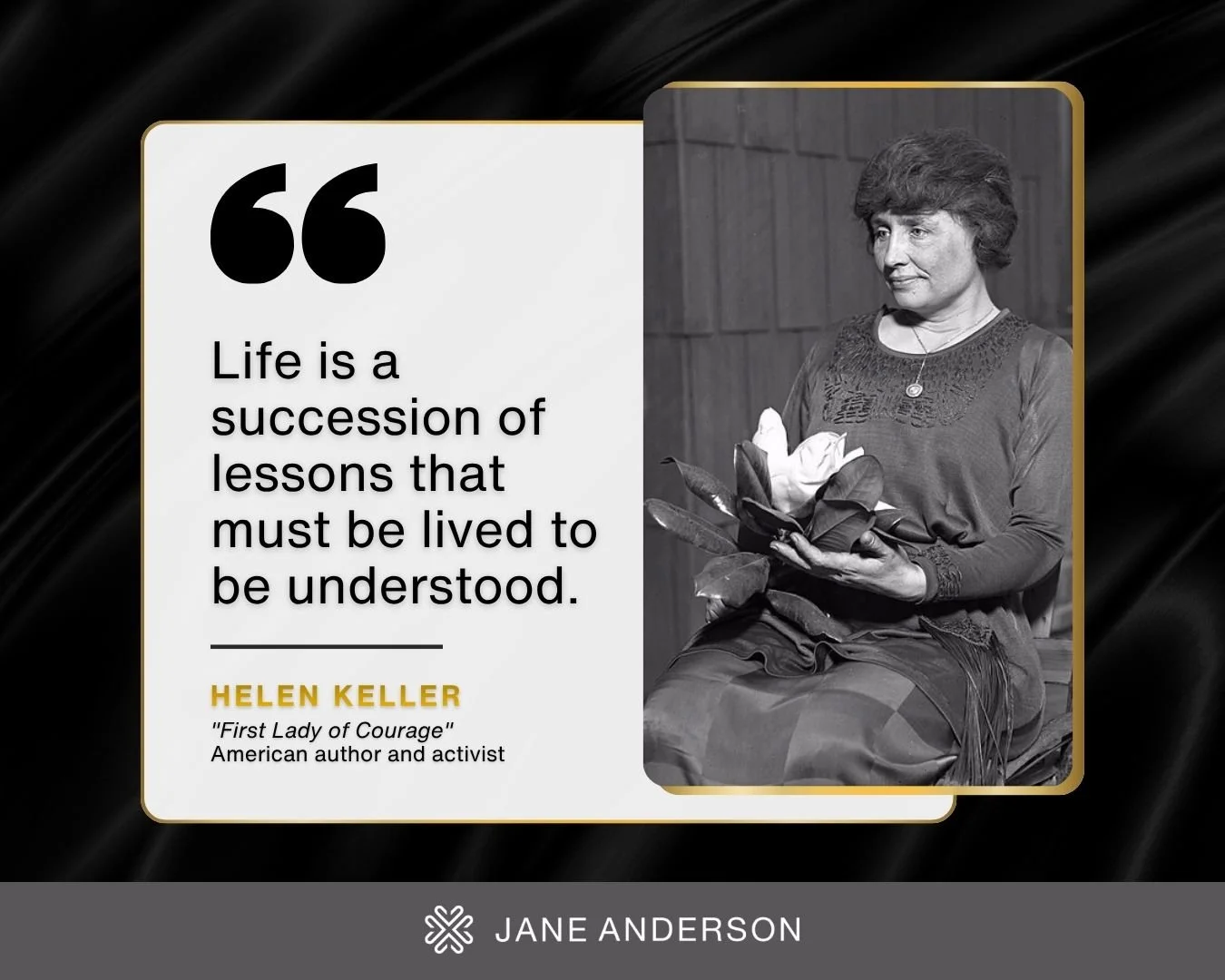
As the wonderful Helen Keller once said, ‘Life is a succession of lessons that must be lived to be understood”
Don’t just tell people what you know, show them what you’ve lived
To build trust in the age of AI, you need to share your lived experiences as part of your marketing and your personal branding. That’s exactly what our builder brought to our conversation.
He wasn’t saying, ‘I know how to do this, so trust me.’ (Though that’s exactly the approach the first builder had tried.) He was showing us that we could trust him through stories, examples, and observations that he’d accumulated through years of doing the work.
This is why storytelling remains such an important part of personal branding. Because you can tell people that you’re experienced. You can put the number of years you’ve been working in your LinkedIn bio. You can list your qualifications and credentials. But that isn’t going to build the trust bridge that you need. Your stories do that.
Here’s how that could look:
Instead of saying that you know how to lead a team through a change, tell the story of the time you did it.
Instead of saying you’re an expert in your field, share the events and circumstances that have led to a particular learning or insight.
Instead of saying you understand your clients, tell us about a specific client problem and how you solved it together.
Your lived experiences are the strongest proof you have
When you’re building your personal brand, writing newsletters, creating content, or just talking to potential clients in a sales meeting or stakeholders in a boardroom, don’t overlook the stories sitting right in front of you.
These are the strongest proof you have, and the best way to build that all-important trust bridge that turns potential clients into actual clients.