I was recently working with a coaching client, Dan, who has been doing solid work on growing his practice.
One of the areas I always measure when someone is scaling, is their referral strategy.
Not just whether referrals happen, but how they happen.
So I asked Dan a simple question.
“Can you tell me how you get referred?”
He paused, then said something I hear all the time.
“Sometimes it’s just luck. Someone referred me out of the blue.
Other times I get a heads-up. ‘I think this person is a good fit for you,
I’ll introduce you.’”
So far, so good.
Then I asked the next question, the one most people never think to ask.
“And what do you say when someone offers to introduce you?”
Dan replied, “I usually just say, ‘That would be great, thanks so much.’”
And here’s the issue. That response is polite. It’s appreciative. And it’s a massive missed opportunity.
Where referrals quietly lose power
What typically happens next is this.
Amy, the referrer, sends a quick email to Peter, the potential client.
“Hi Peter, you should speak to Dan, he’s amazing at what he does.
I’ll leave you two to connect.”
Now Amy is trusted by Peter, which is great. But Amy is also busy, which is reality.
She doesn’t have time to carefully position Dan, articulate his value, or explain why he’s the right fit. She just wants to make the introduction and move on.
And in that moment, without anyone realising it, Dan’s positioning is diluted.
One of the most overlooked and undervalued ways experts deplete their value is how they are referred to.
Referrals are trust currency
Referrals work because they transfer trust. Someone I trust, trusts you, therefore I should trust you too. That logic makes sense intuitively, but it’s also backed by research.
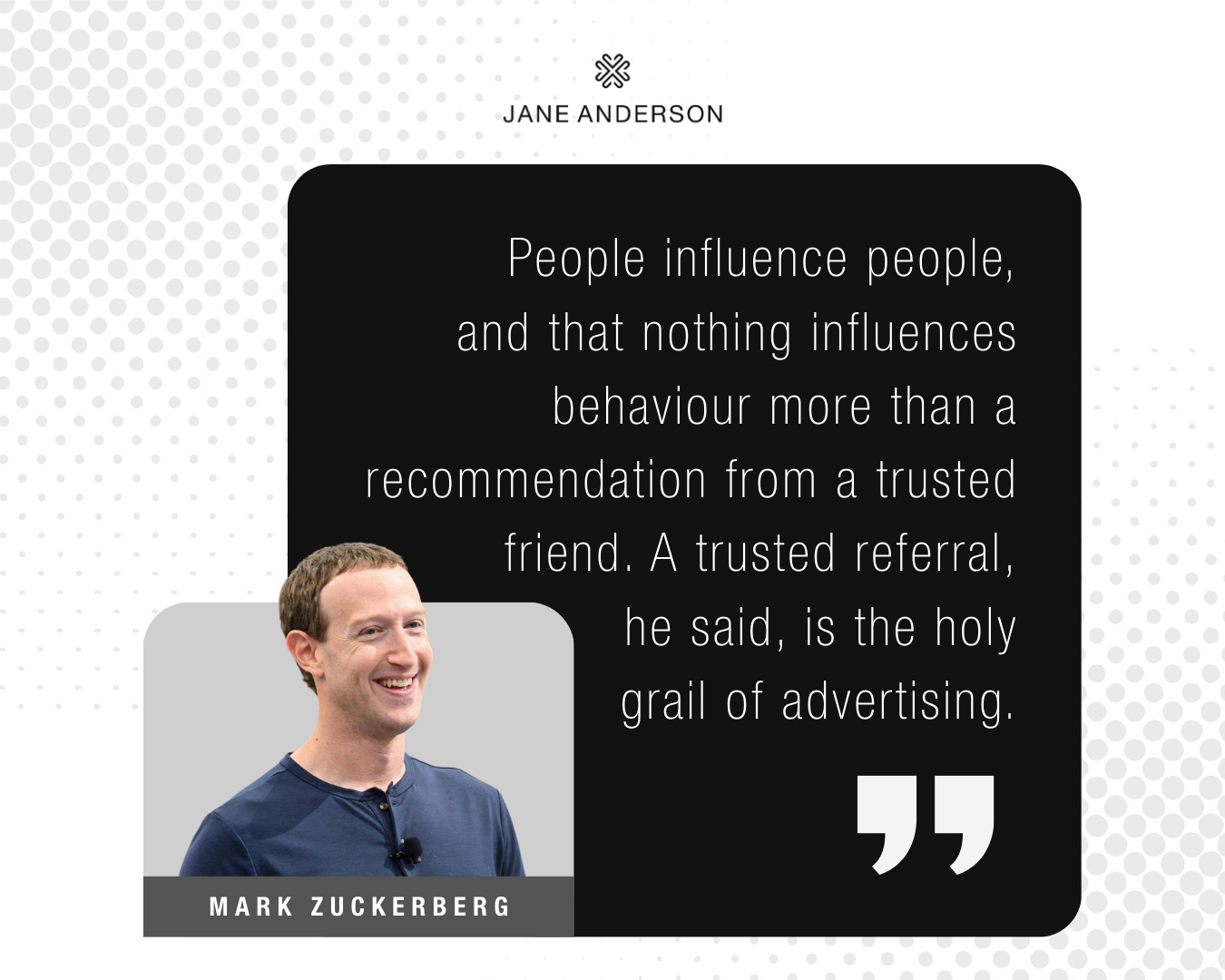
Mark Zuckerberg once said
“People influence people, and that nothing influences behaviour more than a recommendation from a trusted friend. A trusted referral, he said, is the holy grail of advertising.”
And the data supports this.
A landmark study by the Wharton School found that referred customers are 18% to 25% more likely to convert, have significantly shorter sales cycles, and require less convincing.
Research from Bain & Company shows referred clients have a higher lifetime value, are more loyal, and are more likely to become referrers themselves.
Harvard Business Review has also found that referral-based buyers are less likely to negotiate fees, place more weight on fit and credibility, and are more accepting of premium pricing.
And the Nielsen Trust in Advertising Report consistently shows that 88% to 92% of people trust recommendations from people they know. Referrals rank higher than online reviews, advertising, or thought leadership content alone.
Thought leadership builds visibility. Referrals activate belief.
The real problem is not referrals, it’s positioning
Dan doesn’t have a referral problem. He has a referral positioning problem.
He’s relying on other people, busy people, to articulate his value. And when they don’t, his expertise gets reduced to “he’s great, you should talk.”
That’s not strategic. And it’s not fair on the referrer either.
The simple fix: create a referral script
The moment someone says, “I’ll introduce you,” that’s the trigger.
That’s when Dan should respond with something like this.
“Thank you, I really appreciate that. To make it easy for you, I’ve drafted a short intro you can use or tweak. I thought it might save you some time.”
And then he provides the copy.
For example:
“Hi Peter, great to speak with you today.
I think it would be worth you having a conversation with my good friend Dan.
Dan is a leading expert in [specific problem area]. He’s created [method, program, or IP], written [book or resource], and works with [type of clients] across [industries or locations].
His clients typically see around a 50 percent improvement in performance within 12 months. I think there’s strong alignment for you to at least have an initial conversation.
I’ll let you both take it from here. Dan’s details are below, and here’s his website if you’d like a look.”
Same trust. Same referrer. Exponentially stronger positioning.
What to do next
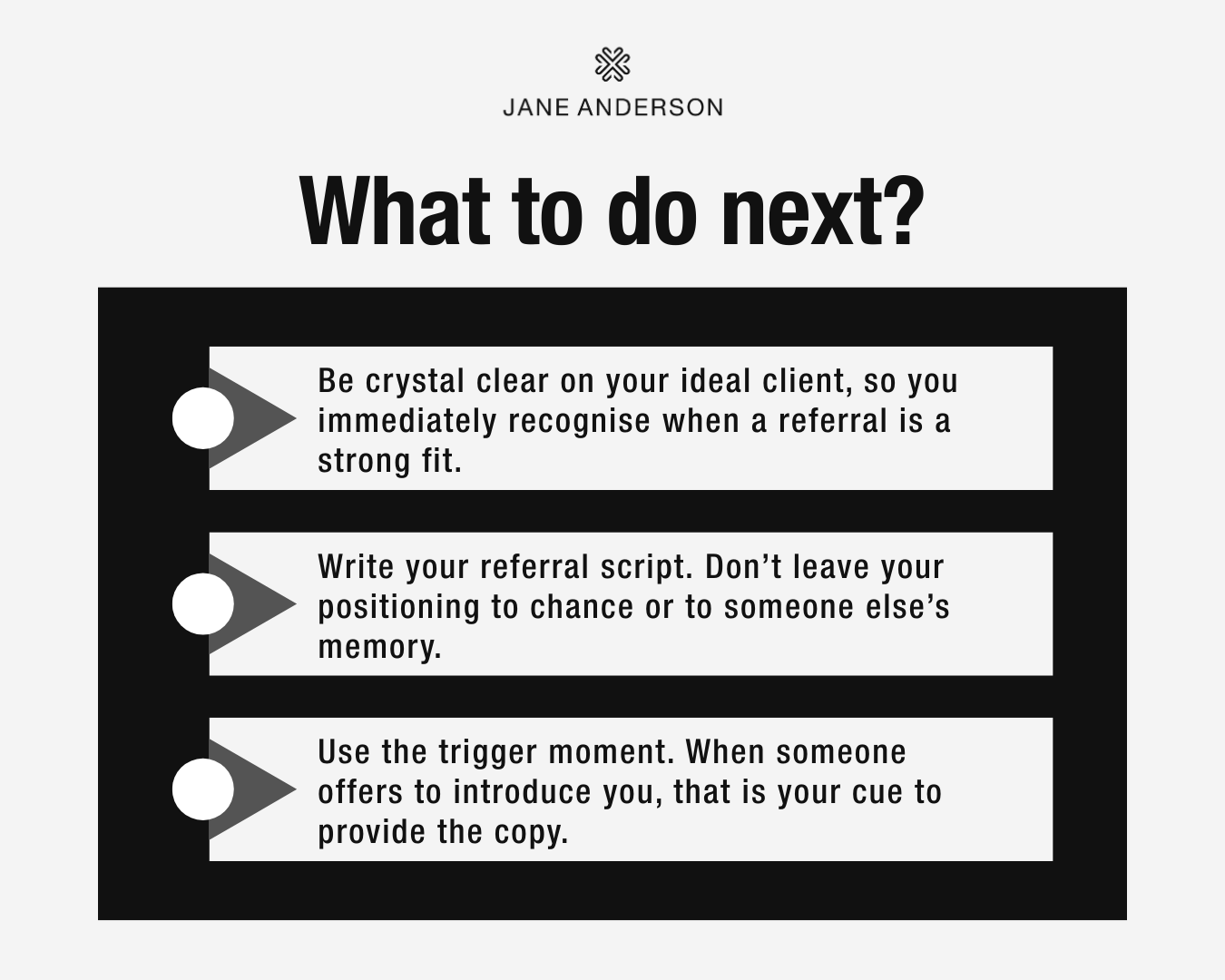
If you want referrals with influence, not just referrals by chance, focus on three things.
First, be crystal clear on your ideal client, so you immediately recognise when a referral is a strong fit.
Second, write your referral script. Don’t leave your positioning to chance or to someone else’s memory.
Third, use the trigger moment. When someone offers to introduce you, that is your cue to provide the copy.
Referrals don’t happen by accident. They happen by clarity.
And when your referrals are positioned well, they don’t just bring you leads. They reinforce your authority, protect your pricing, and accelerate your growth.
I’d love to hear your thoughts, and whether you already have a referral script in place.