Crank Up Your Creativity In Business
When I first start working with clients, I see a full spectrum of creativity. Some arrive at our coaching sessions or bootcamp days feeling ready to push full steam ahead. They’re creativity is sparking and they’re fired up.
But more often, people come to me and it’s like the creative spark is missing – even when they’re typically very creative people. But over time it has become buried and half-extinguished under pressing deadlines, delivery and the day-to-day demands of running a practice and life in general.
This is a common problem because most thought leaders spend so much time delivering that ‘think time’ just gets crowded out. But creativity when you’re a thought leader simply isn’t optional. It’s a central part of a successful practice.
Why creativity in business matters
When thought leaders and consultants don’t have the time to think and prepare their IP, their thought leadership engine will stall. After all, it’s the ability to be an authority in a space and influence the broader industry through original ideas, content and public conversation that forms the basis of your thought leadership.
On the other hand, intentional creativity in business allows you to generate IP, content, ideas and conversations that make you stand out in the market and position yourself as an expert in your space.
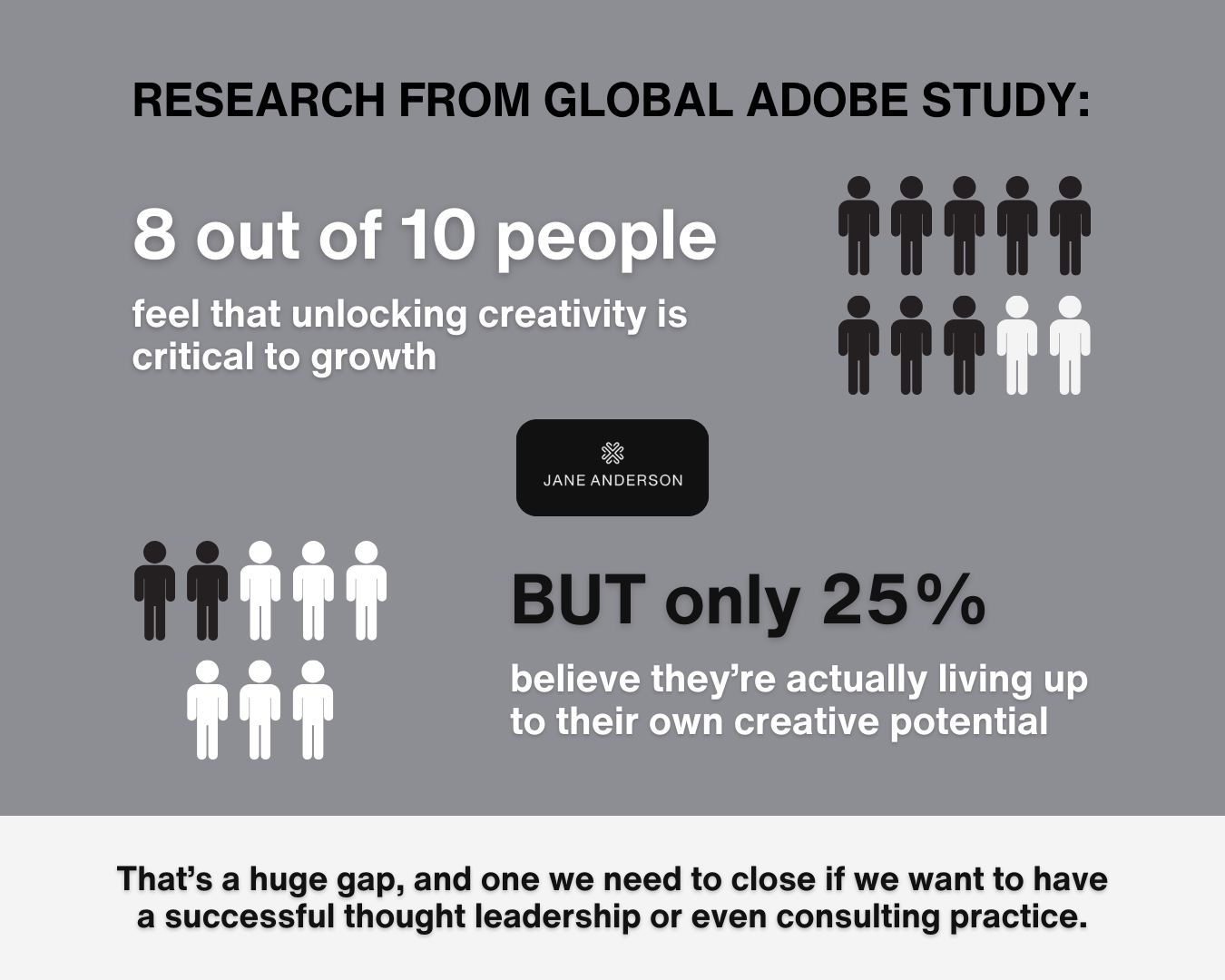
Research from a global Adobe study shows that 8 out of ten people feel that unlocking creativity is critical to growth. But only 25% believe they’re actually living up to their own creative potential. That’s a huge gap, and one we need to close if we want to have a successful thought leadership or even consulting practice.
Why creativity gets switched off
So, why does creativity get switched off in the first place? We already touched on this – but it typically gets pushed aside by the other parts of our practice that feel more urgent. These are client deadlines, team management and the push to constantly deliver.
But of course there are other reasons. The pressure of perfectionism is a big one. As is the fear of putting yourself out there or just feeling plain exhausted. And when you put these all together, it’s no wonder that the creativity button goes into deep hibernation.
How to get intentional about your creativity
Many thought leaders treat their creativity as something that’s done ‘on the run’. They’re squeezing out ideas between client calls, writing half a blog post at night or scrambling to get something on LinkedIn because they haven’t posted all week.
But fitting it around the edges isn’t sustainable. And it’s certainly not the way to have the deep creative thinking that drives real thought leadership and thought leadership content that engages people.
Instead we need to get intentional about our creativity. We do this by deliberately creating space where we give ourselves permission to think and create. Many of my clients do this at our Content Creation Bootcamp. It’s just a focused 48 hours where they can clear the decks and reignite their creative spark within their practice.
CCBC might work for you. Or you might set aside one day a week or fortnight. Or maybe you block out every Friday morning. Whatever works for you, you need to find a regular time where you can just create and think. Turn off the phone and email notifications, and just give yourself the space to let your creative spark lead to idea fires.
When you can do this you’ll see incredible things happen. Your content will be industry leading. Your IP will be tight and value adding. And you’ll even get those game changing books written! And all because you’ve tapped into your creativity.
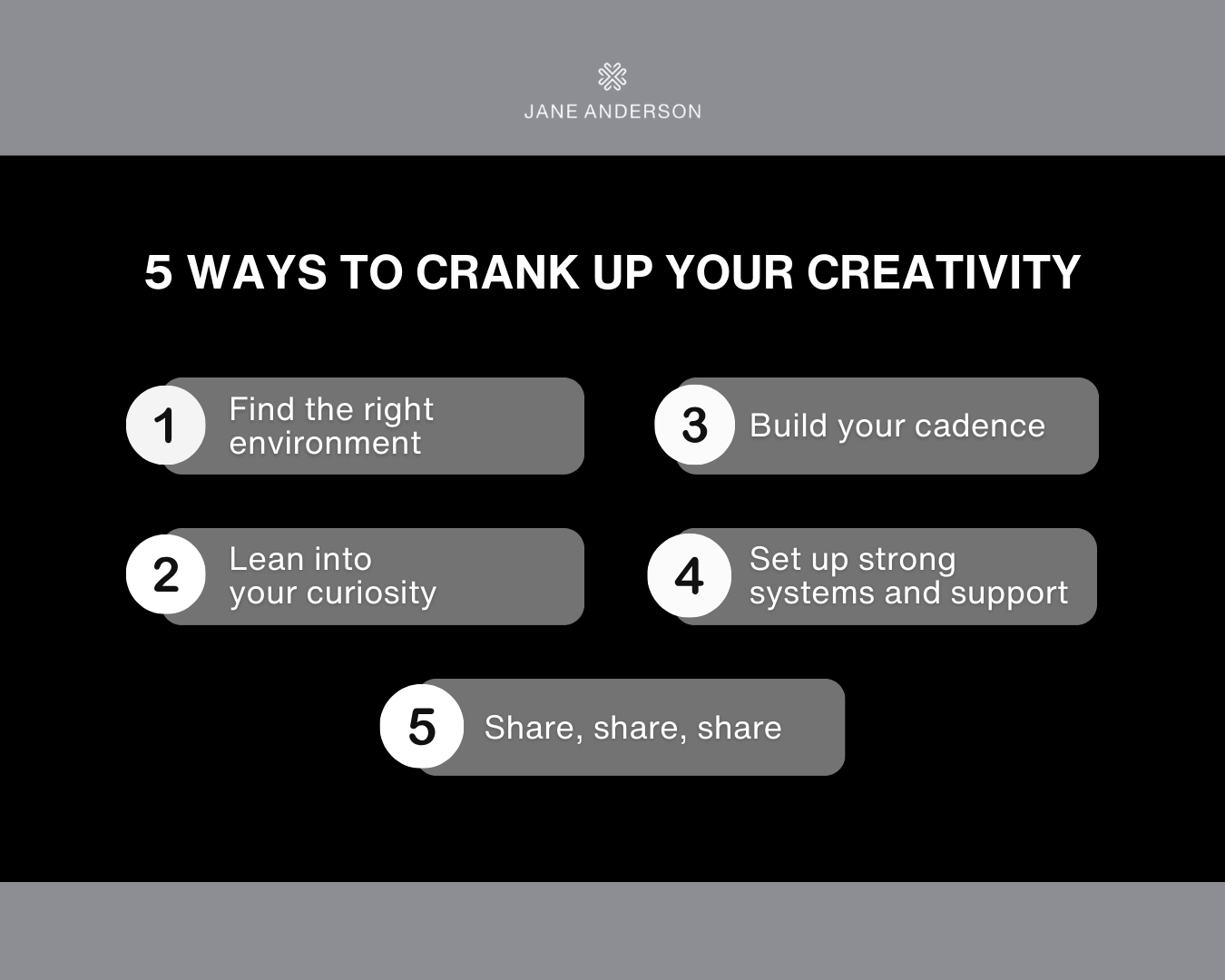
5 ways to crank up your creativity
Here are some real ways to crank up your creativity:
1. Find the right environment
Your environment can impact your creativity. The right space helps you think – the wrong space undermines it. You might need to physically get away for a weekend retreat, or carve out a quiet space in your home with good lighting. The key is to find a place that feels good and helps you get into your creative flow.
2. Build your cadence
Creativity thrives on rhythm. Is your creative time something you’ll do once a quarter for a solid weekend? Or do you need a weekly rhythm to keep your ideas alive? Decide on your cadence and then stick to it.
3. Lean into your curiosity
Elizabeth Gilbert says, ‘Curiosity is the truth and the way of creative living.’ So creativity isn’t about waiting for lightning to strike for your big idea. It comes from being curious, asking questions, observing, listening to clients and noticing patterns in what people are struggling with. When you tune your attention, your ideas will grow too.
4. Set up strong systems and support
If you don’t have the systems to capture them, your ideas will slip through your fingers. You need a process to capture and channel creativity into assets. That might mean filing frameworks in a content library, setting up workflows to create articles or having support staff who can help you turn raw ideas into videos, blogs or podcasts.
5. Share, share, share
Your ideas are no use to you unless you share them! Whether you’re writing an article, sharing your knowledge on a podcast, writing a book or making a video, you need to get your ideas into the world. Publishing and sharing turns creativity into influence.
Intentional creativity in action
At one of our recent bootcamps, a participant arrived completely drained. She’d been in nonstop delivery for months. And once she’d settled into her seat admitted that she hadn’t created a single new piece of thought leadership for nearly a year.
But by the end of the weekend, she’d created a year’s worth of blog posts, she’d outlined her next book and she’d filmed three videos. All because she had the space, support and systems that let her actually be creative – and transform those ideas into publishable thought leadership content.
When she left at the end of the weekend, she said she felt like she’d put a brand new engine in her practice – and she was no longer stuck on neutral!
Ready to get started?
If you’ve been running on empty, don’t panic. Your creativity isn’t gone. It’s just dormant. With the right environment, cadence, curiosity, systems and publishing rhythm, you can crank up your practice’s creativity and reignite your thought leadership engine.
Start by asking yourself the following questions:
Where do I do my best thinking? What changes could I make to create a space that supports creativity?
How often do I need intentional time for creativity? Daily, weekly, quarterly?
What am I thinking/learning about? What questions am I asking or, more importantly, should I be asking? What am I observing in my clients, in the industry or in the world that could spark new ideas and thought leadership?
How will I capture and store my ideas so they don’t get lost? What support should I get to help me turn those ideas into usable assets?
Where can I share my ideas so they can make a real impact?