Nick, a CEO I once coached, was gearing up for his industry conference keynote. His slides were full of bullet points and facts — solid content, but lacking spark. He rehearsed, yet the energy wasn’t there and the connection with the audience felt weak.
Together we applied the With Influence framework: we identified his core message, built a story around it, tuned his state (how he showed up), and shifted the focus from “telling” to “engaging”. When Nick walked on stage this time, his confidence came from alignment rather than nervousness. He made eye contact, asked questions, invited participation. The audience responded — laughter, nods, questions during his talk. Afterwards the organiser told him: “That was one of the most memorable keynotes today.” The content didn’t radically change, what changed was the way he showed up. And that made all the difference.
Research into attention and presentation effectiveness shows that what many believe — “people only focus for eight seconds” — is more myth than fact. One review of academic literature found that the oft-quoted “8-second attention span” lacks strong empirical evidence (PubMed). Yet other credible sources, such as industry research, note that digital-age audiences have an average attention span of roughly eight seconds when consuming online information (Golden Steps ABA).
Whether the number is eight seconds or 80, the lesson is the same: your audience’s attention is fragile. To hold it, you must connect emotionally, tell stories that matter, and give meaning to your message.
As James C. Humes said, “Every time you have to speak, you are auditioning for leadership.” Your audience isn’t just listening to what you say — they’re deciding whether to follow you.
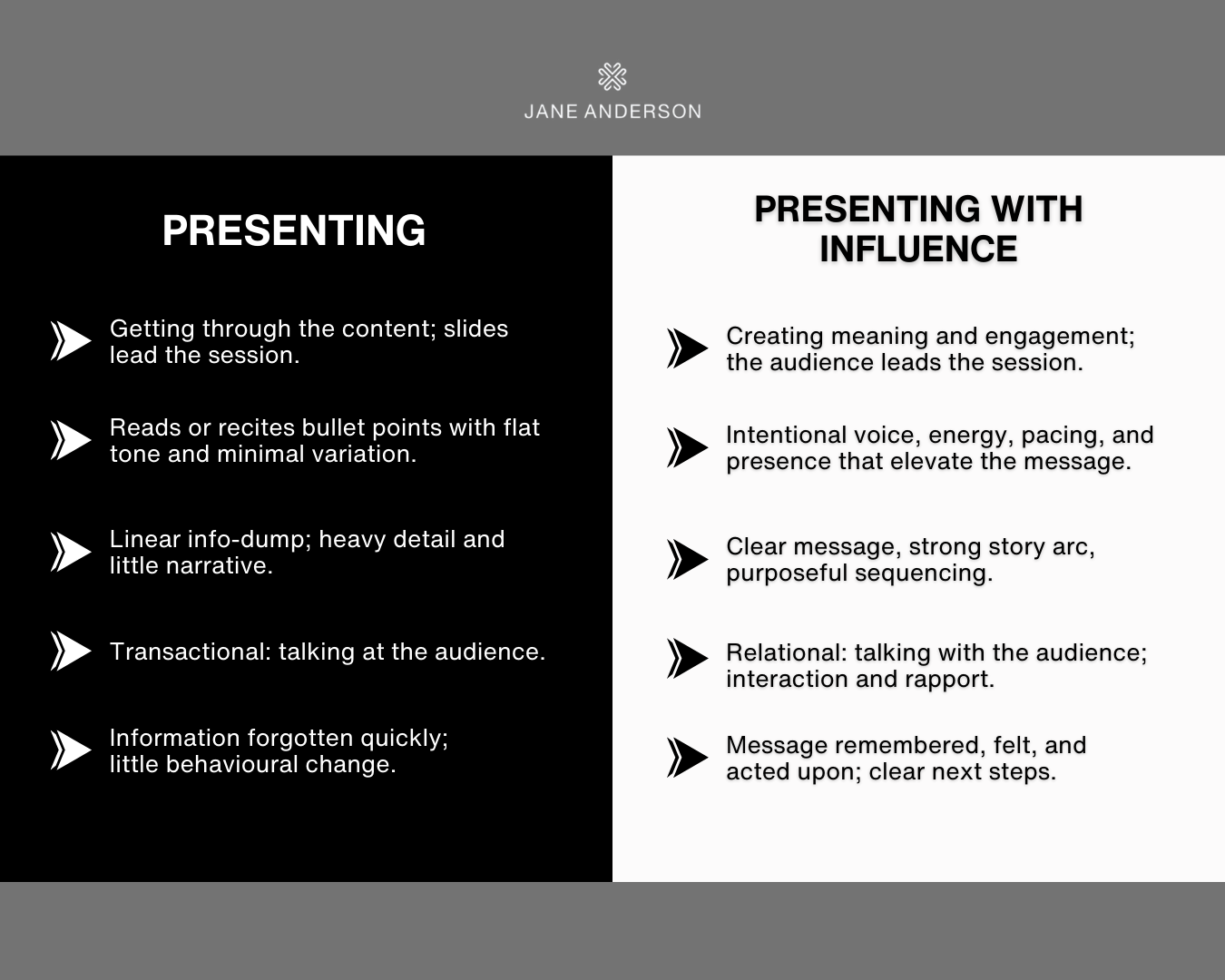
Most presenters aim to inform; influential presenters aim to transform. One delivers information, the other creates connection. The first relies on slides; the second relies on story and state. One seeks applause; the other creates lasting impact.
Imagine presenting as giving someone a map — clear directions from A to B. Presenting with influence, however, is like being their guide on the journey. You bring the terrain to life, help them feel safe, inspired, and curious about what’s ahead. When you guide, they trust you. They remember the journey, not just the directions.
When you speak, ask yourself: am I delivering information or creating transformation? Does my message make people think differently, or simply know more? If every presentation is an audition for leadership, what role am I auditioning for?
Presenters who influence don’t talk at their audience, they talk with them. They blend story, structure, and state to create connection and meaning. Whether in a boardroom, on a stage, or online, your words, energy, and presence reveal your leadership. Every time you speak, you’re not just delivering a message, you’re leading an audience somewhere worth going.